Yuhan Kim, Hansando and Busan 1592 (Osprey, 2025)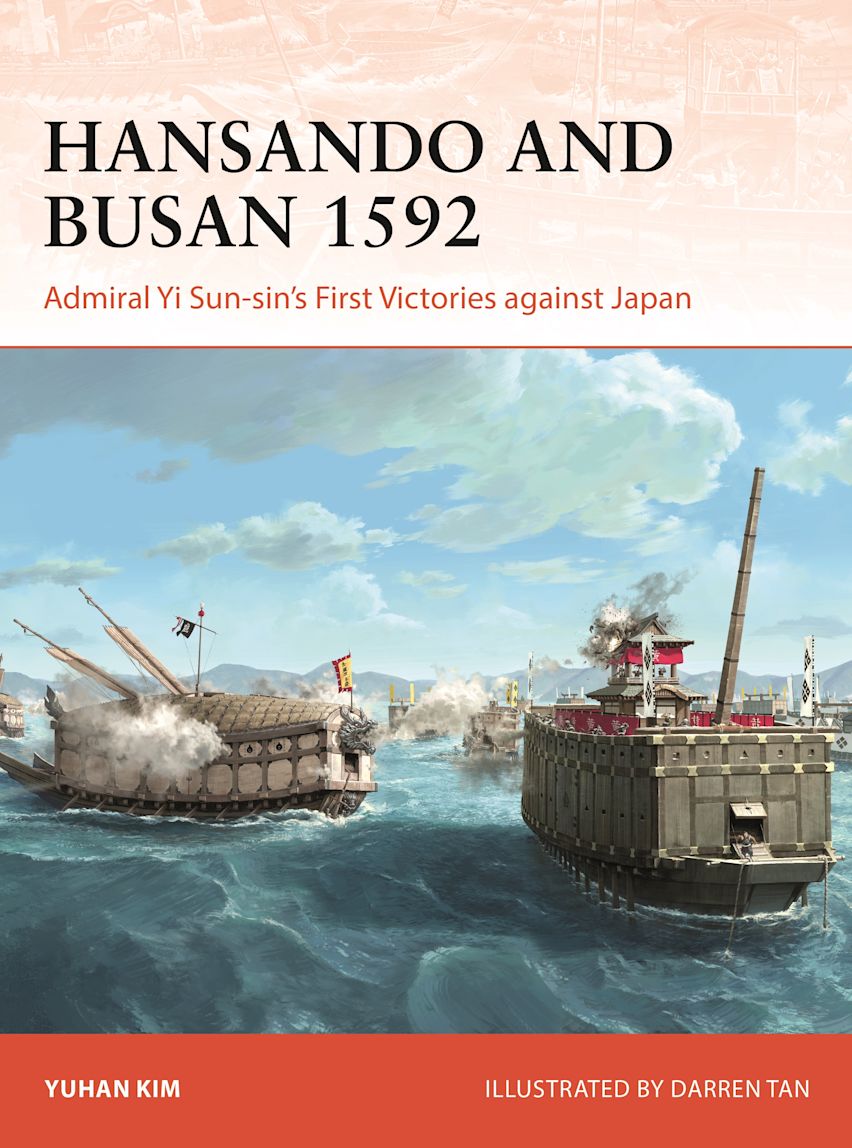
The year is 1592 and Joseon Korea struggles to repel a Japanese invasion that is sweeping all before it. At sea, though, the Japanese fleets have bitten off far more than they could chew because Korea had more than an ace up its sleeve. Step forward Yi Sun-sin to take command of an impressive navy that would hammer the Japanese ships wherever they found them. Yuhan Kim delves into this conflict and tells a fascinating story.
Kim opens his story with the initial, massive Japanese amphibious assault at Busan that began the seven years long Imjin War. He notes that over one million people would die in this conflict, which many Koreans believed could have been stopped at sea, though Kim argues otherwise. Kim continues his background set-up by considering the opposing military structures and commanders, including Yi Sun-sin for the Joseon and Wakizaka Yasuharu for the Japanese. Kim delves deeper into the opposing forces, focusing on their navies, including ships and weapons. The most famous ship was the ‘turtle ship’, the geobukseon, designed specifically to disrupt Japanese fleets, according to Kim. With his set-up established, Kim moves on to his narrative of the main campaigns. He begins with the Okpo campaign, initiated by the fall of Busan and the chaos that ensued. The battle was a crushing Joseon victory under Yi’s command. He was soon on the campaign trail again, intercepting an enemy squadron at Sacheon, trapping a Japanese fleet at Danghangpo, luring a Japanese fleet into deep water off the Gyeongnaeryeang Strait, and pounding an almost captive fleet at Angolpo, winning victory after victory. Meanwhile, the Japanese invasion had stalled, but Yi struck again at the Nakdong delta before sailing to Busan where he battered the main Japanese fleet. Kim moves on to Yi’s fifth campaign, in 1593. Yi’s fleet arrived at Ungpo bay, but the Japanese fleet would not come out. So, Yi organised an amphibious assault on Japanese fortifications, but it failed. A blockade ensued, but Yi had to give up for logistical reasons. In the aftermath, the war dragged on, but while victorious in every battle, Yi could not overcome his manpower and resources issues. Kim notes, however, that there was little doubt that Yi had saved Korea through his bold command decisions.
This is an excellent survey of a conflict that may be unfamiliar to many military history readers outside Korea and the Far East. Kim deftly handles the context of the Imjin War and how it was fought. And it was not all about the famous Turtle ships, though they played a significant role in the demise of the Japanese navy. Kim’s narrative balances the action in numerous battles with the less thrilling aspects of warfare such as logistics and politics. He is well supported by Osprey’s typically excellent illustrations and selection of photographs. Naval history readers will undoubtedly appreciate a book that covers a very different military culture.