by RNS | May 14, 2026 | Beating Tsundoku
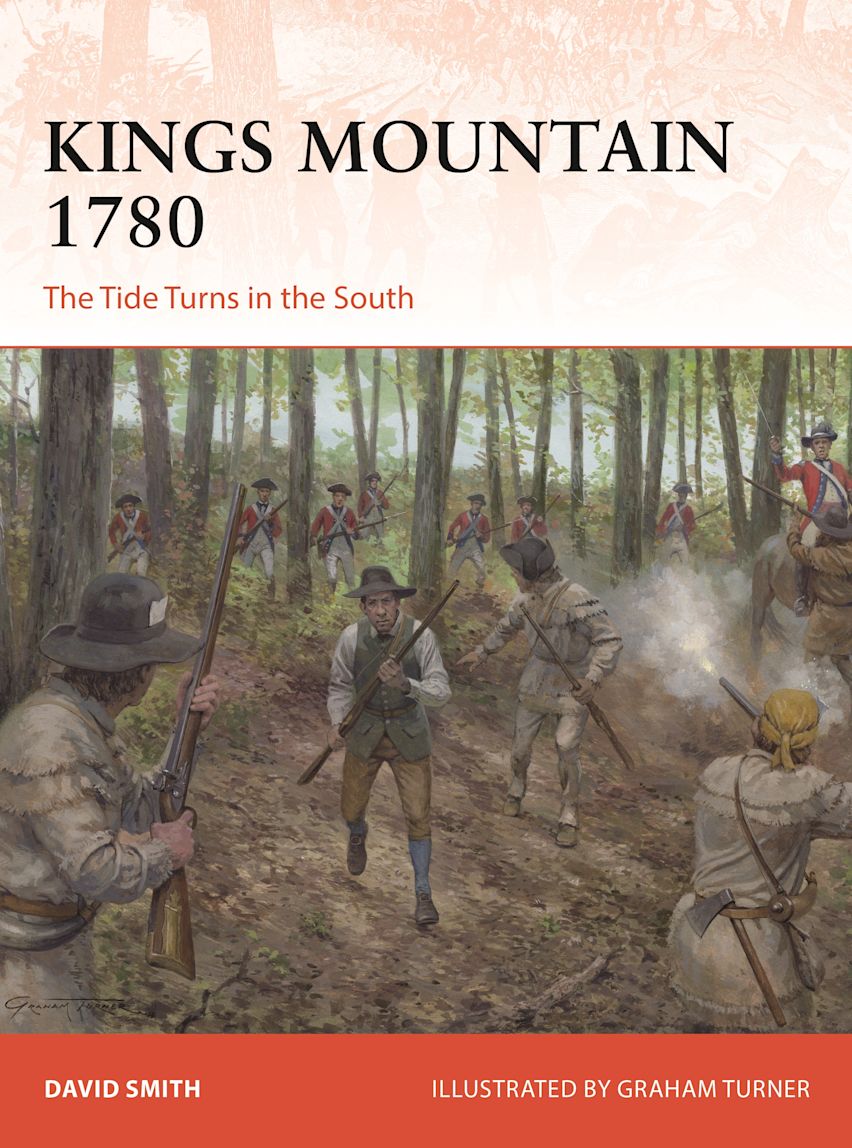
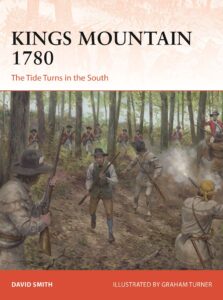
David Smith, Kings Mountain 1780 (Osprey, 2026)
In 1780, at the height of the American War of Independence, the British secured Charleston and the Carolinas coast, which just left the backcountry to establish control over. A force of locally recruited Loyalists could do that job, reasoned the British command, while a significant part of the main army could head north for the real fight. They were wrong. All they did was poke the Patriot bear in the form of thousands of militiamen. An over-confident Scottish officer, Patrick Ferguson, commanded the Loyalists, and they would meet their fate on an isolated hilltop at Kings Mountain, North Carolina, in October that year.
Smith provides brief biographies of the commanders on both sides before considering the forces they commanded. As with most irregular warfare, there was a distinctly ad-hoc feel to these backcountry militiamen, on both sides, with sometimes merely a nod to traditional military discipline. The overall British commander, Lord Cornwallis, notes Smith, opted to advance into North Carolina with Ferguson’s Loyalists on his flank. The Patriots only had to disrupt the British, and if they could defeat Ferguson then all the better for them. The campaign initially went Cornwallis’s way but not without setbacks. In August, the British won a major battle at Camden, but the see-saw of victories and defeats for the Loyalist militia continued. Smith follows the action to Mackay’s trading Post, where the Patriots were forced to retreat and Ferguson pursued. It was a miscalculation that would cost him his life.
Ferguson’s pursuit went well at first, despite his small command, but he underestimated the Patriots who were organising to deal with his incursion into the North Carolina backcountry. The hunter had become the hunted. Too late, Ferguson realised the danger, but he was determined to stand his ground if it came to a fight even as he retreated towards Cornwallis’s army. He arrived at a ridge known as Kings Mountain, threw up earthworks, and awaited the Patriot attack. The Patriots surrounded the ridge but began their assault before that was fully accomplished. At first, the intensifying battle seemed to be going the Loyalists’ way, but the Patriots squeezed the Loyalist position, which began to break down. Then came the fateful moment; Ferguson was shot out of his saddle, and the Loyalist resistance collapsed. The Patriots had won a stunning victory. Smith notes that this was a significant turning point, loosening the British grip in the South.
This is the book I wish I’d had when I visited Kings Mountain – Smith offers a brief description of the battlefield as an epilogue for future visitors. Smith surveys the principal actors at the tactical and strategic levels then follows them in a clear narrative along their routes to the battle. His account of the fighting is also lucid, clarifying what was a confusing action for all involved. Smith illuminates his story with quotes from men who fought, and he is helped by maps, artwork, illustrations, and modern photographs. Readers of the American Revolution already know how complex the fighting was in the backcountry; for others, Smith lays the groundwork for a better understanding at the broader level in this entertaining and informative read.
by RNS | Apr 30, 2026 | Beating Tsundoku
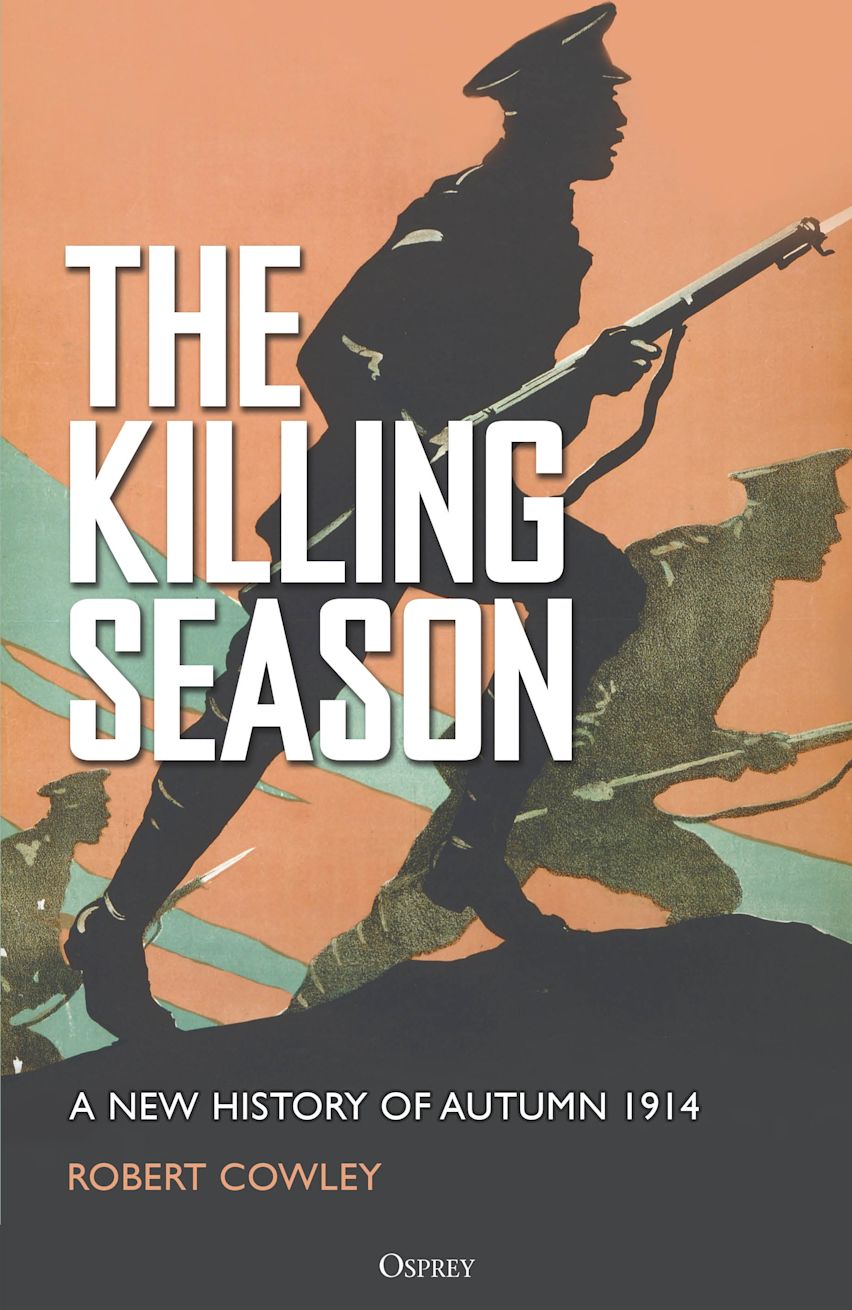
Robert Cowley, The Killing season (Osprey, 2026)
Ask a reasonably informed reader when the greatest carnage occurred during the Great War, and they will probably reply, the Somme or Passchendaele or some other late war meat grinder. In this riveting narrative history, Robert Cowley highlights the opening months of the war as the most blood-soaked. He slays other dragons too along the way, some of which might ruffle traditional feathers.
Much of Cowley’s narrative is familiar to even the most casual student of the war. He begins with the Schlieffen Plan, that massive wheeling invasion through Belgium into northern France, outflanking the French, and storming into Paris. But it did not go to plan: the Belgians proved stoic in their resistance, the British Expeditionary Force equally so, the French sacrificed again and again, and ultimately, the Germans were not up to the task. Cowley tracks all of that from the opening battles through the race to the sea as the Germans sought to anchor their attack on the channel ports, and he closes with the desperate battle to control the town of Ypres.
Cowley tells his story through multiple lenses at all levels of the battlefield. The operational decision-makers are all represented: Foch, French, and Falkenhayn etc. At the opposite end of the chain, the horror of WWI combat is on full display as men rush into battle to be mercilessly cut down. It is the middle-ranking officers, making battle-field decisions while displaying sometimes extraordinary courage, that provide the thread of experience from high command to the common soldier. Their losses were egregious, particularly for the Germans whose units could barely function without them, argues Cowley. Bravery and futility run through Cowley’s account, which is set in an unrelentingly hostile environment, both natural and manufactured.
Anyone approaching Cowley’s book in expectation of reading about an open battlefield and a ‘clean’ war will find themselves rapidly disillusioned. Many of the horrors that made the Great War unique were already present in late 1914, but it is the seemingly senseless slaughter this early in the war that Cowley brings out. The Killing Season is an exceptional and important study of the opening chapter of the Great War and essential reading for students of the war and military history enthusiasts alike.
by RNS | Apr 23, 2026 | Beating Tsundoku
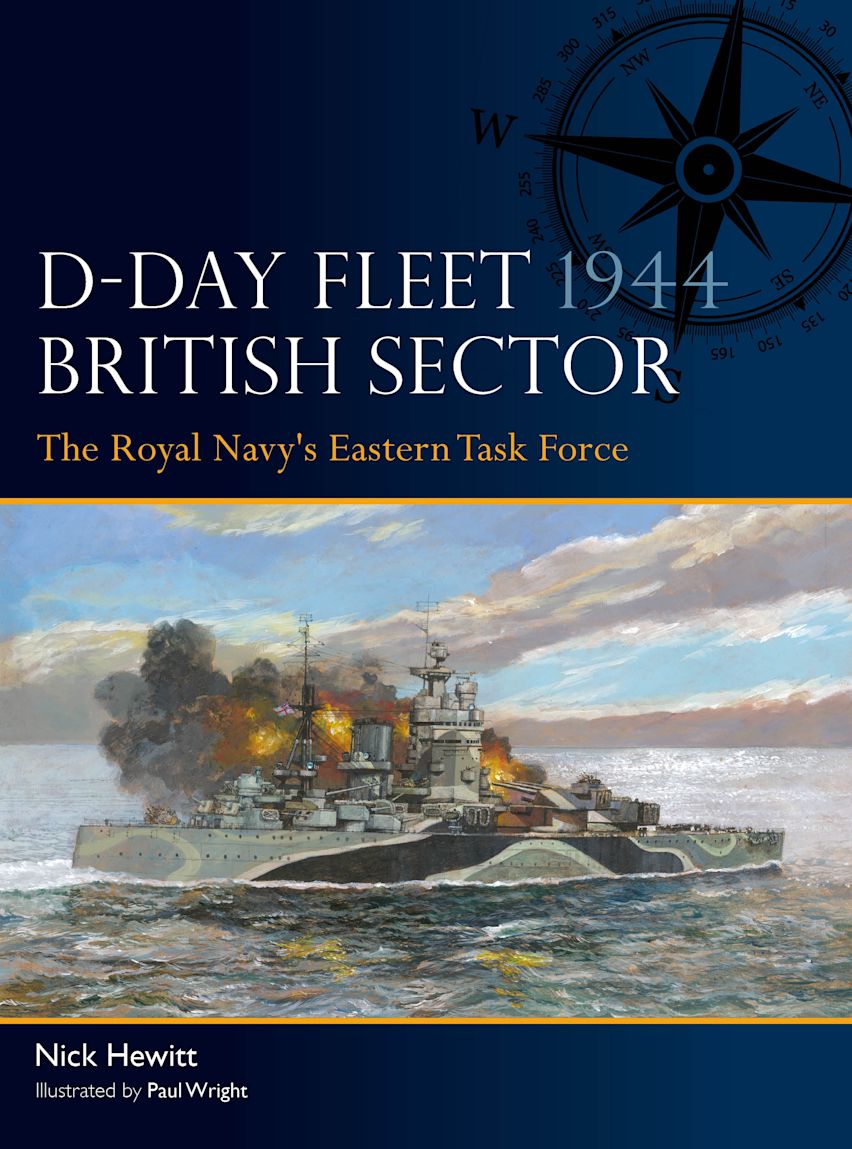
Nick Hewitt, D-Day Fleet 1944, British Sector (Osprey, 2026)
The Royal Navy created the Eastern Naval Task Force (ENTF) to carry the Anglo-Canadian invasion force to Normandy, but the idea came much earlier in the war. The Allies tested methods of amphibious landings in various places while planning was developed to land in France in June 1944. For D-Day, the ENTF had to clear mines and beaches, and the German naval and air power would have to neutered. In this latest volume in Osprey’s Fleet series, Nick Hewitt narrates that extraordinary story.
A massive range of vessels was needed for D-Day. Hewitt groups them into three categories – assault craft, warships for fire support, and logistical support vessels – all of which he describes in detail along with their respective functions on the day. As with everything else on D-Day, the scale of the naval operation as viewed through the number of ships was mammoth. That is echoed in Hewitt’s consideration of the technical aspects of the operation. These include the massive volume of firepower on hand, which included air support. Of particular note were the unique Mulberry harbours, which were essential for continuous logistical support once the invasion began. Hewitt turns to how the fleet operated, with the meticulous preparation required in all aspects of the D-Day operation, including intelligence planning and deception, and logistics and training. How it all came together on the day is Hewitt’s next stop. Everything did not go to plan, with weather and congestion problems, and the bombardment was ineffective. Nevertheless, the soldiers were landed, and the fleet then had to manage the massive logistical support that was needed for the drive inland. That included fending off air and naval attacks that lasted for weeks. Hewitt concludes with remarks on an ‘incredibly successful’ mission by the ENTF in the face of a determined enemy.
Nick Hewitt manages to cram a lot of information into a slim book; after all, the size and scale of the D-Day operation is almost incomprehensible and capturing that in a survey is commendable. This is not, however, just a catalogue of numbers; Hewitt presents the build-up of the ENTF in a logical way, allowing the reader to take it all in while D-Day approaches. Hewitt’s well-handled combat narrative section brings out lesser known facts about the fighting the fleet had to do, not just the logistical support. Overall, Hewitt has written an interesting and informative survey of a critical component of the Allied D-Day operation that will appeal to naval and military history readers.
by RNS | Apr 18, 2026 | Beating Tsundoku
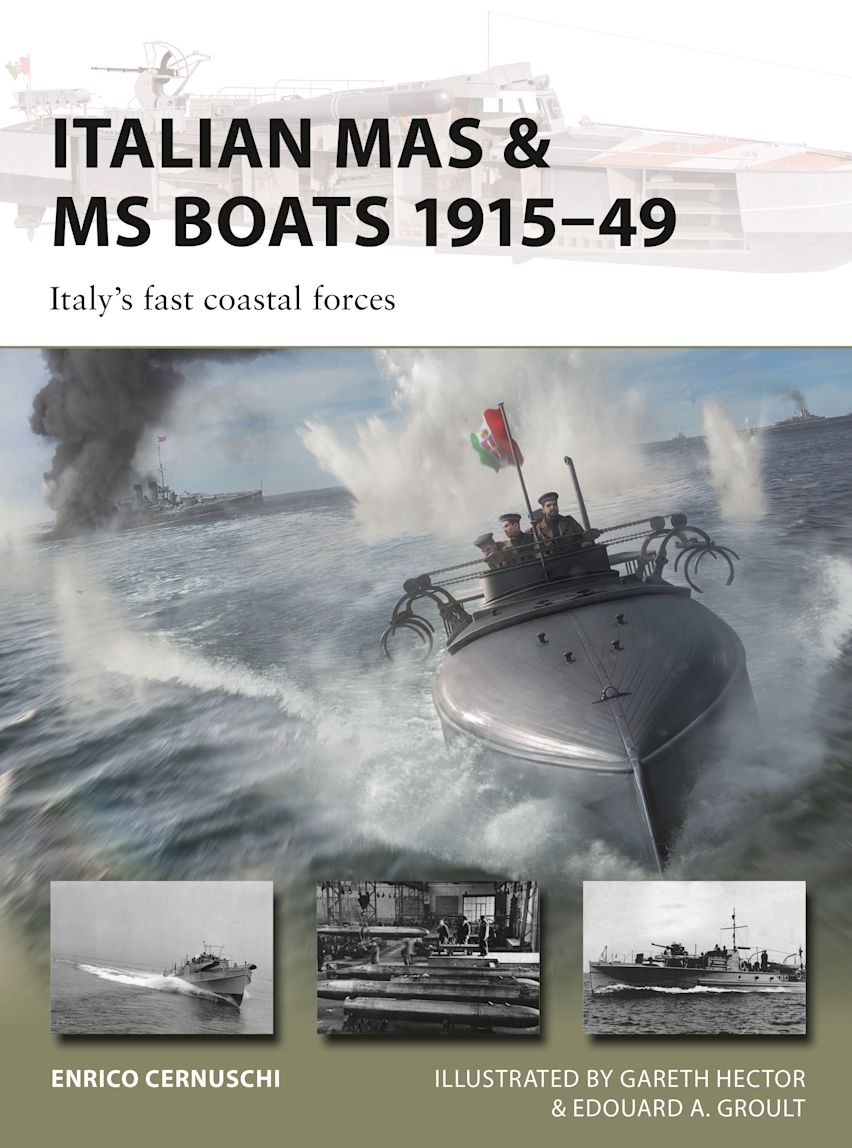
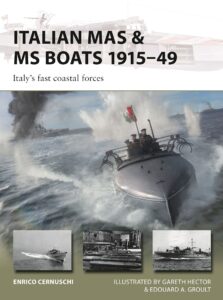
Enrico Cernuschi, Italian MAS & MS Boats 1915-49 (Osprey, 2026)
Italy, that boot-shaped peninsula dominating the central Mediterranean, has a long coastline to defend. In the early 20th Century, Italy was also flanked by potential enemies with powerful fleets. Therefore, Italy had to project seapower as well as defend its coasts. That required a wide variety of naval vessels for the Regia Marina (RM). In this book, Enrico Cernuschi surveys the development of Italy’s fast motor torpedo boats (MTB) and their actions in war and peace.
Before the Great War, begins Cernuschi, Italy was quick to grasp the advantages of small, fast attack boats. Developing them to the required specifications proved the hard part. But, by 1917, the RM had found what they needed: a versatile, multi-function boat, the MAS, that could take the war to the Austro-Hungarian and Ottoman enemies in several successful actions. Between the wars, development continued with the emphasis on finding a MTB that could cope on the high seas rather than just an Adriatic vessel, and one that could carry mines and torpedoes. Building the right engine seems to have been the biggest problem; that, and a lack of belief in these boats amongst the Italian RM high command. As World War II approached, however, the necessity was not for quality but quantity to suit Italy’s strategic situation.
That brings Cernuschi to the operational history of the boats in WWII. In the early war, they took on the French, prowled Malta’s Grand Harbour, hoping to spring night ambushes, protected Sicily, and operated amongst the Greek islands. Political rivalries and a lack of aerial reconnaissance diminished their capacity, however, but they still had some successes against the Royal Navy. In the war’s middle period, the MAS pestered British convoys to Malta, but their biggest victory was sinking of HMS Manchester in August 1942. The tide turned against the Italians in 1943, though they were still involved in many combat actions. From October 1943 to May 1945, the MAS boats carried out 307 missions for the Allies. After the war, the Italian boats worked against sea traffic to the communists in Yugoslavia. The last hurrah of the MAS boats came with a police action in 1965.
This is a slim volume in Osprey’s New Vanguard series, but Cernuschi squeezes in a lot of useful information. He weaves together technical details, tracing them through the development of the Italian MTBs, and combat narratives, following the MTBs on a range of different operations. They had a busy war on both sides! Cernuschi is assisted by Osprey’s usual excellent photographs and artwork to create an introductory book that is well-worth reading for naval and military history readers.

by RNS | Apr 2, 2026 | Beating Tsundoku
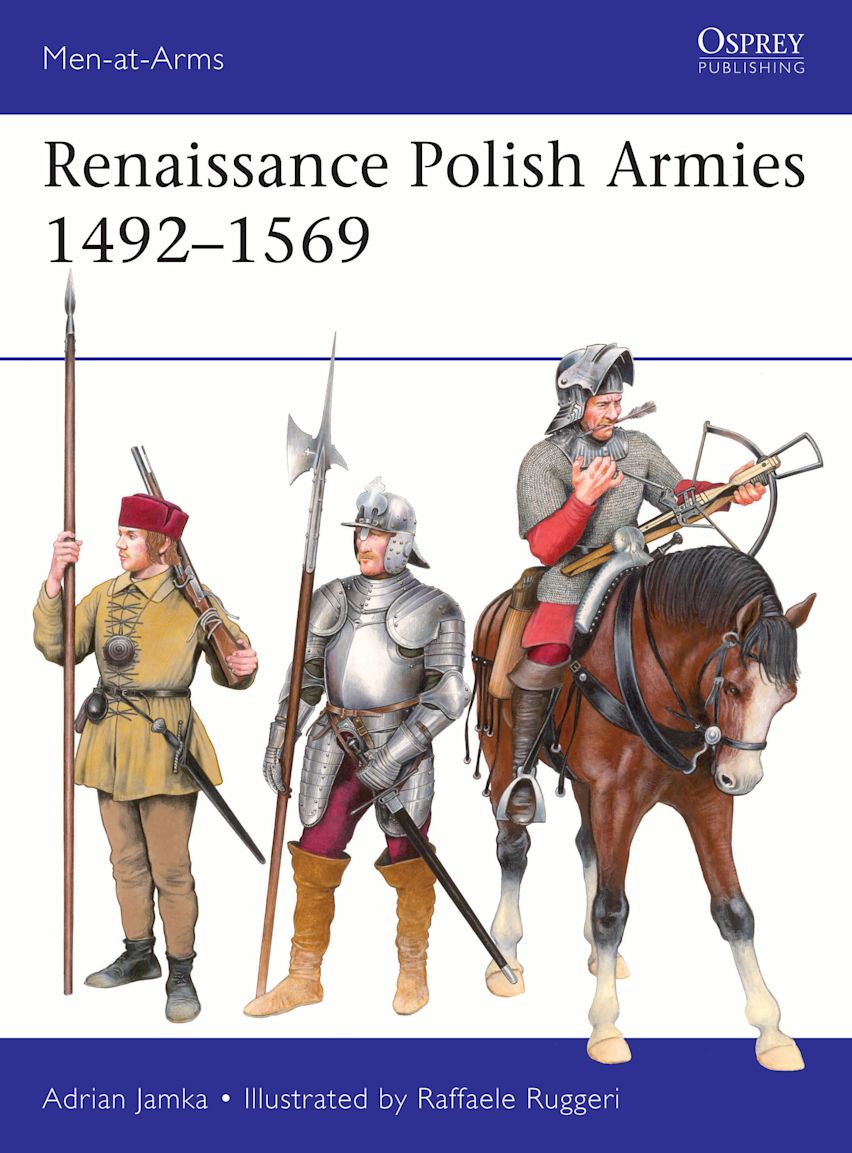
Adrian Jamka, Renaissance Polish Armies 1492-1569 (Osprey, 2026)
Sixteenth Century Poland was a kingdom beset by external problems. The Tatars raided for slaves, the Muscovites wanted land, and the Teutonic Order sided with them. The Turks were mostly, but not always, a dark cloud on the horizon, and the Swedes and Danes pitched in with the Muscovites in 1558 to fight over Livonia. In short, the Polish kings were kept busy between fighting and diplomacy. Adrian Jamka reviews the Polish military and how it went about its response to all those threats.
Jamka begins with how the Polish army was structured and recruited. He includes local and kingdom-wide musters and the hiring of mercenaries. Jamka describes the organisation of the army, beginning with the cavalry, appropriately for a cavalry based army, then the infantry, and its logistics for campaigning. In the early period, kings commanded armies, but that gradually changed to appointed hetmani, who held combat command but also supervised the administrative staff. The size of the army the king had to put in the field depended on the royal treasury’s wealth. That meant that peacetime forces were small, which then had to be increased rapidly for war. Specialisation was also a factor for which troops were recruited. Armour was still a common sight on 16th Century Polish battlefields, along with helmets and shields. Jamka also describes the most common ranged and melee weapons and the various units that used them. For the cavalry, that meant lancers, light cavalry, hussars, and Cossacks. The Polish fielded heavily armoured infantry too, and the soon to be obsolete pavisers, and the crossbow-armed shooters, who gradually adopted arquebusiers and also carried melee weapons. Jamka closes with a survey of the army on campaign and in battle. Of note here was the deployment of tabors; chained wagons used as field defences.
This edition of Osprey’s Men-at-Arms series provides a useful survey of the Polish army as it transitioned into the early modern era. Jamka highlights the main trends and peculiarities of an army that struggled with logistical difficulties, but also one that proved a potent force in battle. Jamka does not adequately cover the artillery, but that is a mere quibble for an informative text that will appeal to hobbyists and those interested in this fascinating era of warfare on the cusp of the military revolution.