by RNS | Mar 26, 2026 | Beating Tsundoku
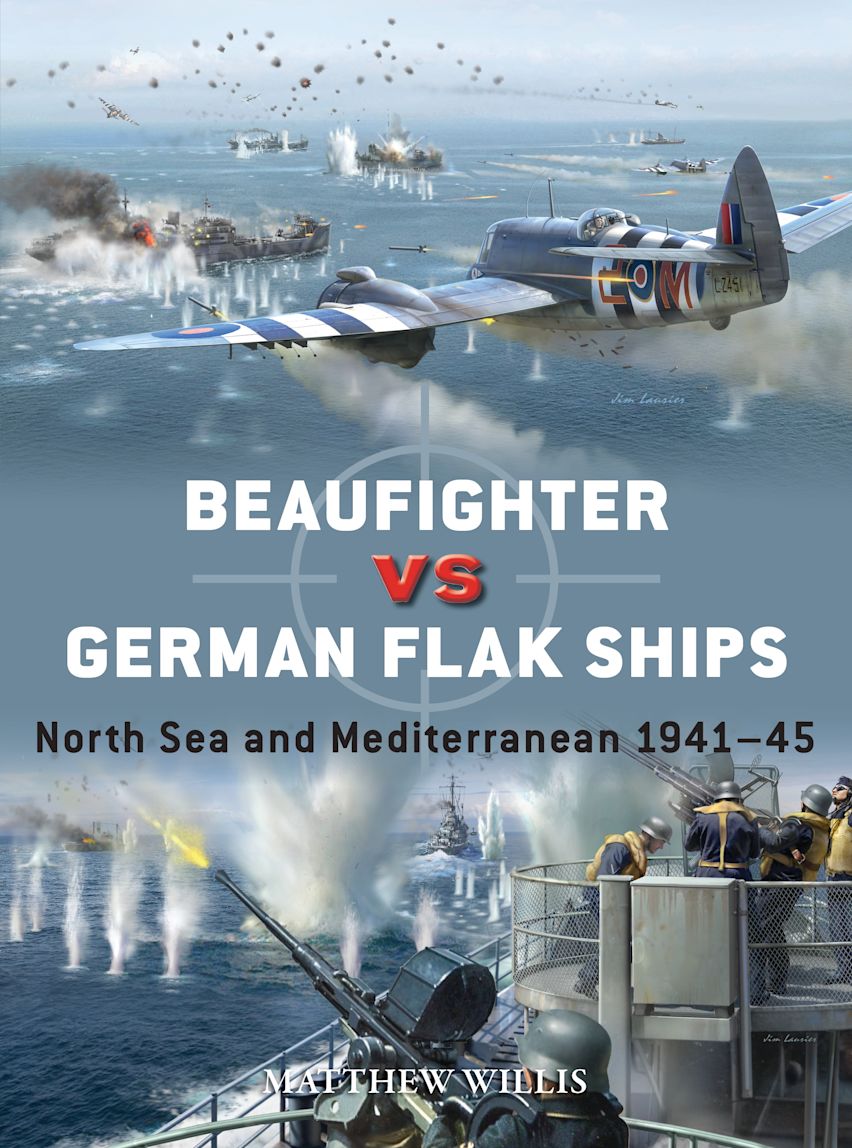
Matthew Willis, Beaufighter vs German Flak Ships (Osprey, 2026)
The ability to control logistics is the unseen power in warfare. In a massive war such as World War II, that usually meant that who dominated the sea lanes was likely to win. Yet, as Matthew Willis points out in this edition of Osprey’s Duel series, the RAF began the war without a modern anti-shipping aircraft. By 1943, that had changed with the adaptation of the Bristol Beaufighter to carry torpedoes then rockets. To counter them, Germany developed specialist flak ships, which in turn led to tactics to take them out to open the lanes for strike aircraft to do their job.
Willis begins his survey by describing the development of the Bristol Beaufighter. After some teething problems and modifications, the powerful warplane became operational in September 1940, initially as part of the blitz then as a specialist for maritime operations. In 1942, the external torpedo carriage was added, and with a few more tweaks, it became an anti-shipping aircraft. The Beaufighter was initially equipped with four fuselage-mounted 20mm cannons and carried bombs then rockets. Opposing the Beaufighters, were the German flak ships, which were not officially designated Kriegsmarine vessels, but anything that was primarily an anti-aircraft ship was designated as such by the RAF. These came in all shapes and sizes from armed trawlers to 7,000 ton auxiliary vessels loaded with anti-aircraft guns, many of them on flak towers.
As you might expect from a Duel book, the author digs into the weapon specifications in some detail, accompanied by excellent coloured illustrations, before moving onto a narrative of operations, beginning with the strategic situation. In essence, this was Germany’s increasing need to import supplies by sea, and the Allied effort to stop them. Willis’s overview encompasses an area from the far North Sea through the Baltics and into the Mediterranean. Unusually, for a book in this series, Willis surveys the combatants on both sides. He describes the Coastal Command crews as a ‘breed apart’, which they had to be to contend with the highly trained Flak crews. Willis also describes combat, which must have been a hairy experience for both sides. He concludes with his analysis of this particular duel. The British were on the receiving end before 1943, he argues, but with adoption of flak suppression tactics, the tide soon turned against the Germans. Willis concludes that the Beaufighters did have a material effect on Germany’s defeat.
The best volumes in Osprey’s Duel series, for me, are those in which you cannot decide who you would rather be. In this case, you have Beaufighters bearing down, ready to unleash devastating cannon and rocket fire on ships preparing to send out a storm of bullets and flak. Willis captures the moment well, measuring the machines and men against each other and the development of tactics and technology that led them there. The supporting graphic illustrations and dynamic combat photographs add to the flavour of what is an interesting and informative read. World War II and naval history readers will enjoy this.
by RNS | Mar 21, 2026 | Beating Tsundoku
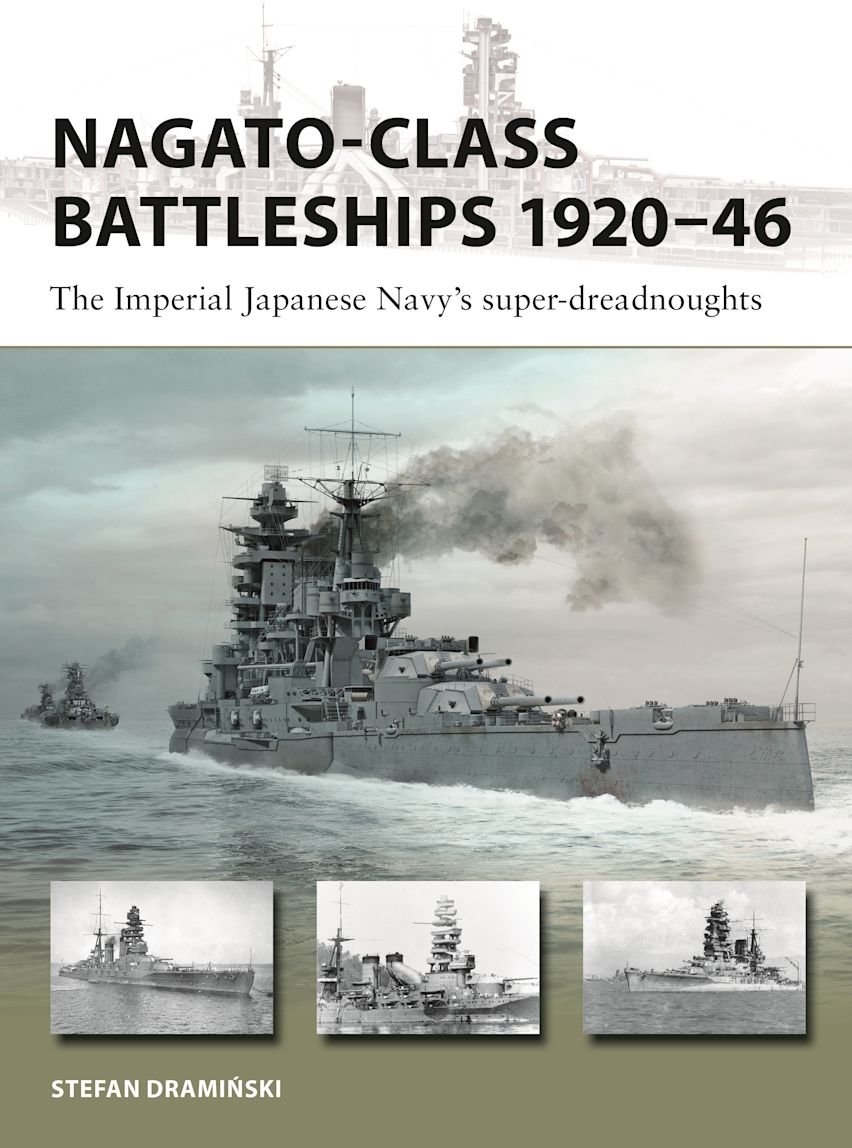
Stefan Draminski, Nagato-Class Battleships 1920-46 (Osprey, 2026)
By the outbreak of World War I, Japan was already a recognised sea power. To maintain that status, the Japanese decided to build new battleships, the Nagato class, but costs and the 1922 Washington Treaty limited their ambitions to just two of those powerful vessels, Nagato and Mutso. Stefan Draminski describes the development of these redoubtable ships and tracks their service in the Imperial Japanese Navy.
Draminski notes that the two Nagato-class battleships were commissioned during World War I but were not ready until just before the Washington conference, when they were the fastest battleships in any navy. He describes their design, armament, armour, and engine power. By any measure, they were formidable battleships in that era. Of course, both ships were upgraded, including the addition of aviation facilities, and that continued with the demands of the Second World War.
Having described the ships, Draminski narrates their service history. They led a relatively quiet existence until 1937, when Nagato supported operations in the Sino-Japanese War. Then came World War II. Admiral Yamamoto was aboard Nagato when he gave the order to launch the Pearl Harbor attack. He then transferred his flag to an even bigger battleship, Yamato in February 1942. Nagato was in support for the disaster at Midway. Training and transport duties followed before Mutsu exploded at anchor in 1943, killing over 1,000 crewmen. Nagato sailed on, conducting manoeuvres but not taking part in combat until 1944 when she came under US air attack. She fought at Philippine Sea and Leyte Gulf in what was becoming a losing cause. Nagato ended her war as an anti-aircraft battery protecting the homeland. After Japan’s surrender, she met her ignominious end as a target for US nuclear weapons tests in 1949. Draminski concludes that the Nagato and Mutsu were the pride of the IJN in the interwar years but became comparatively obsolete in World War II.
This is a slim volume in Osprey’s New Vanguard series, and it is of niche interest. Nevertheless, Draminski sticks to his task. He provides all the technical information a novice needs to know and outlines clearly the development and service of both ships in the class. That information along with the graphic art and excellent supporting photographs will delight model-makers. This is an ideal book for readers interested in the Imperial Japanese Navy and the development of battleships.

by RNS | Mar 2, 2026 | Beating Tsundoku
Peter Williams, Kokoda 1942-43 (Osprey, 2026)
By July 1942, the Japanese had decided to capture Port Moresby in Papua to bottle up any strategic counter-offensive from Australia. To do that, they had to cross the Owen Stanley mountains by means of the Kokoda trail. The recently strengthened Australian garrison at Port Moresby and their US allies were determined to stop them. In this book, in Osprey’s Campaign series, Peter Williams narrates the story of desperate combat in often horrific conditions.
Williams provides brief military biographies on the main commanders involved in the campaign before moving on to the forces involved. He notes that the Japanese fielded experienced soldiers riding the wave of recent victories. One of his points of emphasis, supported by a photograph, is the Japanese field artillery that could be disassembled, carried up the trail, then reassembled. The Allies had nothing like it. But the IJA was let down by frugal logistics, though their soldiers were provided with sufficient medical support. They also had significant air power, at least initially. Australian infantry bore the brunt of the fighting along the Kokoda trail, though the first contact with the Japanese came from a local Papuan infantry battalion. The Australian deficiency in artillery was balanced by superior infantry weaponry and better tanks. Williams highlights the use of ten-thousand Papuan carriers to conduct logistical support to the front line. However, Australian lacked proper medical support. The Japanese were well-prepared for the task ahead, argues Williams, through solid intelligence. Crossing the Kokoda trail was a vital part of the broader operation to seize Milne Bay. The Australians knew less about the terrain than the Japanese even though it was their territory, and they had only a relatively small garrison on hand to defend the trail.
Williams now moves into his detailed narrative, beginning with the Japanese advance. The Australians and Papuans played hit and run, but they could do little to prevent the Japanese encroachment on Kokoda village and airstrip. The Australians continued to give ground while reinforcements prepared to arrive on both sides. Japanese tactical manoeuvring often failed to dislodge the dug-in Australians, though the defenders chose to move into more suitable positions. Williams records the various mishaps that were inevitable in dense jungle warfare. Then the Japanese received news that the wider Port Moresby campaign had been halted. Here Williams digresses to cover the action at Milne Bay. Japanese pressure back on the trail continued, pushing the Australians back without breaking them, until they reached within striking distance of Port Moresby. Then the tide turned and the Australians began a relentless counter-attack. This took a while to organise, and the Japanese dug in along ridges as they fell back to impede Australian progress. Numbers and resources soon told on the Allied side, and a US led attack on Buna outflanked the Japanese on the Kokoda trail. All of this took considerable time and effort, of course, and the Japanese defence proved redoubtable. Allied morale fell. Reorganisation followed, then tanks arrived, and after intensive fighting, the Japanese positions fell one by one with some Japanese defenders making their escape via a breakout. In his summation, Williams emphasises the learning curve for the Allies for continuing operations. The Papuan campaign was the end of Japanese Pacific expansion and the launching pad for future Allied campaigns.
Kokoda is an excellent addition to Osprey’s Campaign series. In the context of the war, this was a small operation, but Williams captures some of the intensity and complications that make Kokoda unique. The fighting along the Kokoda trail is not easy to integrate into the wider campaign for Papua, but Williams manages that well and provides a useful platform for those who want to dig deeper. He is ably supported by excellent maps and flavourful graphic art. Readers interested in Australia’s war effort in the Pacific will appreciate this survey.