Nick Hewitt, D-Day Fleet 1944, British Sector (Osprey, 2026)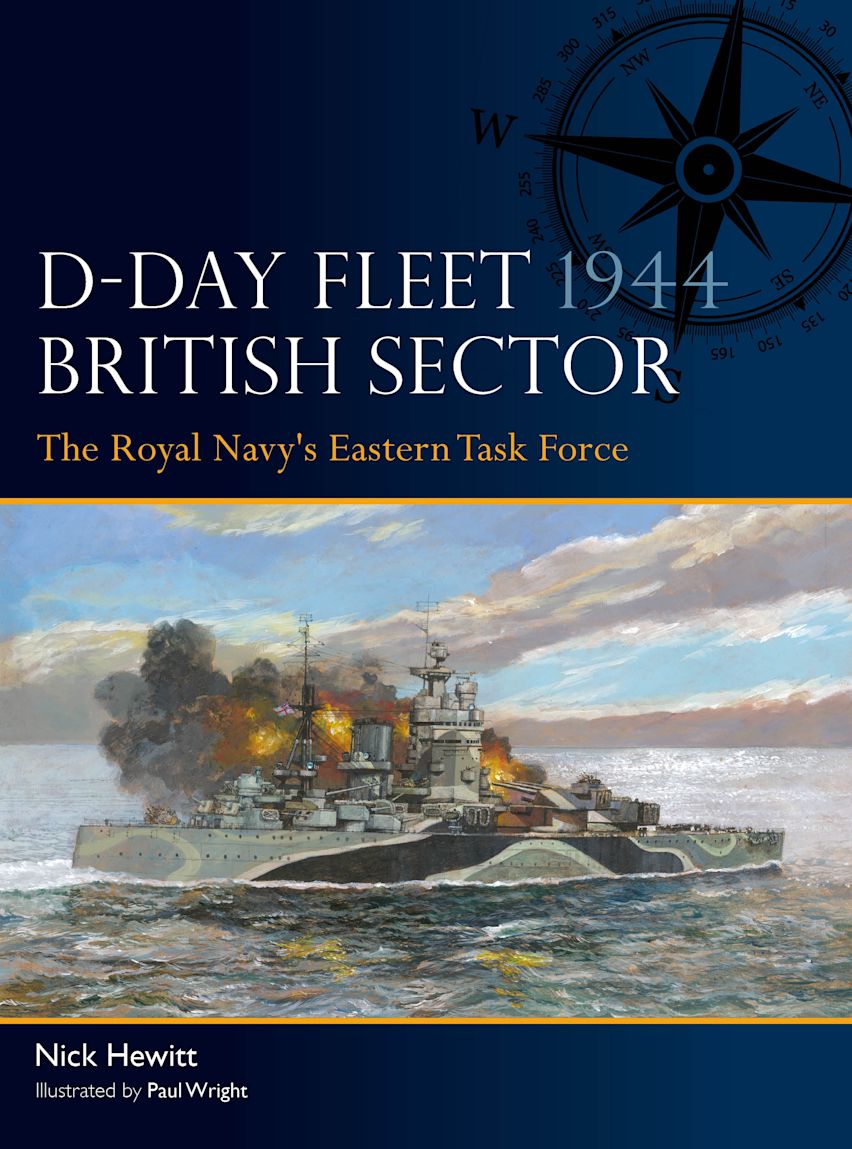
The Royal Navy created the Eastern Naval Task Force (ENTF) to carry the Anglo-Canadian invasion force to Normandy, but the idea came much earlier in the war. The Allies tested methods of amphibious landings in various places while planning was developed to land in France in June 1944. For D-Day, the ENTF had to clear mines and beaches, and the German naval and air power would have to neutered. In this latest volume in Osprey’s Fleet series, Nick Hewitt narrates that extraordinary story.
A massive range of vessels was needed for D-Day. Hewitt groups them into three categories – assault craft, warships for fire support, and logistical support vessels – all of which he describes in detail along with their respective functions on the day. As with everything else on D-Day, the scale of the naval operation as viewed through the number of ships was mammoth. That is echoed in Hewitt’s consideration of the technical aspects of the operation. These include the massive volume of firepower on hand, which included air support. Of particular note were the unique Mulberry harbours, which were essential for continuous logistical support once the invasion began. Hewitt turns to how the fleet operated, with the meticulous preparation required in all aspects of the D-Day operation, including intelligence planning and deception, and logistics and training. How it all came together on the day is Hewitt’s next stop. Everything did not go to plan, with weather and congestion problems, and the bombardment was ineffective. Nevertheless, the soldiers were landed, and the fleet then had to manage the massive logistical support that was needed for the drive inland. That included fending off air and naval attacks that lasted for weeks. Hewitt concludes with remarks on an ‘incredibly successful’ mission by the ENTF in the face of a determined enemy.
Nick Hewitt manages to cram a lot of information into a slim book; after all, the size and scale of the D-Day operation is almost incomprehensible and capturing that in a survey is commendable. This is not, however, just a catalogue of numbers; Hewitt presents the build-up of the ENTF in a logical way, allowing the reader to take it all in while D-Day approaches. Hewitt’s well-handled combat narrative section brings out lesser known facts about the fighting the fleet had to do, not just the logistical support. Overall, Hewitt has written an interesting and informative survey of a critical component of the Allied D-Day operation that will appeal to naval and military history readers.