Stefan Draminski, Nagato-Class Battleships 1920-46 (Osprey, 2026)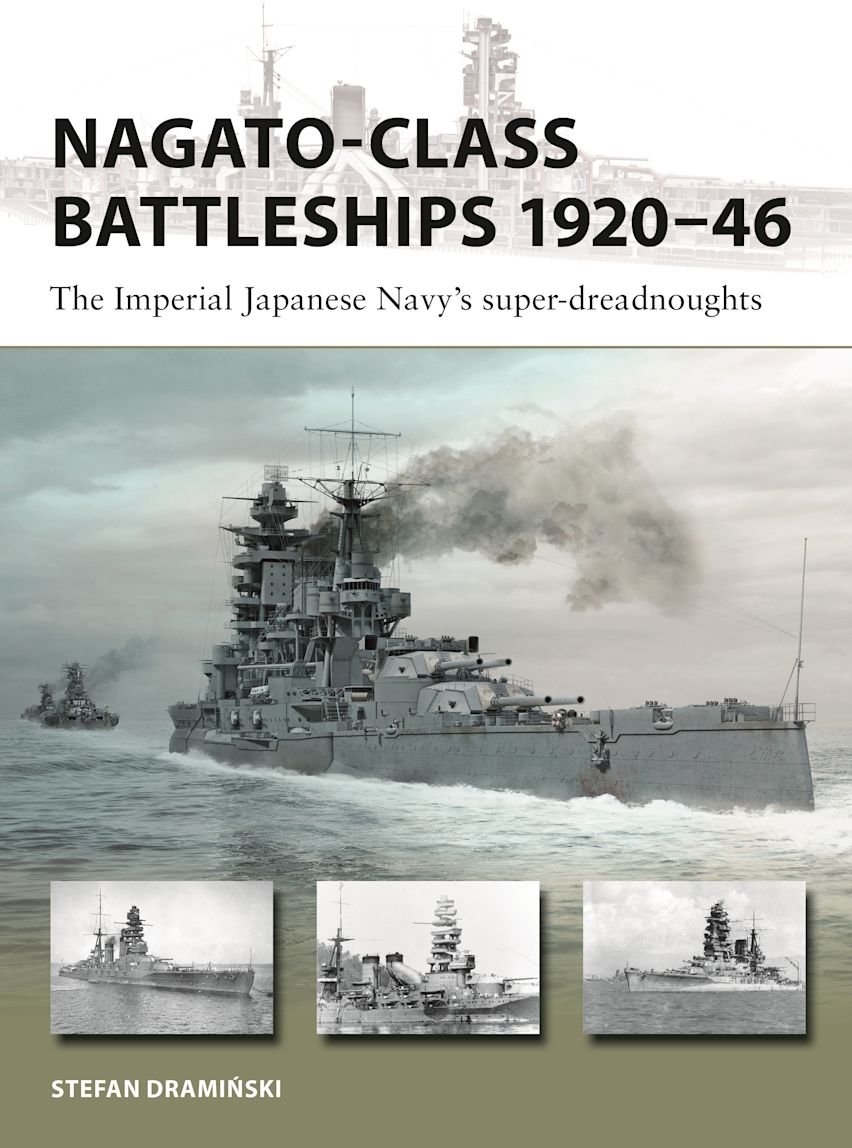
By the outbreak of World War I, Japan was already a recognised sea power. To maintain that status, the Japanese decided to build new battleships, the Nagato class, but costs and the 1922 Washington Treaty limited their ambitions to just two of those powerful vessels, Nagato and Mutso. Stefan Draminski describes the development of these redoubtable ships and tracks their service in the Imperial Japanese Navy.
Draminski notes that the two Nagato-class battleships were commissioned during World War I but were not ready until just before the Washington conference, when they were the fastest battleships in any navy. He describes their design, armament, armour, and engine power. By any measure, they were formidable battleships in that era. Of course, both ships were upgraded, including the addition of aviation facilities, and that continued with the demands of the Second World War.
Having described the ships, Draminski narrates their service history. They led a relatively quiet existence until 1937, when Nagato supported operations in the Sino-Japanese War. Then came World War II. Admiral Yamamoto was aboard Nagato when he gave the order to launch the Pearl Harbor attack. He then transferred his flag to an even bigger battleship, Yamato in February 1942. Nagato was in support for the disaster at Midway. Training and transport duties followed before Mutsu exploded at anchor in 1943, killing over 1,000 crewmen. Nagato sailed on, conducting manoeuvres but not taking part in combat until 1944 when she came under US air attack. She fought at Philippine Sea and Leyte Gulf in what was becoming a losing cause. Nagato ended her war as an anti-aircraft battery protecting the homeland. After Japan’s surrender, she met her ignominious end as a target for US nuclear weapons tests in 1949. Draminski concludes that the Nagato and Mutsu were the pride of the IJN in the interwar years but became comparatively obsolete in World War II.
This is a slim volume in Osprey’s New Vanguard series, and it is of niche interest. Nevertheless, Draminski sticks to his task. He provides all the technical information a novice needs to know and outlines clearly the development and service of both ships in the class. That information along with the graphic art and excellent supporting photographs will delight model-makers. This is an ideal book for readers interested in the Imperial Japanese Navy and the development of battleships.