Angus Konstam, Second Sirte 1942 (Osprey, 2025)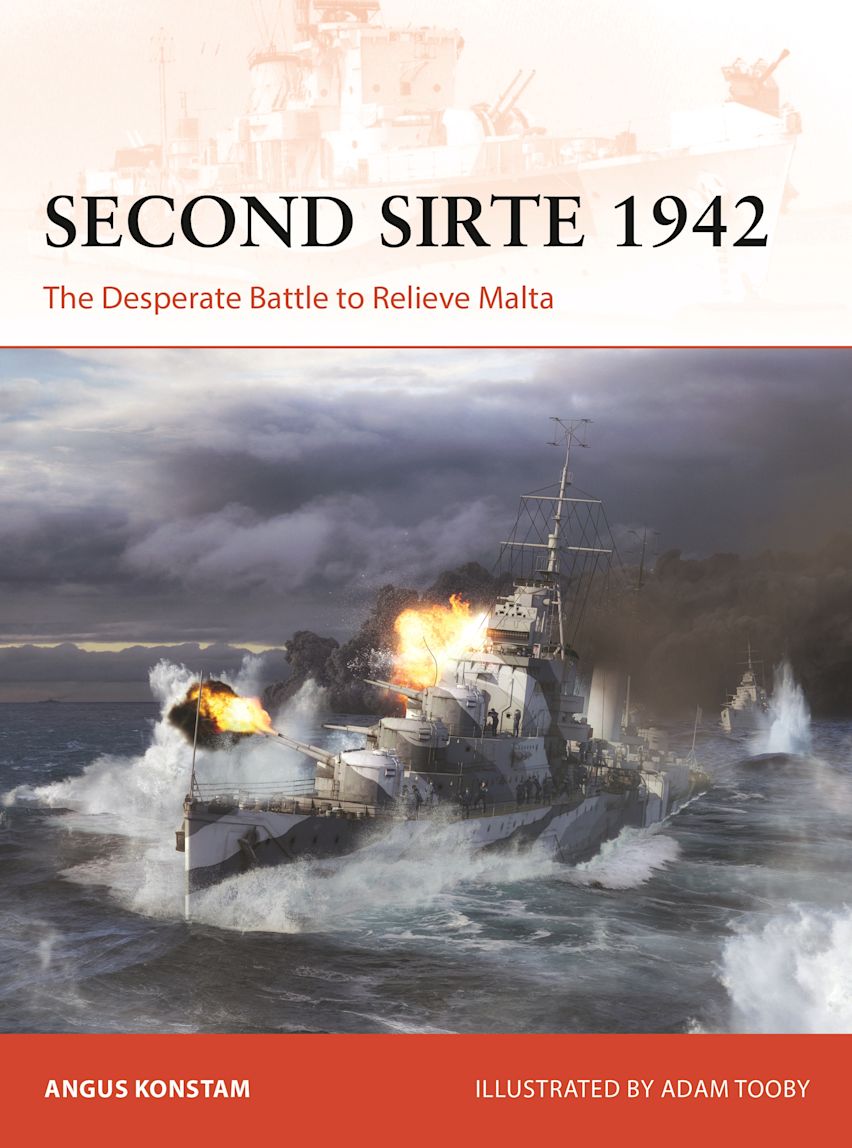
The Gulf of Sirte was the north-African terminus for Axis supplies from Italy. The British had to interrupt that supply line, but to do that effectively, they had to protect their bastion of Malta, which they also had to supply. Thus, two supply lines crossed, and whoever controlled them would win the war in the Mediterranean. In his latest book in the Osprey Campaign series, Angus Konstam argues that the British problem was greater because the Axis controlled the skies and operated from home bases. In December 1941, a British convoy got through to Malta, just. In March 1942, they tried again despite being outnumbered and outgunned.
Konstam sets off the Battle of Second Sirte against the backdrop of the continuing struggle for control in the Mediterranean. That had favoured Britian, especially after the victory over the Italians at Matapan in March 1941. Then came the German invasion of Greece and the Allied loss of Crete with significant losses to the Royal Navy. The pendulum had swung, with the German luftwaffe in particular causing the British headaches. The Italian fleet was also still powerful, despite their losses in the raid on Taranto, but the RN held the advantage in radar, deterring the Italian fleet from nighttime engagements. Still, getting convoys through to Malta was imperative however risky that would prove to be, especially during the day.
Admiral Sir Andrew Cunningham commanded the Mediterranean fleet, with Rear Admiral Sir Philip Vian his able subordinate. The Italian Regia Marina was commanded by Admiral Angelo Iachino assisted by Ammiriglio di Divisione Angelo Perona, but both laboured under restrictive orders from their superiors in Rome. Konstam discusses the disparity in the respective fleets, noting that the RN was deficient in carriers, battleships, and heavy cruisers, and what they had was not all that great. But the RN had radar, effective gunnery, and professionalism, whereas the Regia Marina had the resources but not the wherewithal on how to use them effectively
Konstam moves onto the action after describing the respective battle plans, which amounted to the British moving a convoy over 900 miles, and the Italians, with German luftwaffe and U-boat assistance, trying to stop them. The convoy sailed on Friday, 20 March 1942, but did not see serious action before Sunday morning. Then the air attacks and the Italian fleet arrived to which the RN countered with a wall of smokescreen. The fleets exchanged gunfire, broke off, manoeuvred, then engaged again in a sprawling melee fought at times in near gale-force conditions. In the end, the Italian fleet turned for home as night fell. Despite constant air attacks, most of the convoy made it to Malta. However, they were still not safe from the luftwaffe, which sunk or damaged all of the ships.
The story of the Battle of Second Sirte is a confusing one, but Konstam narrates it well, and along with some excellent maps, brings clarity to the combat. Konstam not only coordinates the action but brings out the reasons why the battle transpired as it did, and the reader cannot help but admire the daring and resolve of the outgunned RN ships and their crews. It would have been interesting to know what the latter thought of it all, but the Campaign series format allows for not much more than an operational level overview. Konstam provides a useful further reading list, however, for those wanting to read more. Overall, Second Sirte is a worthwhile addition to the Campaign series, and the prolific Konstam is always worth reading.