The Middlemen
Adrian Jamka, Renaissance Polish Armies 1492-1569 (Osprey, 2026)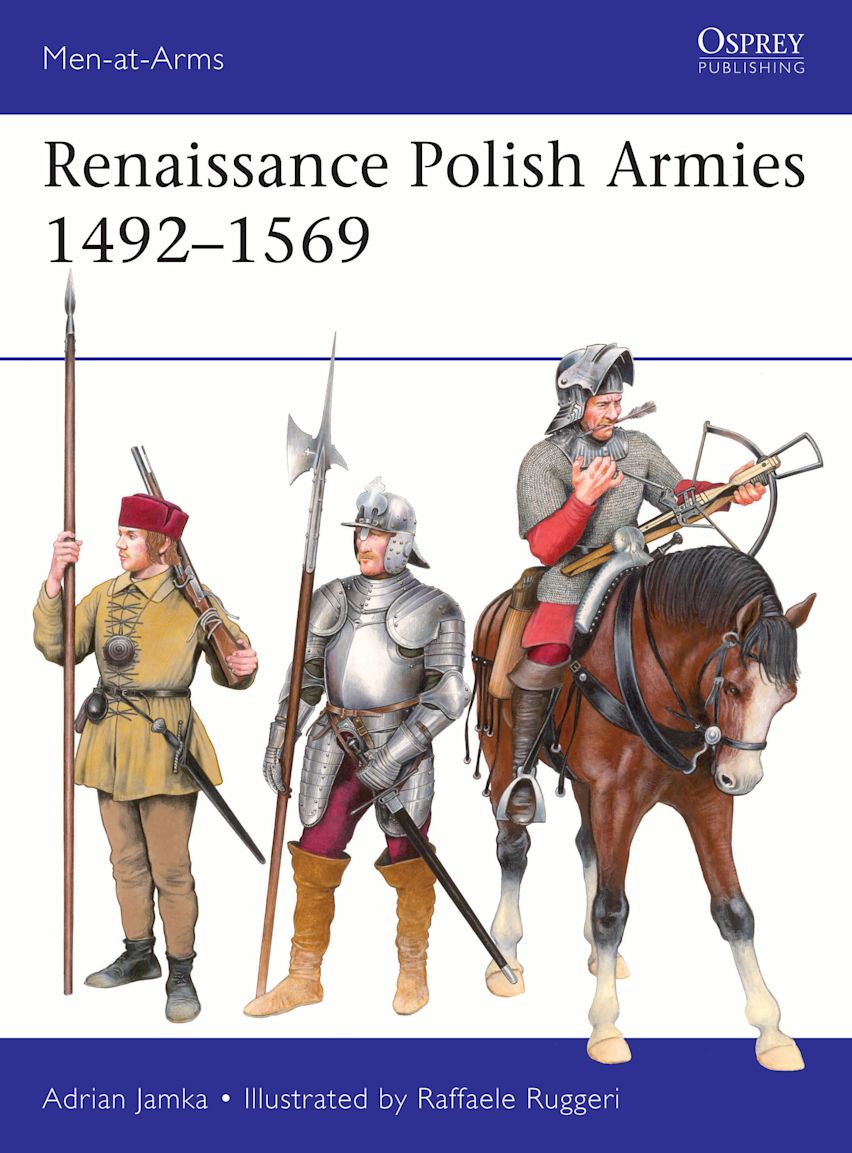
Sixteenth Century Poland was a kingdom beset by external problems. The Tatars raided for slaves, the Muscovites wanted land, and the Teutonic Order sided with them. The Turks were mostly, but not always, a dark cloud on the horizon, and the Swedes and Danes pitched in with the Muscovites in 1558 to fight over Livonia. In short, the Polish kings were kept busy between fighting and diplomacy. Adrian Jamka reviews the Polish military and how it went about its response to all those threats.
Jamka begins with how the Polish army was structured and recruited. He includes local and kingdom-wide musters and the hiring of mercenaries. Jamka describes the organisation of the army, beginning with the cavalry, appropriately for a cavalry based army, then the infantry, and its logistics for campaigning. In the early period, kings commanded armies, but that gradually changed to appointed hetmani, who held combat command but also supervised the administrative staff. The size of the army the king had to put in the field depended on the royal treasury’s wealth. That meant that peacetime forces were small, which then had to be increased rapidly for war. Specialisation was also a factor for which troops were recruited. Armour was still a common sight on 16th Century Polish battlefields, along with helmets and shields. Jamka also describes the most common ranged and melee weapons and the various units that used them. For the cavalry, that meant lancers, light cavalry, hussars, and Cossacks. The Polish fielded heavily armoured infantry too, and the soon to be obsolete pavisers, and the crossbow-armed shooters, who gradually adopted arquebusiers and also carried melee weapons. Jamka closes with a survey of the army on campaign and in battle. Of note here was the deployment of tabors; chained wagons used as field defences.
This edition of Osprey’s Men-at-Arms series provides a useful survey of the Polish army as it transitioned into the early modern era. Jamka highlights the main trends and peculiarities of an army that struggled with logistical difficulties, but also one that proved a potent force in battle. Jamka does not adequately cover the artillery, but that is a mere quibble for an informative text that will appeal to hobbyists and those interested in this fascinating era of warfare on the cusp of the military revolution.