by RNS | Oct 24, 2025 | Beating Tsundoku
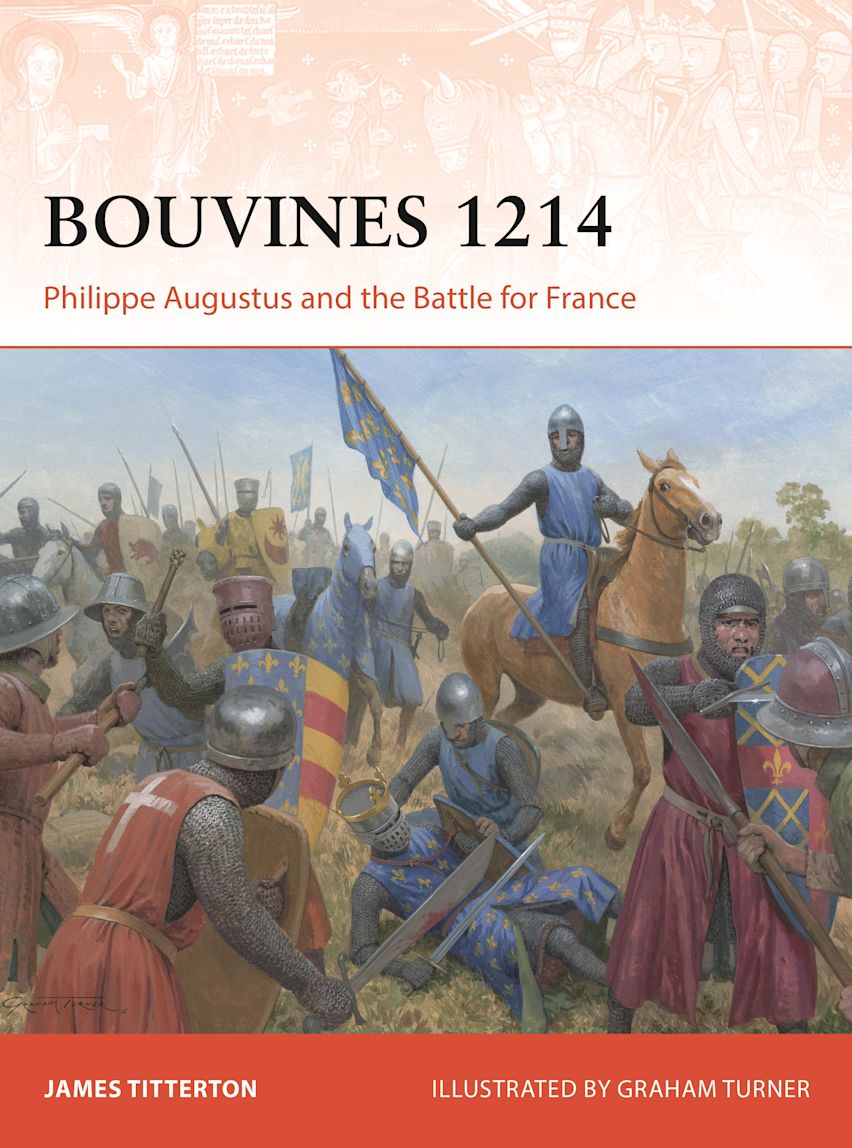
James Titterton, Bouvines 1214 (Osprey, 2025)
You might think that the purpose of a military campaign is to bring the enemy to battle and defeat him. That was not the case in 13th Century Europe: campaigns were designed to coerce the enemy preferably without risking everything on a single engagement. But sometimes battles happen as when French king Philippe II Augustus turned to fight a coalition army at Bouvines, reshaping the destiny of three European dynasties and that of Europe. Medieval historian James Titterton is our guide to that battle in the latest volume of Osprey’s Campaign series.
Titterton first considers the commanders for the 1214 campaign. England’s King John was a capable military commander but politically inept. His ally, Otto IV, the Holy Roman Emperor, was a ruler in political decline and beset by dynastic conflict at home. They led a coalition of European nobles with axes to grind. Their opponent was Philippe II Augustus, the ‘ascendant power in Europe’, a severe and pious man who was also a ‘bold and dynamic’ general, according to Titterton. He was assisted by ‘Brother’ Guérin, bishop-elect of Senlis and an excellent general. Titterton raises the thorny problem of contemporary neutral sources before delving into the plans for each side. The coalition, he notes, was ambitious, with two armies operating in different theatres: King John marching north from La Rochelle, and Otto moving in from the north with no obvious military objective other than to harass Philippe. The French opted for a Fabian approach, avoiding an engagement until the barking Otto caught the truck.
European feudal armies were much the same, argues Titterton, differing mostly in organisation and finance. He then surveys the main components of medieval armies: the knights, mounted serjeants, and foot soldiers, of whom we know next to nothing other than they took the brunt of the vicious fighting that was the hallmark of medieval battles. Despite the general paucity of sources, Titterton notes that the campaign and Battle of Bouvines are well represented, including an accurate order of battle for both sides. The author follows those armies on campaign. John’s campaign in the south followed the typical pattern of raids and sieges, while the northern campaign proved less complex, with both sides making a beeline to Bouvines, where they would meet on 27 July 2014.
Although we do not have a complete picture of the battle, Titterton cobbles together a breathtaking narrative of the Coalition catching the French rearguard on the march, Philippe offering his crown to his nobles as a loyalty test, the French turning to fight, the slowly developing deployment, attacks and counter-attacks, the chaos of battle as ‘a spectacle of violence’, Philippe’s moment of peril, Otto’s flight from the field, and the collapse of the Coalition army. Titterton argues that the Battle of Bouvines decided the fate of three dynasties: Angevin, Capetian, and Welf. Otto all but lost his empire and returned to his estates a humiliated man. The triumphant Philippe turned south to take on King John. The latter, abandoned by his continental barons, had to negotiate a truce, after which he returned to England. The defeat of his coalition led to the signing of the Magna Carta. Philippe became the premier ruler of Europe, and his monarchy shaped the future of France for centuries.
Bouvines 1214 is a tidy introduction to a campaign and battle that is not as well known or understood as it should be. Titterton deftly handles the often difficult task of narrating a medieval battle, and his contextual material covers all the relevant factors. He also supplies a very useful list of books for further reading, reinforcing the idea of this book acting as a gateway into the period, as so many of the Osprey Campaign series books do. I was not convinced by Titterton’s argument on the decisive nature of this battle, but he certainly makes the case for Bouvines as a major catalyst for the fundamental changes that subsequently happened in Europe. Nevertheless, readers with even a passing interest in medieval military history and European history in general will appreciate and enjoy Titterton’s book.
by RNS | Oct 18, 2025 | Beating Tsundoku
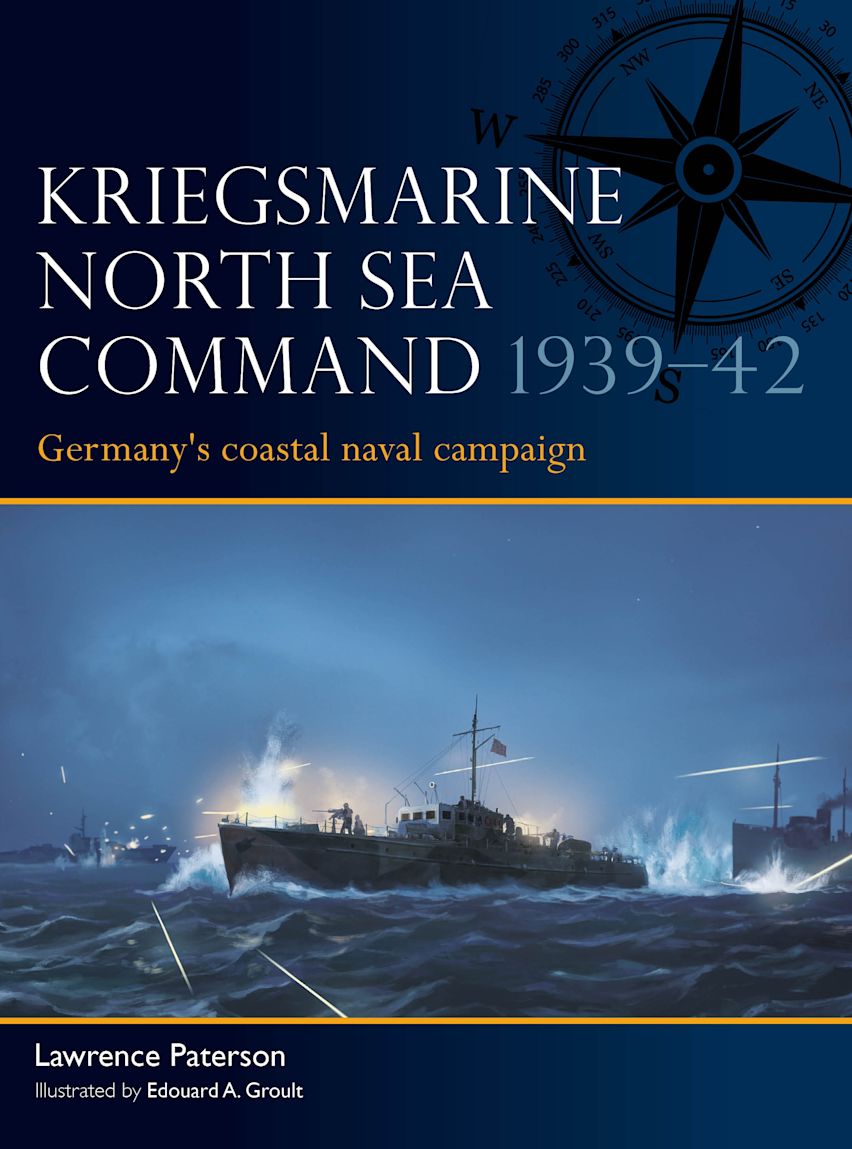
Lawrence Paterson, Kriegsmarine North Sea Command 1939-42 (Osprey, 2025)
Readers of World War II will be well aware of the Battle of the Atlantic, with its U-boats and pocket battleships waging war against the Allies on the high seas. But Lawrence Paterson, in Kriegsmarine North Sea Command 1939-42, surveys the naval war off the European and British coastlines. Here the ships may have been smaller but the combat no less intense.
Paterson begins with the fleet’s purpose, which was primarily to protect its North Sea coastline and trade routes while carrying the war to enemy coasts. The North Sea also provided the jumping-off point for offensive operations in the Atlantic. All of that was set against Britain’s threat to blockade Germany. The Germans would do this, argues Paterson, through a form of nautical guerilla warfare, including attacks on shipping off the British coast and laying minefields. Paterson next surveys the classes of ships the Germans used to pursue their objectives: light cruisers, destroyers, torpedo boats and schnellboote, fleet escort ships, and minesweepers. He also covers the main weapons, such as torpedoes and mines, and here he includes cooperation with the Luftwaffe, though later we find out how ineffective that was.
With the ships and weapons all accounted for, Paterson considers the command organisation and sub-commands of this diverse fleet before taking a deeper dive into the complex roles of intelligence and logistics. Paterson closes with a narrative section on the fleet in combat, beginning in 1939 with destroyer led minelaying operations off the British coast sometimes leading to combat with Royal Navy forces. The action continued into 1940, with more minelaying and a disastrous friendly-fire incident leading to a drop in morale amongst the destroyer crews. That year also saw the invasion of Norway, involving much of the North Sea fleet, though they could do little to prevent the evacuation of Dunkirk in May. Here, Paterson brings the S-boats to the fore, highlighting their hit-and-run attacks on Allied shipping. The following two years saw a greater RAF presence, though mining and attacks continued, the tide was turning against the Germans. Paterson concludes that what had started out as a promising campaign ran into the same problems that doomed the Third Reich military campaigns elsewhere: the fleet was understrength, there was no clear strategy, and inter-service rivalry blighted operations.
I must confess, I did not have high hopes for this book about what felt like a secondary front in the naval war, but I was pleasantly surprised. Paterson’s narrative of the small-scale actions is well written and brings out the often knife-edge nature of this form of combat. His analysis also provides useful insight into how a promising early war situation for the Germans steadily turned into morale sapping defeat. As usual with Osprey, the author is well supported by high quality graphic illustrations, maps, and photographs of the various ships. This is a book full of incident, and naval warfare readers should enjoy it.
by RNS | Oct 10, 2025 | Beating Tsundoku
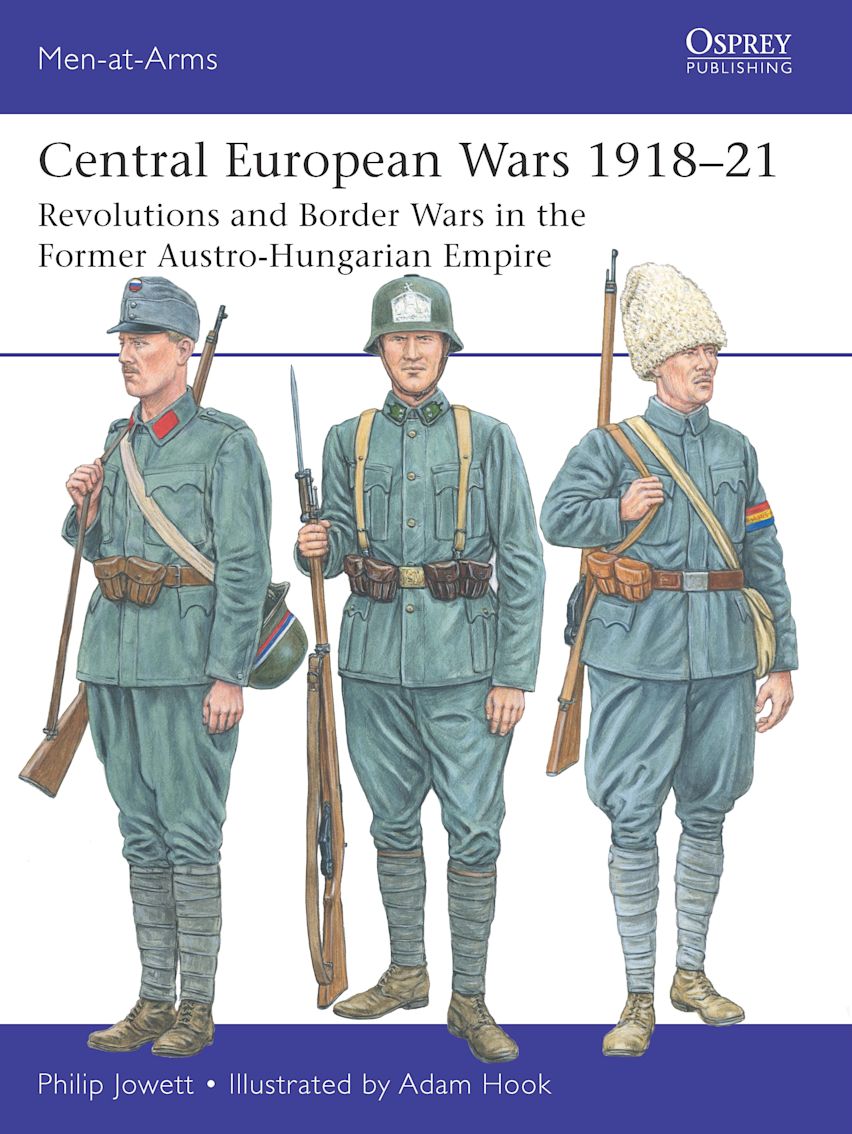
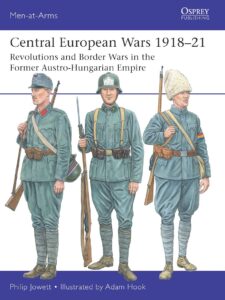
Philip Jowett, Central European Wars 1918-21 (Osprey, 2025)
When peace came in November 1918, the war to end all wars had finally ended. At least that is how the story goes for most of us. But the war that destroyed the Austro-Hungarian empire unleashed a tsunami of revolutions and conflicts across eastern Europe and the Balkans. In this volume of Osprey’s Men-at-Arms series, Philip Jowett surveys the men who fought those wars, what they wore and how they were armed, while providing a flavour of the main events in the period 1918 to 1921.
Jowett introduces us to the chaos that enveloped the Habsburg Empire after the armistice, helpfully providing a brief chronology. Then we meet the major players – Austria, Czechoslovakia, Hungary, Romania, and the Kingdom of Serbs, Croats, and Slovenes – and learn how they organised their armies. Jowett describes how these armies depleted the stores of the former empire for their weapons, uniforms, and equipment, though the Romanians and Serbs, Croats, and Slovenes benefitted from the support of the former Allied powers. Jowett moves on to the major operations, including the Carinthia War, Romania’s invasion of Hungary, the Polish-Czechoslovak War, the Hungarian-Czechoslovak War, and other conflicts involving the busy Hungarians.
This is a slim book that appeals to a niche readership. But if, like me, your gateway into a historical period is through understanding the human experience, however pretentious that might sound, then wee survey books like this can lead to more in-depth reading on the subject. Jowett’s text is an easy read and clarifying on a highly complex series of events. He is aided by Osprey’s graphic illustrations of soldiers and an excellent array of contemporary photographs. I expect that Jowett’s book will be well received by his target audience.
by RNS | Oct 4, 2025 | Beating Tsundoku
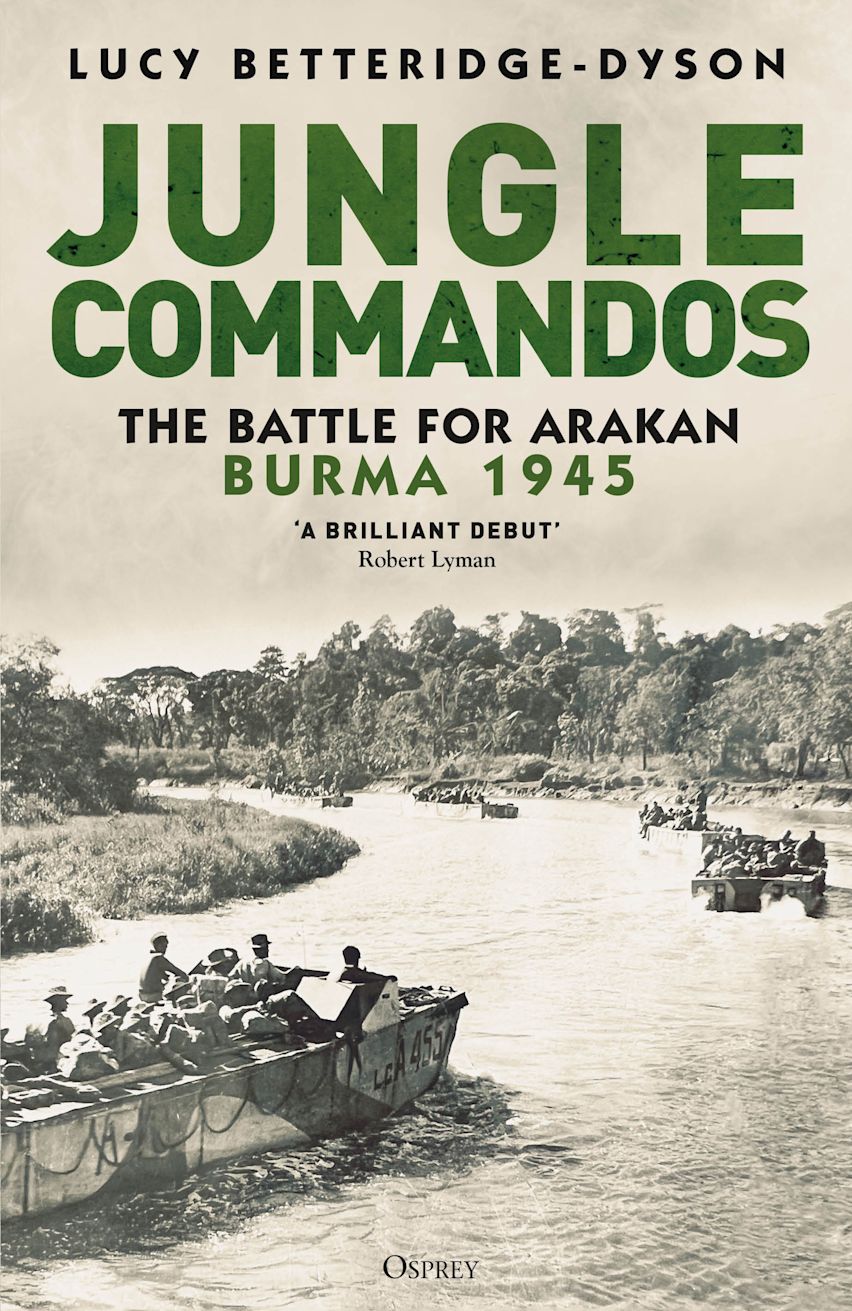
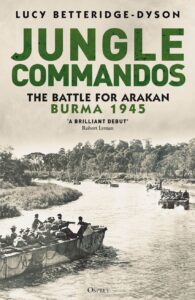
Lucy Betteridge-Dyson, Jungle Commandos (Osprey, 2025)
The story of Lieutenant-General William Slim’s brilliant campaign to drive the Japanese out of Burma in 1945 has rightfully captured the imagination of military history students. Set against that, the simultaneous operation to reclaim the crucial coastal Arakan region has been seen as something of a sideshow. In this new book from Osprey Publishing, Lucy Betteridge-Dyson rescues the fight for the Arakan from the shadows, highlighting an equally stunning victory without which Slim’s campaign might have stalled or maybe have even been defeated.
The Arakan campaign in 1945 was built on lessons learned from previous failures. This time, the campaign would have better commanders leading better trained troops in a combined arms operation some had doubted could succeed. At the forefront of the drive south to entrap and destroy the Japanese 28th Army were the Royal Marine and Army Commandos, in which Betteridge-Dyson’s grandfather fought, more than ably assisted by West African and Indian infantry. Betteridge-Dyson describes the formation of the Commandos and the raising of the West-African and Indian Divisions, and relates the myriad problems they faced, particularly from the unforgiving Burmese terrain, which included the familiar jungles and knife-edge mountains and adds the almost impassable mangrove swamps found along the Arakan coastline. And then there were the highly experienced and often fanatical Japanese soldiers determined to hold their ground to the last drop of blood. Yet Britain’s imperial forces out-manoeuvred and outfought the Japanese in a series of bloody fights culminating in the all-out struggle for Hill 170 at Kangaw.
Jungle Commandos is an excellent narrative history that brings the Arakan campaign fully into the light and easily earns its place on the Burma War bookshelf alongside Fergal Keane’s Road of Bones and James Holland’s Burma ’44. Betteridge-Dyson takes a while to set-up the campaign, but then the narrative flows, leading to the crescendo at Kangaw. The author also keeps the events grounded in the soldiers’ experiences, on both sides, allowing her readers to follow individual soldiers, their trials and tribulations, and their courage. She is particularly adept at emphasising the contributions from Indian and African soldiers, when most Anglocentric historians had relegated them to support forces. Betteridge-Dyson integrates those soldiers’ stories seamlessly into the broader operational narrative. All in all, this is a first class narrative of which Betteridge-Dyson’s grandfather would be proud.
by RNS | Sep 21, 2025 | Beating Tsundoku
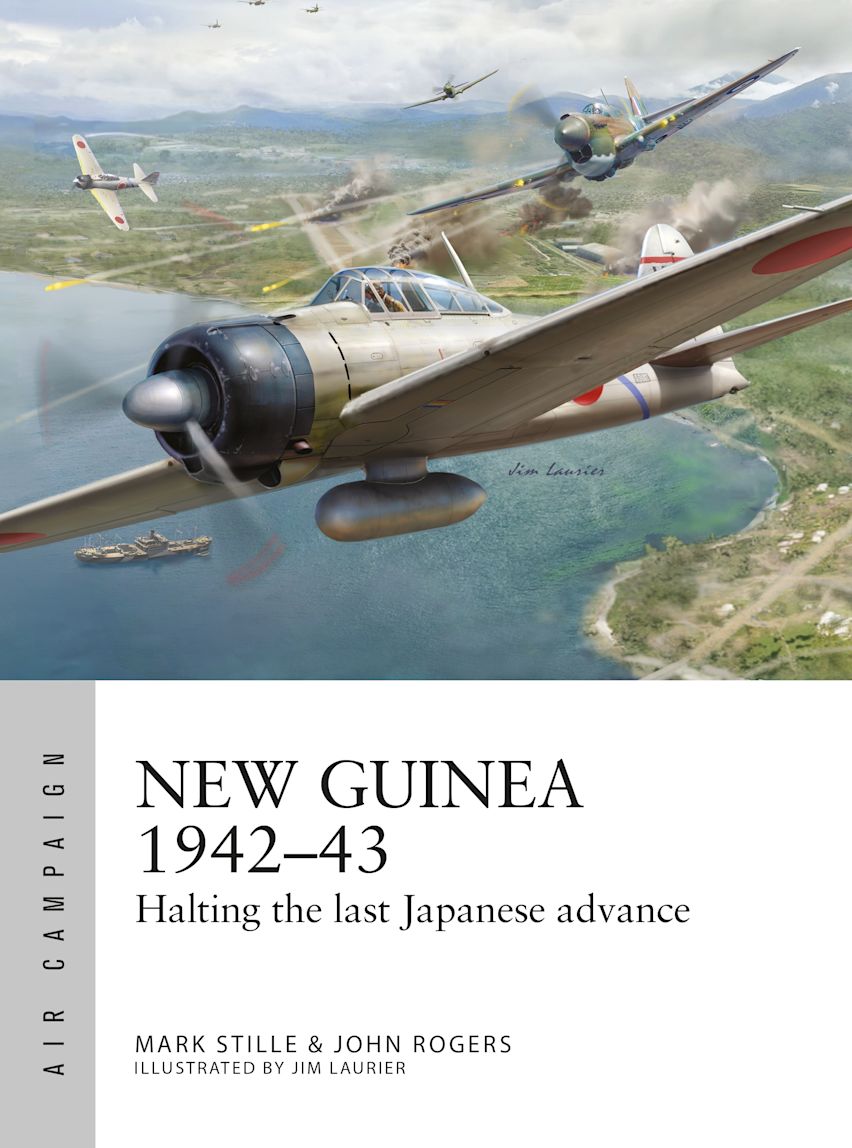
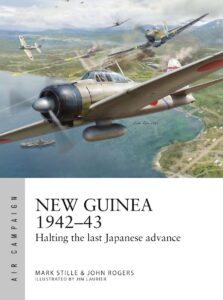
Mark Stille & John Rogers, New Guinea 1942-43 (Osprey, 2025)
Many historians highlight turning points that determine how campaigns are won and lost. But some, if not most, campaigns do not fit that model. They are attritional, with their outcomes dependent on resource allocation and a myriad of small victories and setbacks. The air campaign over New Guinea in 1942 seems to fit the latter model. Mark Stille and John Rogers narrate the events of that campaign and analyse its conduct and the reasons for Allied success and Japanese failure.
In early 1942, Japan still has imperial conquest on its mind. Control of Papua New Guinea formed an important part of the imperial strategy. The Allies needed New Guinea to defend Australia. For both of them, distance and environment presented tactical headaches. Stille surveys the respective capabilities of both sides. For the Japanese, both the navy and army air forces would be involved in the fighting. Their main warplane was the famous, or infamous, Zero. The Allies opened with an aerial disadvantage. The Australians in particular had very little to play with, and the US prioritized Europe, reducing their effectiveness in the Pacific. Stille notes that both would improve through 1942. The campaign objectives come next, with a deeper dive into the strategies of both sides. Then we are into the narrative of the campaign.
Even while still consolidating its gains, Japan moved aggressively to reduce Port Moresby in January 1942. The opening engagements favoured the Japanese, with the Zeros dominating the skies. Spurious raiding from both sides turned into a battle of attrition from April. That did not favour the Japanese with more US forces coming on tap. Along the way, Stille connects his narrative to the broader strategic situation; for example, he considers the effects of the Battle of the Coral Sea, the Japanese invasion of Buna, and the Battle of the Bismarck Sea. Ultimately, the Allied superiority in logistics and tactical innovations turned the tide against the Japanese. Stille concludes that the Japanese contributed to their own demise, so much so that their defeat almost appeared inevitable.
New Guinea 1942-43 is an action-packed and informative introduction to the air war in that part of the Pacific theatre during a crucial phase in the war. Stille and Rogers clearly know their stuff, and their text is accompanied by many illuminating maps, photographs, and illustrations. My only criticism is that that the text needed a final edit: the alternative plan of reducing the font to fit all the text into the format did not help this reviewer’s aging eyes. Nevertheless, anyone interested in aerial warfare and the Pacific theatre will undoubtedly enjoy this book.
by RNS | Sep 12, 2025 | Beating Tsundoku
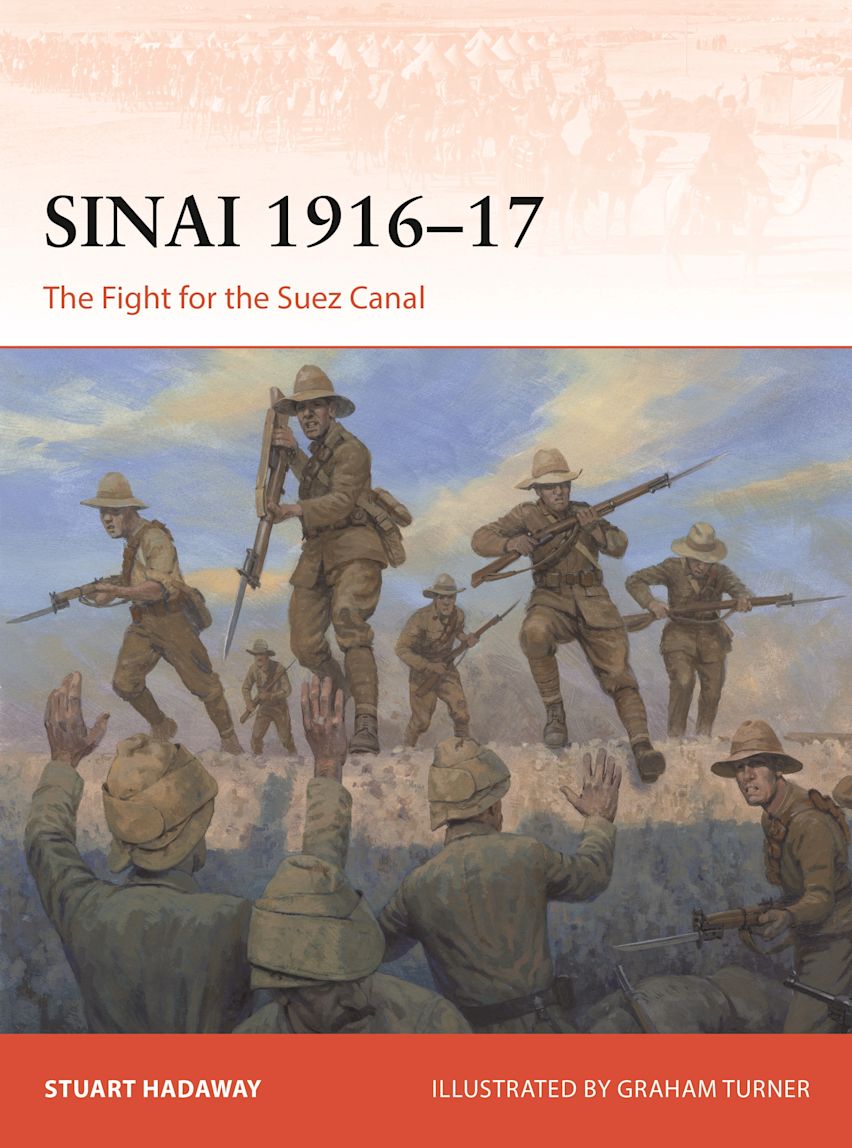
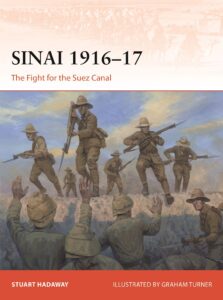
Stuart Hadaway, Sinai 1916-17 (Osprey, 2025)
The most popular description of World War I reflects the European Western Front of ‘mud and blood’ in the trenches. But that is far from the whole story, as Stuart Hadaway narrates in this illuminating Campaign series book from Osprey. The theatre Hadaway is interested in is the desert campaign fought between the Commonwealth forces and the Ottomans for control of the Suez Canal, the ‘jugular vein of the British Empire’.
After retelling the background story of the Ottoman attack on the Suez Canal in January 1915, which was repulsed by the Indian garrison, Hadaway introduces the Egyptian Expeditionary Force, made up of British and Commonwealth troops, tasked with developing a buffer zone in the Sinai for the Canal. Hadaway considers the opposing commanders: the Ottoman Ahmed Djemal Pasha and General von Kressenstein, his German staff officer, and for the Commonwealth forces, Sir Archibald Murray, Sir Herbert Lawrence, and Sir Harry Chauvel. Assessing the forces follows. The Ottoman organisation changed under the exigencies of war, and the mostly peasant army faced manpower and logistical problems. They were assisted by specialised troops from their European allies. Hadaway notes the esprit-de-corps of the British and Commonwealth forces, the usefulness of their cavalry across great distances, and the lack of potency in the air, and he makes a special mention of the Egyptian Labour Corps without whom the army would have difficulty advancing or supplying itself. As for strategies, ultimately the Ottomans wanted to liberate Egypt, but they needed to control the Sinai. They ended up doing neither. The British needed to defend the Suez Canal, but initial victories led them to underestimate the Ottomans; a story that Hadaway goes on to narrate.
You cannot fight effectively in the desert without proper logistical support, and that is where Hadaway begins his narrative. He compares the British and Ottoman supply difficulties, the focus of which would be the Suez Canal. The Ottomans struck first, at Qatia, on 23 April 1916, leading to the Commonwealth forces digging in at Romani. The Ottomans attacked again in early August. After hard and often confusing fighting, the Ottomans retreated with the Commonwealth forces in pursuit. They in turn would find themselves blocked at Bir El Mazar in mid-September. Nevertheless, the advance continued. Haddaway follows the action to El Arish and Magdhaba, which fell in December 1916. By early 1917, the Commonwealth forces had achieved their strategic goal of securing the Suez Canal. Although severe setbacks awaited, Hadaway concludes here; the Sinai campaign was over.
The Sinai campaign of 1916 and 1917 may be less well known among casual readers of World War I, but Hadaway’s book should bring it to a wider audience. It is not easy to clearly narrate military campaigns fought in a desert, but Haddaway manages it very well by blending operational information with the human factor. He also weights his narrative effectively, giving due credit to the considerable work ‘behind the scenes’ in addition to the front-line fighting. With the assistance of Osprey’s customary excellent maps and illustrations, Hadaway’s book should turn more attention to this oft ignored World War I theatre.