by RNS | Jun 27, 2026 | Beating Tsundoku
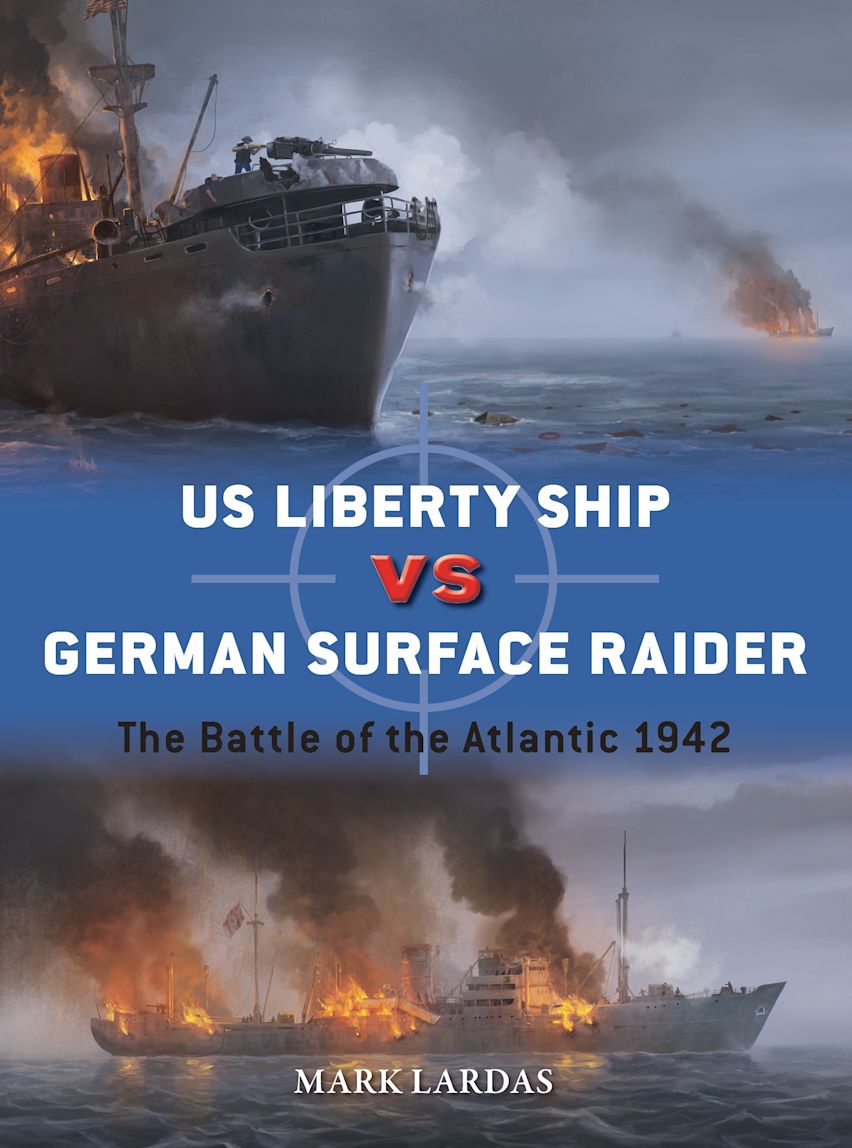
Mark Lardas, US Liberty Ship vs German Surface Raider (Osprey, 2026)
World War II naval history students will be used to reading about powerful navies competing at sea across the world. Aircraft carriers and battleships dominated major battles. However, in this Duel series edition from Osprey, Mark Lardas highlights a different contest, that between armed German merchant ships and the US freighters maintaining the Allied maritime lifelines.
Lardas traces the concept of arming merchant ships back to the 19th Century, but they came into their own in World War I. As it entered WWII, Germany had a modern merchant navy, some of which the Kreigsmarine thought would be useful in an auxiliary cruiser capacity. The main criteria was their range of operations, and the ships were kitted out with guns and efficient communications. The first of 2,708 United States Liberty ships was launched in September 1941. These were fast and fuel-efficient freighters, Lardas notes, and they were cheap and quick to build at a unique time of crisis. Lardas describes their development and characteristics. He continues his history lesson into the strategic situation entering World War II. The Germans initially did not trust submarine warfare and focused on surface raiders, including auxiliary cruisers. These proved successful at first, but as Allied security tightened, particularly in the north Atlantic and around European coasts, the raiders operated more on marginal trade routes. Lardas moves onto describing the technical specifications for both sides and adds the human factor to his survey with an overview of the respective combatants. Then Lardas narrates combat operations, tracking the German auxiliary cruisers across the seas in early 1942, when they scored numerous victories. He also highlights some individual combats involving US merchant ships. These seem to have been rather one-sided affairs, though the American sailors gave as good as they got for the most part. Ultimately, the U-boats took over the raider role, and the war had swung against the auxiliary cruisers by 1943.
There was a certain intimacy in the cat-and-mouse struggles Mark Lardas describes in this interesting and entertaining survey. This was ship-vs-ship, crew-vs-crew, combat on the high seas, and the stakes could not have been higher. The US ships were on the receiving end for the most part, but you do not have to buy into Lardas’ generalisation of American sailors as ‘scrappers’ to respect their courage under fire. Lardas casts an expert’s eye over the ships and men, and naval history readers will certainly enjoy this book.

by RNS | Jun 20, 2026 | Beating Tsundoku
Angus Konstam, Königgrätz 1866 (Osprey, 2026)
In June 1866, the Austrian Empire still held sway as the most powerful force in Europe. But a former ally was intent on upsetting the Austrian apple cart. Prussia, with Otto von Bismarck at the helm, wanted to flex its growing muscles. In 1864, the Prussians had bullied Denmark into submission, and Austria was next in line. The Austrians were concerned but not worried. However, they were in for a rude awakening in July 1866 at a small town called Königgrätz in an epic battle that would change the European political landscape forever. In this Osprey Campaign series book, prolific historian Angus Konstam tells the story of an epoch changing day.
Konstam glides through the build-up to the war of 1866, explaining briefly the machinations of Bismarck in service of his German unification vision. The Austrians could do little about it diplomatically, and both sides prepared for war. In command of the Austrian defence was Feldzeugmeister Ludwig von Benedek, a general arguably behind the times, and for Prussia, Helmuth, Count von Moltke, a thoroughly modern commander. Konstam highlights how modernity in tactics and weaponry allowed the Prussians to dominate the battlefield. As for the battle, a truly massive affair, Konstam breaks that down into the actions of the three Prussian armies against a formidable Austrian defensive position near Königgrätz in Bohemia. The Prussians won the battle and broke the mould of European geopolitics in the process. Konstam concludes with a visit to the battlefield today, which is very well preserved.
Angus Konstam’s survey of the Battle of Königgrätz is not an in-depth study, but it covers all the necessary information to provide an understanding of what happened and why. There is a sense of inevitability in the grinding Prussian offensive, but no developed explanation of why that was beyond Prussia’s tactical and technological advantages. That quibble aside, Konstam has written a useful and informative guide to this critical 19th century battle that will appeal to military history readers.
by RNS | Jun 7, 2026 | Beating Tsundoku
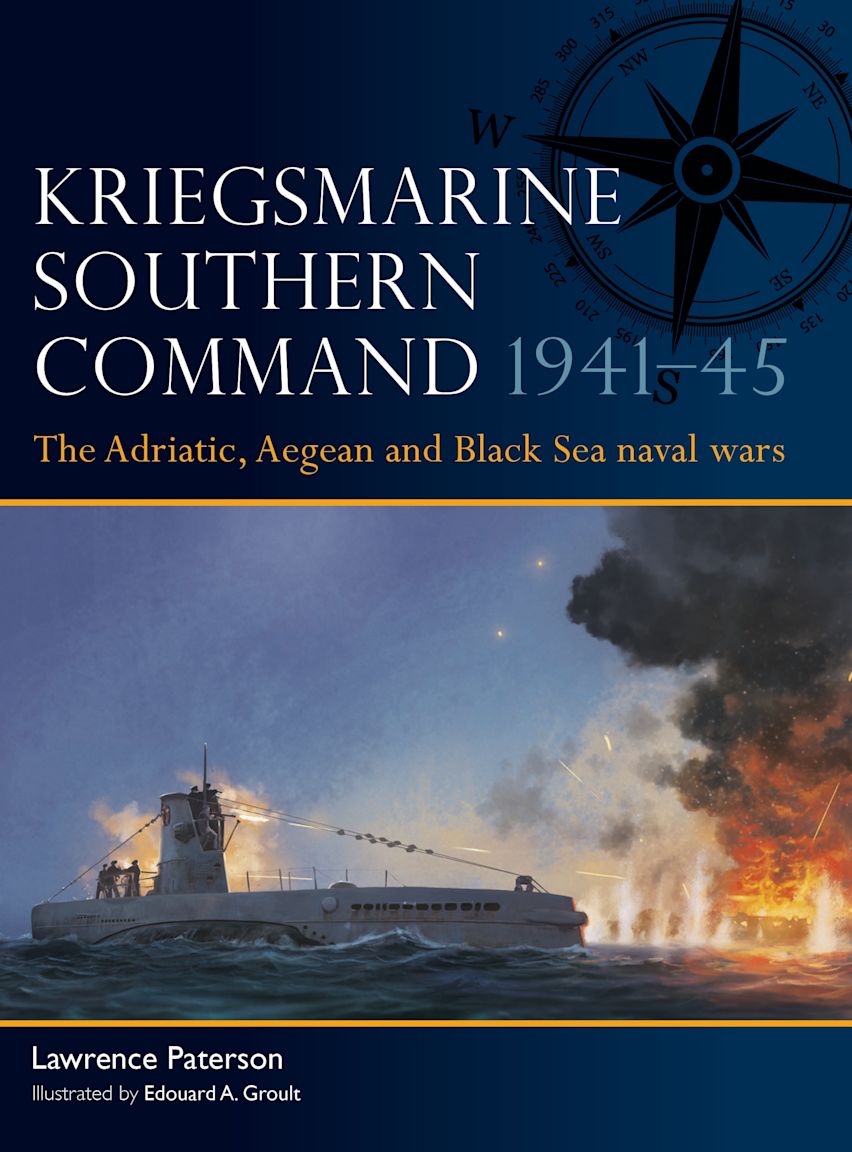
Lawrence Paterson, Kriegsmarine Southern Command 1941-45 (Osprey, 2026)
World War II naval history tends towards the big battles between the big ships. There is nothing wrong with that, but the war was full of action along all the belligerents’ coastlines fought by small and sometimes ad-hoc fleets. In Kriegsmarine Southern Command, Lawrence Paterson surveys a smaller German naval command that was put in place as the war expanded into the Balkans and the Soviet Union. The purpose of the new German command was to cooperate with other Axis fleets in the Balkans region, including the Black Sea and the Aegean Sea. The Germans would provide the umbrella while the other fleets mostly provided the muscle.
Paterson begins with the establishment of the fleet to meet the growing Allied threat after 1940. The ships in this new command included a single German destroyer, some German E-boats and minesweepers, a few submarines, and converted trawlers. The Italians, Romanians, Bulgarians, and Croatians also deployed ships in the region. Paterson examines the command structure in the Black Sea, Aegean, and Adriatic, and he considers the thorny problem of moving ships from Germany into the theatre. He then embarks on a detailed narrative of the fleet’s operations from 1940 through the deteriorating conditions on the eastern front, ending in 1944. In his analysis of this fleet, Paterson argues that Hitler’s failure to grasp the importance of naval operations undermined the fleet’s capacity to make a difference. That was not helped by persistent logistical problems and lack of supply. Nevertheless, Paterson concludes, the Axis forces still punched above their weight against the Soviets.
Kriegsmarine Southern Command is an interesting survey on a little known fleet operating in a theatre that does not get much attention. Patterson’s narrative sections are well written, though he could have joined the dots a bit better on his descriptions of the fleet’s components and command. The illustrations and maps that accompany the text are very useful for following the action. World War II naval history enthusiasts will enjoy this diversion into something of a backwater.