Angus Konstam, Königgrätz 1866 (Osprey, 2026)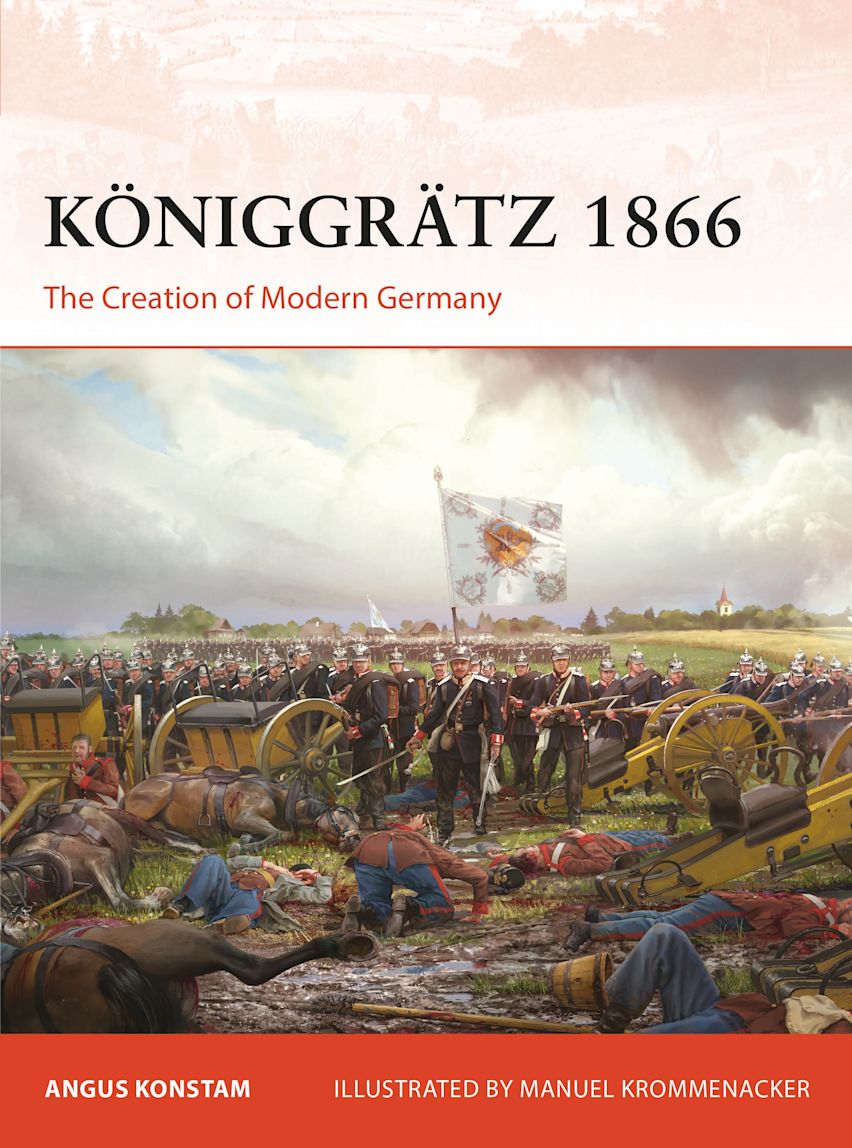
In June 1866, the Austrian Empire still held sway as the most powerful force in Europe. But a former ally was intent on upsetting the Austrian apple cart. Prussia, with Otto von Bismarck at the helm, wanted to flex its growing muscles. In 1864, the Prussians had bullied Denmark into submission, and Austria was next in line. The Austrians were concerned but not worried. However, they were in for a rude awakening in July 1866 at a small town called Königgrätz in an epic battle that would change the European political landscape forever. In this Osprey Campaign series book, prolific historian Angus Konstam tells the story of an epoch changing day.
Konstam glides through the build-up to the war of 1866, explaining briefly the machinations of Bismarck in service of his German unification vision. The Austrians could do little about it diplomatically, and both sides prepared for war. In command of the Austrian defence was Feldzeugmeister Ludwig von Benedek, a general arguably behind the times, and for Prussia, Helmuth, Count von Moltke, a thoroughly modern commander. Konstam highlights how modernity in tactics and weaponry allowed the Prussians to dominate the battlefield. As for the battle, a truly massive affair, Konstam breaks that down into the actions of the three Prussian armies against a formidable Austrian defensive position near Königgrätz in Bohemia. The Prussians won the battle and broke the mould of European geopolitics in the process. Konstam concludes with a visit to the battlefield today, which is very well preserved.
Angus Konstam’s survey of the Battle of Königgrätz is not an in-depth study, but it covers all the necessary information to provide an understanding of what happened and why. There is a sense of inevitability in the grinding Prussian offensive, but no developed explanation of why that was beyond Prussia’s tactical and technological advantages. That quibble aside, Konstam has written a useful and informative guide to this critical 19th century battle that will appeal to military history readers.