Pritt Buttar, Berlin Endgame 1945 (Osprey, 2026)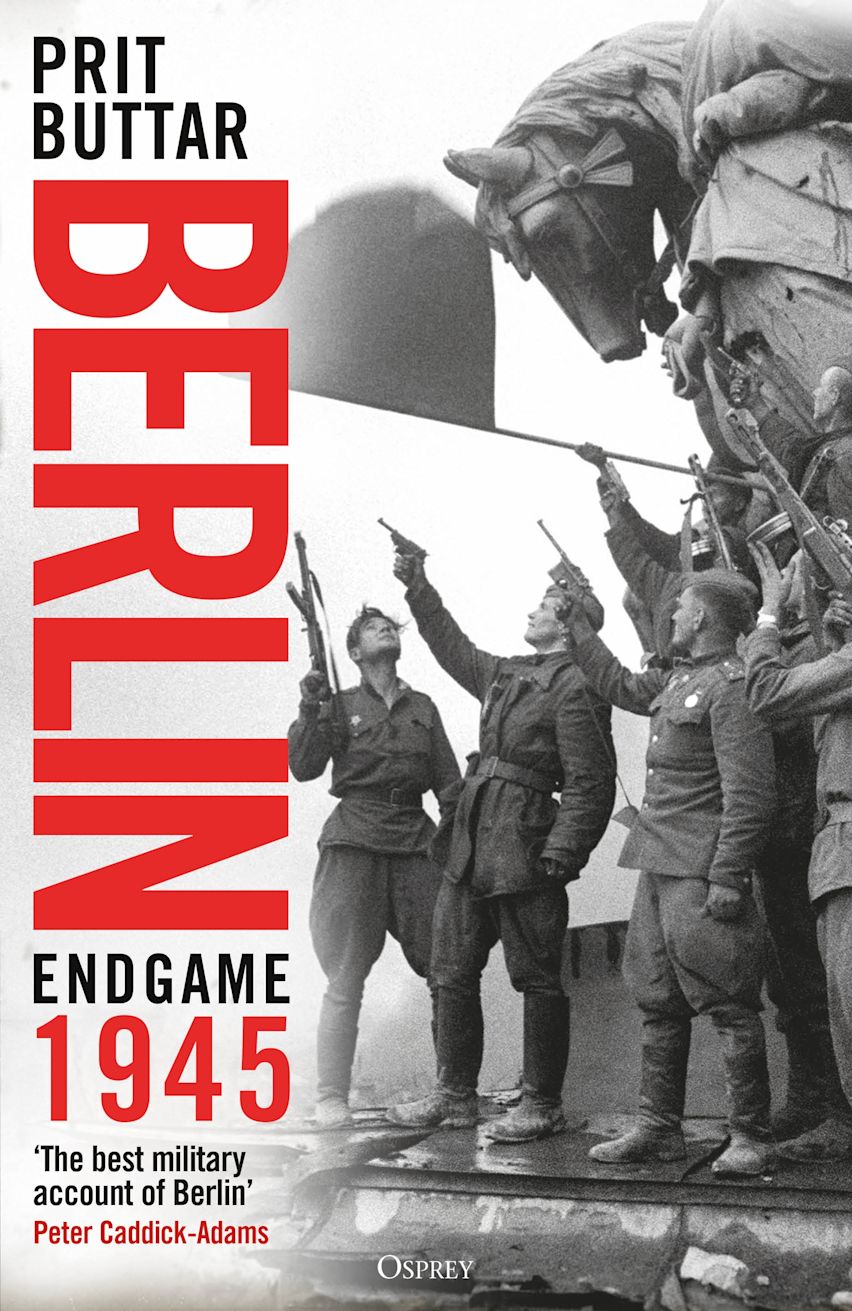
By 1945, the Second World War had turned inexorably against Germany. Both in the west and east, Allied armies made steady progress, pushing the Germans further into their homeland. The Allied leaders had decided the outcome of the war while the shells were still falling, and for the Soviets, that meant they were tasked with administering the coup-de-grâce by capturing Berlin if the Germans refused to surrender. That suited the Soviets who were intent on revenge for German atrocities in the east, and they pursued the war with fanatical vigour right to the steps of Reichstag. The German soldiers fought hard, but their armies disintegrated and the city fell. Pritt Buttar, a specialist of the Eastern Front, narrates this epic tale of victory and defeat.
Buttar opens with the geopolitical and strategic context of the war and brings us to the crisis facing Germany as 1945 began. The wolves were at the door and defeat seemed almost certain. Then Buttar emphasizes the central importance of Berlin to Germans and particularly Hitler, whose ambitions for his capital city were dashed by a persistent Allied bombing campaign throughout the war. Buttar describes the aerial degradation of Berlin but not its people. With the scene set, Buttar begins his narrative of operations leading to the fall of Berlin.
In January 1945, the Soviets launched their offensive that initially led to a spectacular advance but fell afoul of logistics difficulties, a recurring theme for the next few months. On the other side, a rigid and ideologically orientated command structure retarded German flexibility thus hampering the defence. Nevertheless, the Germans desperately held on to their bank of the Oder river, but the German army was disintegrating, with gaps in the ranks plugged by boys and old men with little training. Dwindling resources did not help. Meanwhile, the Germans prepared defences to cover the roads to Berlin and in the city itself and waited both for the Soviets and, hopefully, reinforcements from the western front. Commanders on the ground, and some in Berlin, knew that the Soviets were on a revenge mission and that they outnumbered the Germans defending Berlin both in manpower and resources.
Buttar works his way through the respective plans for the final battle of Berlin. This would be a massive logistical operation on both sides, but while the Germans could not afford heavy losses in material or men, the Soviets were habituated to mass casualties and were constantly being resupplied. The final battles began on 16 April behind a massive barrage. Buttar describes the battle for the Seelow Heights, Berlin’s last real external defensive position. The Soviets made slow progress against a stout German defence and counterattacks, but that defence was unsustainable against the unrelenting onslaught that Buttar describes as a ‘slow brutal, grind’.
By 20 April, Buttar argues, the battle for Berlin had been decided: the Soviets were on the outskirts of the city, and the German army was in disarray. Command confusion reflected the chaos on the ground against relentless Soviet attacks, and while there was some confusion in Soviet ranks too, they moved forward relentlessly. On 22 April, Hitler conceded that the war was lost. Buttar describes the following days marked by intense street-fighting, the sacrifice of the indoctrinated Hitler Youth, many armed with just panzerfausts, deadly but one-shot weapons, and atrocities against deserters by SS patrols. By 27 April, order in the German army had all but collapsed, and two days later, Hitler authorised a breakout to the west. It was all over in Berlin by 1 May, with sporadic fighting in isolated pockets, but German soldiers still attempted to flee to the ‘safety’ of surrendering to the western Allies.
In his conclusion, Buttar follows the last remnants of the Germany army as they continued to fight the Soviets in the east. He speculates on a hypothetical attack by the Western allies against Berlin, and decides it was probably not worth the losses, though there were some western plans to continue war against Soviets alongside the Germans. He finishes by assessing the Soviet army and the depth of German resistance bolstered by their knowing what defeat might mean for them under Soviet occupation.
Berlin Endgame 1945 is a thorough retelling of the battle that ended World War II in Europe. Buttar considers the campaign from all sides, switching between operational level and the fighting on the ground, and he includes many quotes from those who lived through it all. He is particularly good at highlighting the increasing infighting and confusion amongst Germany’s senior officers and politicians and the raw ambition of the Soviet commanders vying to be first to Berlin’s centre and claim victory. Buttar also does not forget the civilians and ordinary soldiers struggling in the face of disaster. For many readers, Buttar presents an immersive world full of detail and insight; other, more unkind, readers might argue that Buttar needed a more combative editor to sharpen his text and adhere more tightly to his mission. Whichever side they fall on, readers will benefit greatly from reading this illuminating and informative single volume history of Europe’s last epic battle.