by RNS | Sep 28, 2026 | Beating Tsundoku
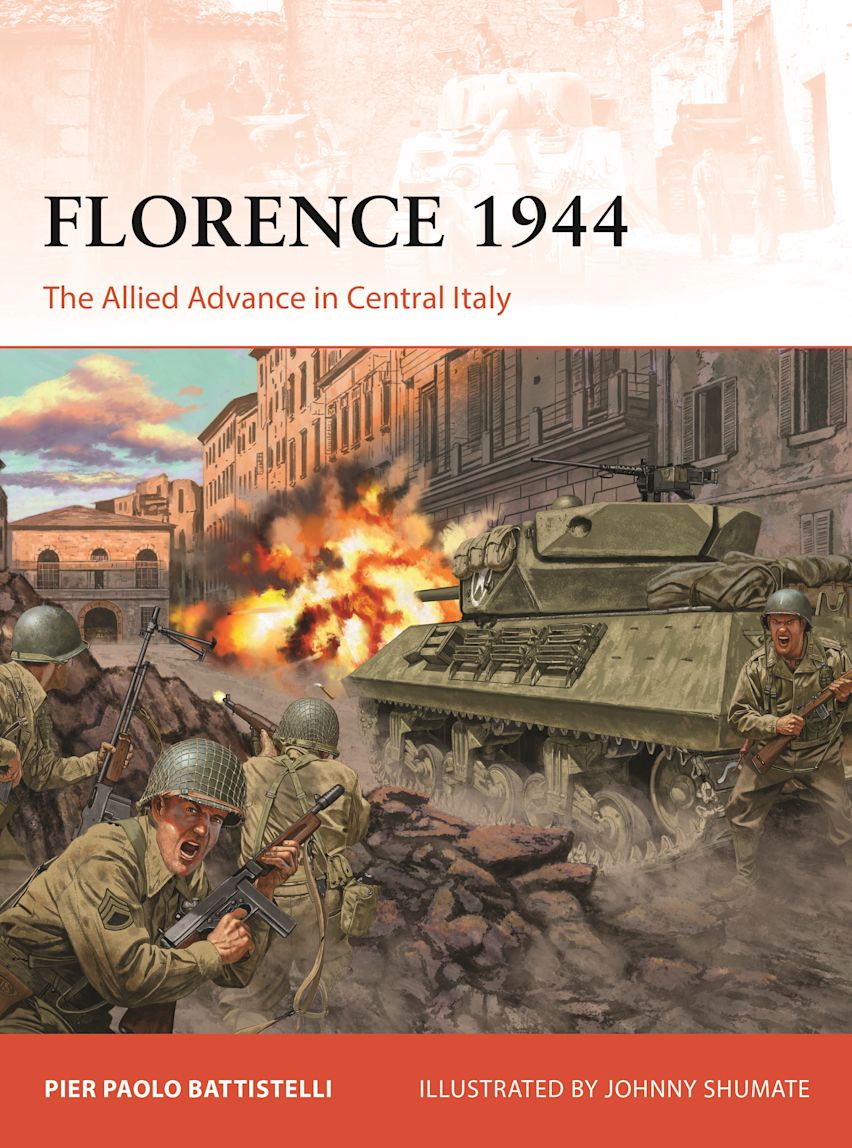
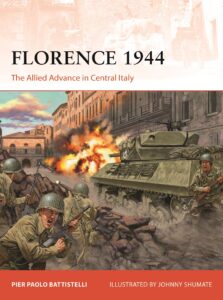
Pier Paolo Battistelli, Florence 1944 (Osprey, 2026)
According to Pier Paolo Battistelli, in Florence 1944, the Florence campaign in Italy was one of missed opportunities for the Allies. They held the advantages of speed and manoeuvre, but they chose to conquer territory rather than go for the jugular of the German army. The Germans, meanwhile, pulled off a textbook fighting withdrawal. In this book in Osprey’s Campaign series, Battistelli tells that story.
The stand-out Allied commander, argues Battistelli, was the American Mark Wayne Clark, though he was ably supported by a cadre of talented US and Allied Corps commanders. Battistelli notes that for the Germans, army and corps commanders took the strain as they battled the Allied tide. For the forces they commanded, Battistelli again begins with the Allies. They were ascendant and superior in all military factors on the ground and in the air. However, the need for troops to invade southern France depleted the armies in Italy. Chaos and confusion, Battistelli contends, characterised the German forces, which makes it hard to determine who did what, where and when. They had been worn down but fought on while badly understrength.
The Allies lacked a plan for advancing north of Rome beyond moving fast and hitting the Germans hard. The Allied armies were allowed to use their initiative on how to proceed. The broader idea was to drive the Germans back to the Gothic Line, where they could then be defeated. The Germans had to fall back to the Gothic Line, while delaying the Allies as much as possible. And with that overview, Battistelli takes us into the campaign narrative. The long streaming northward pointing arrows on Osprey’s accompanying map do not do justice to the intensity of the fighting narrated by Battistelli.
He opens with the Allied march on Rome, leading to German confusion as they attempted to defend the Dora Line north of Rome. Nevertheless, localised German resistance strengthened as the Allies advanced. Battistelli covers the capture of Elba Island, something of a sideshow to the main thrust of Allied operations. He then surveys the British 8th Army that pushed the Germans backwards but at a pace often dictated by the Germans. The action moves on to the next German defensive line, the Albert Line, which could not resist the Allied armour and artillery superiority. Battistelli notes, however, that the Allies focused on capturing territory rather than destroying the German armies. Fierce fighting continued all the way to the gates of Florence and beyond. Battistelli concludes that the Allies missed opportunities to inflict the maximum damage on the withdrawing Germans, which made the next phase of the campaign harder than necessary. He closes with the curious absence of memorials in Italy for this campaign.
Pier Paolo Battistelli’s Florence 1944 is an informative and entertaining survey of an important but under-emphasised campaign. The relentless advance of the Allied armies against the professionally managed withdrawals of the Germans is a complex story, but Battistelli highlights the main events. And while most of his narrative is at the operational level, he does not neglect the common soldier, and he includes the considerable contributions of the Commonwealth, French, and Polish troops who did so much to bring about the Allied success. Battistelli is aided by Osprey’s excellent maps and photographs of the combatants. World War II enthusiasts will appreciate Battistelli’s book as will any reader of military history.

by RNS | Sep 20, 2026 | Beating Tsundoku
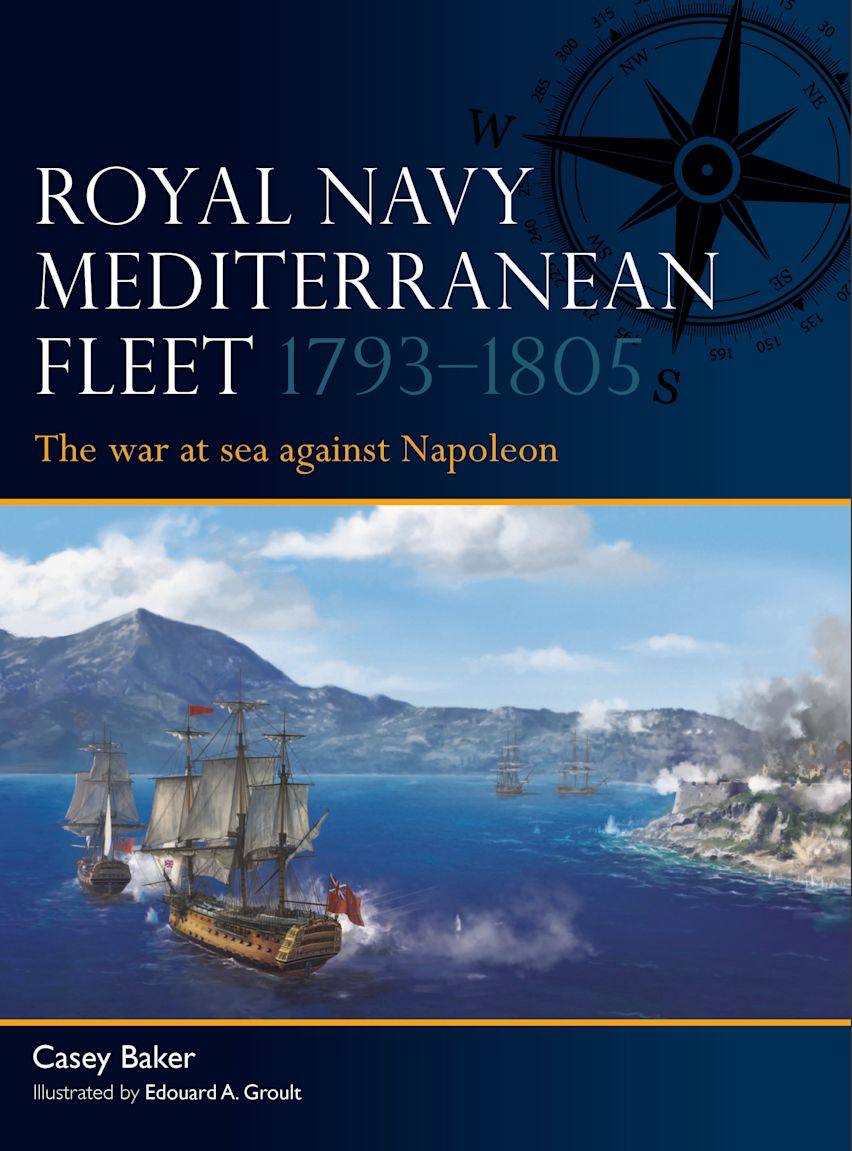
Casey Baker, Royal Navy Mediterranean Fleet 1793-1805 (Osprey, 2026)
One of the foundations of British naval history has been the victories of the Royal Navy during the Napoleonic wars, most notably at Trafalgar in 1805. The image of giant wooden vessels pounding each other with thunderous cannonades and men boarding French ships with furious intent has roused patriotic fervour ever since. But, as Casey Baker highlights in this volume of Osprey’s Fleet series, the fortunes of the Royal Navy fluctuated far more than spectacular successful battles would suggest.
Baker highlights the complexity of the Mediterranean theatre in an overview describing the variety of fleets that operated there. The Royal Navy in 1793 adopted a defensive mode, primarily protecting trade, but they were soon on the offensive, attacking Toulon and Corsica. The fleet and its strategic purpose expanded as the Second Coalition sharpened into an Anglo-French war at sea. In 1803, the Royal Navy resumed its war with the French and Spanish fleets, and as Napoleon’s empire widened, the Mediterranean became ever more important.
The Spanish, French, and Britain designed their ships for different purposes, Baker notes. He examines the Royal Navy ships of the line, from the 130-gun behemoths through the second-rate 100 and 90-guns and third-rate 74-gun ships. Frigates, Baker argues, performed the ‘most glamorous role in the fleet’ because they could act independently in a variety of roles. Baker also considers the smaller boats: bomb vessels and gunboats, fireships, schooners and cutters, and troop transports. How casualties occurred on these ships was mostly down to accidents. The crews, many of them foreigners, had other things to worry about, such as lack of pay and boredom, and some of that led to mutinies. But they were well drilled, especially in gunnery.
The Mediterranean Fleet was the plum command for ambitious officers, argues Baker. He surveys the commanders, including Nelson and Hood, their rivalries and the wide variety of obligations and duties they had to perform, all of which was conducted by a semi-professional officer class. Communications were difficult for the Fleet, but they were helped by a series of bases in the region, though major repairs still had to be carried out in British dockyards. Baker also reviews the issues relating to logistics, particularly provisions and health care. Of the Fleet’s many roles, Baker highlights blockade duty and hunting Spanish treasure ships.
Baker splits the Mediterranean theatre into three stages: the fights for Toulon and Corsica; the resurgence of the Royal Navy, commencing with the victory at Cape St Vincent in 1797; and the campaign that began with the Battle of the Nile and ended in the Battle of Trafalgar in 1805. Baker follows all the action – the blockades, convoys, sieges, and battles – and ties all that into the raging land war across Europe and Egypt. His viewpoint is taken from the command perspective, particularly examining inter-command relationships in the Fleet. In his final analysis, Baker highlights the vicissitudes of the Royal Navy Mediterranean Fleet. He praises its skill and aggression in action and how the Fleet eroded Napoleon’s confidence in his naval capability. That was balanced by the Fleet’s inability to conduct amphibious operations and to work effectively with the army.
Casey Baker has written an excellent addition to Osprey’s Fleet series with this volume on the Royal Navy in the Mediterranean fighting against French and Spanish forces. He paints a more nuanced picture of the Royal Navy in action, covering its strengths and weaknesses, and his analysis of inter-command relationships and rivalries is particularly good. Baker rarely takes readers below decks, which is disappointing but understandable given the survey nature of these books, but that is a quibble more than a complaint. Osprey’s usual high quality graphics dovetail well with Baker’s informative text. Any reader interested in the Napoleonic wars, particularly at sea, will appreciate this book as will general military history readers.
by RNS | Sep 6, 2026 | Beating Tsundoku
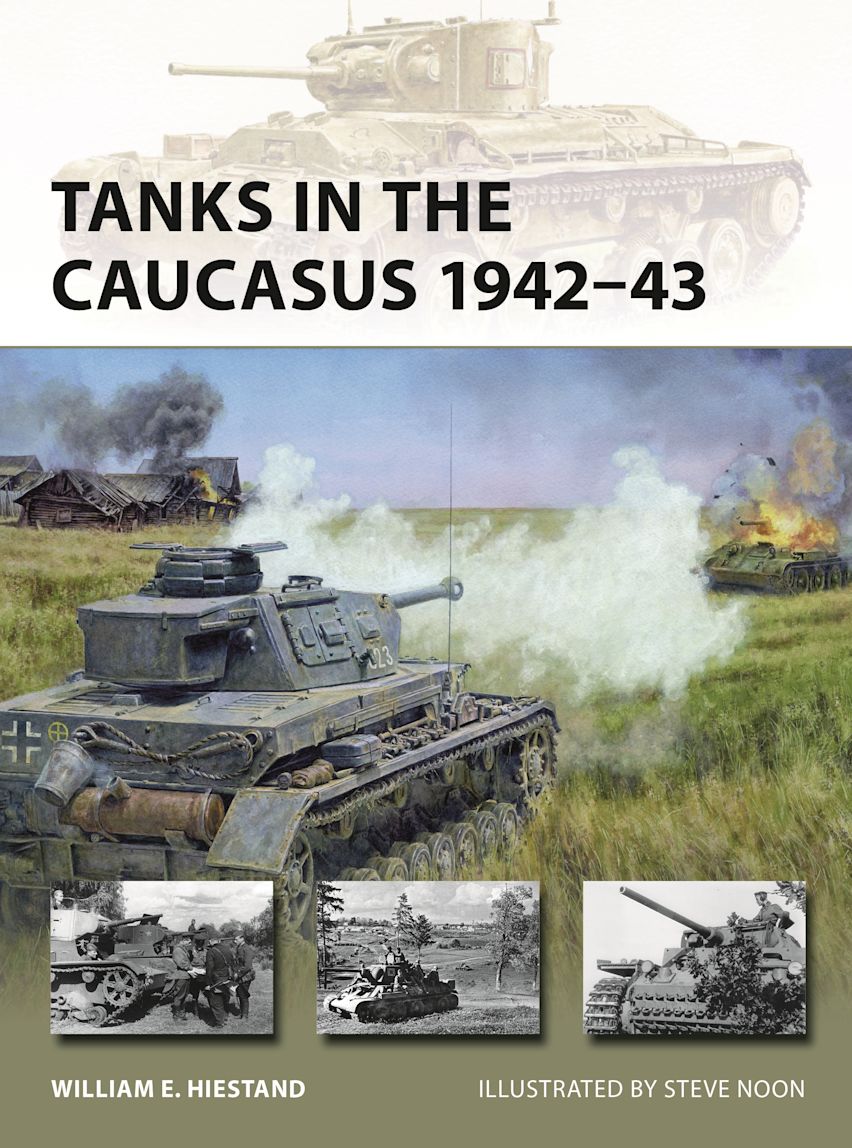
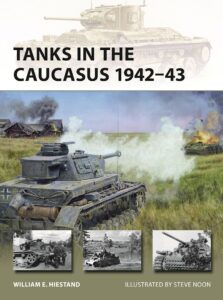
William E. Hiestand, Tanks in the Caucasus 1942-43 (Osprey, 2026)
Tank warfare on the Eastern Front in World War II conjures up images of hundreds of tanks fighting across wide open plains. But, as William Hiestand illustrates in this Osprey New Vanguard series book, the Caucasus theatre was unusual because the German panzers initially outnumbered the Soviet T-34s, then the Soviets fought back using a variety of Allied lend-lease tanks.
Hiestand opens with the launching of Operation Barbarossa on 22 June 1941, noting that through the opening phases, the Germans operated combined-arms formations that used better doctrine, organisation, and tactics to defeat their enemies. But they ground down in Russia, encountering supply problems and finding tanks hard to replace. Seizing the Caucasus oilfields became Germany’s primary task for its armour in the southeast. Hiestand describes the German tank formations assigned to the task then moves on to the Soviets. They were rebuilding and reorganising, which Hiestand walks us through, but they were short of home produced tanks. The Allied Lend-Lease programme helped with that. Hiestand describes the tanks from both sides: German Panzerkampfwagen IIs, IIIs, and IVs, the new Tigers, Stugs, Marder IIs, and specialised command tanks; Soviet T-26s, BT-7s, T-34s, KV1s, T-60s, and T-70s; and the Allied Lend-Lease tanks, including Valentines, Stuarts, and Grants.
Having set the scene, Hiestand narrates the campaign. He begins with Operation Edelweiss and Germany’s panzers driving towards the Caucasus oilfields, brushing aside the meagre Soviet defences. But Soviet resistance stiffened behind defence-friendly terrain while nipping at the German advance, which ground to a halt before reaching key strategic objectives. The failure to capture Stalingrad threatened the German position in the Caucasus, and they siphoned off units to assist the beleaguered city. The Soviets, meanwhile, were a gathering storm, aided by the infusion of Lend-Lease tanks. Conversely, the loss of tanks adversely affected the Germans, which was not helped by grinding Soviet frontal attacks. By August 1943, argues Hiestand, both sides were exhausted and offensive operations ceased. The Germans would eventually withdraw. In his analysis, Hiestand emphasises the qualitative German advantage over the Soviets, but as the campaign wore on, the Soviets regained cohesion and were able to launch costly counterattacks that halted then turned the German offensive.
Tanks in the Caucasus is an interesting and informative overview of combat on the eastern front. Hiestand lays out the context and technical aspects of the campaign and provides a useful operational narrative of events. I would like to have seen a bit more on how the combat was fought at a more granular level, particularly with regard to the Soviet use of the Lend-Lease tanks, but that is not the remit of these New Vanguard books, and Hiestand includes a handy bibliography for those seeking more in-depth coverage. Readers of the Eastern Front will enjoy this somewhat different slice of the campaign, and tank enthusiasts will, of course, lap it up.

by RNS | Sep 1, 2026 | Beating Tsundoku
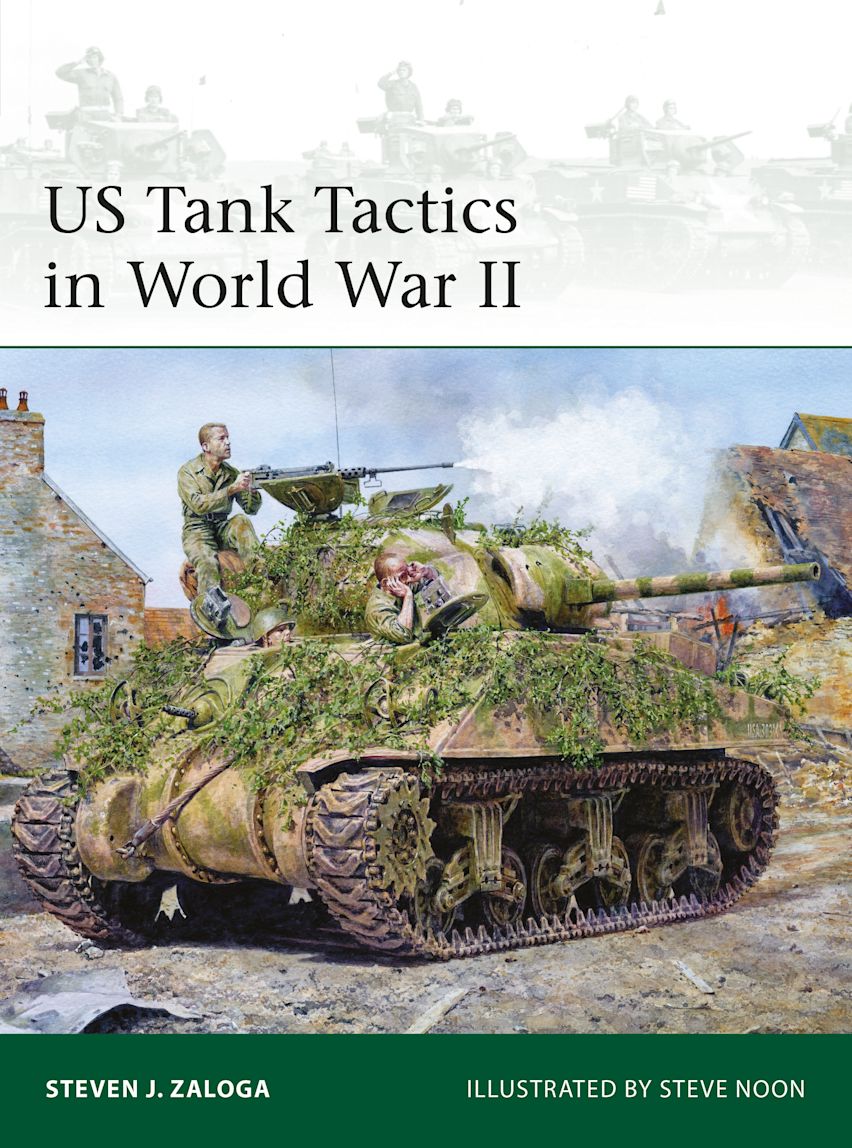
Steven J. Zaloga, US Tank Tactics in World War II (Osprey, 2026)
Tanks are synonymous with land combat in World War II. German panzers appear to take up most interest amongst tank enthusiasts, with the American tanks lagging behind. That is perhaps appropriate given that the US lagged behind when it came to developing tank warfare and tactics. In this book, in Osprey’s Elite series, Steven Zaloga surveys the US’s efforts to catch up with other powers as they entered World War II and the sometimes painful lessons they learned along the way.
Stemming from their WWI experience, US tank tactics were focused on infantry support, and tanks were distributed across infantry units. The US stuck to this theory even as the alarm bells of war started ringing in the 1930s, but Germany’s blitzkrieg changed all that. When France fell, the US adopted mechanisation. Zaloga narrates that development and then delves into the rudiments of US tanks, tactics, and organisation. He describes the light and medium tanks and demonstrates that the most basic tactic was centred on the tank’s crew and their drills. From 1940, the infantry support function remained, but a more destructive component was added. Zaloga works his way through the organisation of tanks formed into platoons, companies, battalions, regiments, and divisions. But these were all untested until 1943, and combat inevitably leads to change. That takes Zaloga into North Africa and Sicily, the lessons for the latter gleaned from failures in the former. A renewed emphasis on infantry support was a major change but one that that was difficult to effect given the war’s spread into the Pacific and the demands of the service. Zaloga notes also that the demands on tanks in France would be different from the other theatres. Getting tanks onto the D-Day beaches was one such problem that the US needed to negotiate; dealing with Normandy’s infamous bocage was another. Zaloga examines the thorny problem of communications between tanks and between tanks and infantry. That involved experimenting with radios and telephones. The use of tanks in a breakthrough situation was also a tactical requirement that was tested in France, as was the new obstacle of fighting in urban environments. Zaloga highlights the rarity of tank vs tank combat before September 1944 in Lorraine, where superior US tactics defeated the heavier German panzers. Then came the Battle of the Bulge that December, where German and US tank forces ground each other down. Zaloga notes the importance of combined arms tactics in all of this. Zaloga turns to the Pacific theatre and the deployment of amphibious tanks by the US Marines and their subsequent use as artillery as well as infantry support. Zaloga concludes with the lessons the US learned from World War II and the reorganisation of 1947.
Steven Zaloga has written an engaging and informative survey of US tank warfare in World War II, which is well supported by Osprey’s usual excellent graphic artwork and photographs. He balances a discussion of both the organisation of tanks and tactics as they evolved to uncover a story of assumptions tested by combat and the lessons American commanders drew from that. He also provides examples of US tanks in combat told from the viewpoint of the participants. However, Zaloga’s focus is primarily on the war against Germany, and he gives the Pacific theatre a thin veneer of attention. He might have been better served to ignore the Pacific and change the title. Nevertheless, readers of World War II will enjoy reading this introductory work, which Zaloga notes fills a puzzling gap in the literature on US tank warfare.