by RNS | Nov 15, 2026 | Beating Tsundoku
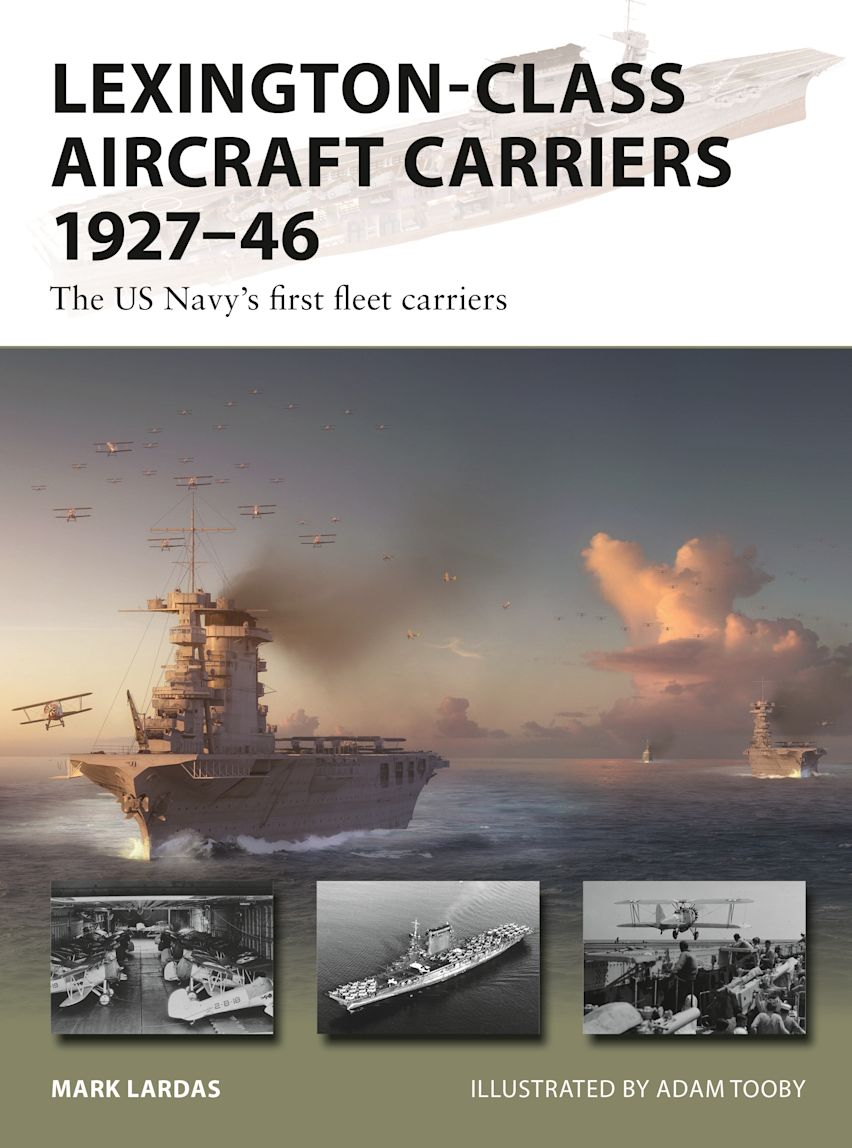
Mark Lardas, Lexington-Class Aircraft Carriers 1927-46 (Osprey, 2026)
Arguably, the most distinctive warships of World War II were the Lexington-class Carriers of the US Navy, with their massive funnel arrangements. There were only two of them, Saratoga and Lexington, but they played a significant role in the Pacific theatre. They were also the largest carriers the US deployed before 1945. In this Osprey New Vanguard book, Mark Lardas describes these historic vessels and narrates their wartime experiences.
Lardas begins with the sinking of Saratoga by nuclear explosion in 1946. In juxtaposition, he follows with the development of aircraft carriers, leading to the Lexington Class Carriers in accord (but not quite) with the Washington Treaty of 1922. He compares those with other naval powers: France, Britain, and Japan. Lardas notes that the US could already build fast ships, but like everyone else, designing the specifications for an aircraft carrier was still relatively new. In addition to the basic configuration, the designers upgraded and modified the Carriers as the demands of war were met. Lardas highlights the installation of radar as illustrative of new technological resources being deployed.
Lardas closes with two narrative sections about the two ships in peace and war. Both were laid down in the early 1920s, with air operations beginning in 1928. Then they were used in fleet exercises, in the wrong role, argues Lardas. In the 1930s, he continues, they were involved in shaping the US naval doctrine that would take them into war. That included an exercise attacking Pearl Harbor, the lessons from which impressed the Japanese more than the Americans! Neither Carriers were present at the real thing, but Saratoga was torpedoed by a submarine in January 1942. While in drydock, Lexington was sunk at the Battle of the Coral Seas in May 1942. Saratoga survived the war only to be destroyed in post-war atom bomb tests.
There were only two ships in the Lexington-class, but they were important for the development of US Navy carrier doctrine, and their unique profile prompts questions worthy of a book in this series. The sinking of the Lexington at Coral Sea was also an iconic moment of the Pacific War. Lardas has written an interesting wee survey that covers all the technical bases and outlines the fate of the Lexington and Saratoga. Excellent graphic art and photographs accompany his text. Readers interested in the Pacific Theatre will enjoy this book as will readers of naval history in general.
by RNS | Nov 12, 2026 | Beating Tsundoku
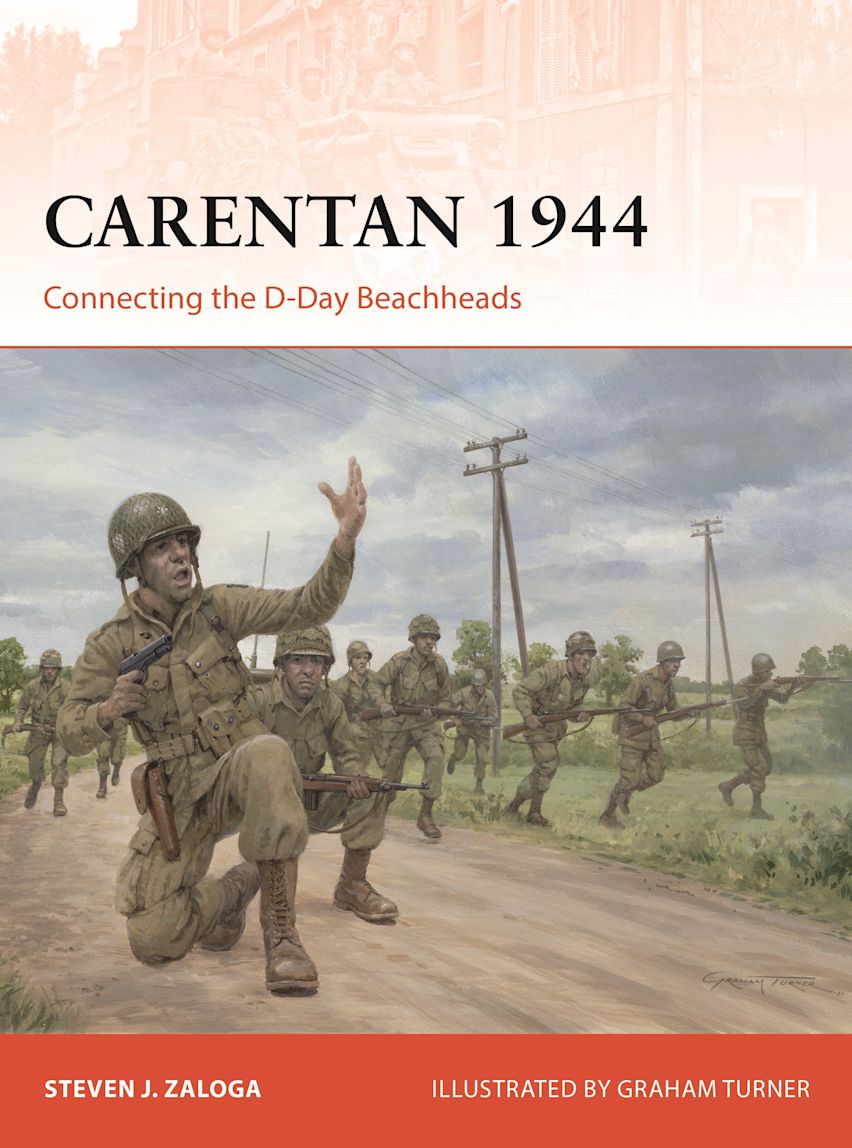
Steven J. Zaloga, Carentan 1944 (Osprey, 2026)
So, you have landed your army on two beaches along the Normandy coastline. Then what? You have to unite them before you can push forward. This was the situation facing the Americans on D-Day; they just had to take the towns of Saint-Côme-du-Mont and Carentan with the 101st Airborne to bridge the gap. But that proved easier said than done, with an elite unit of Germans dug-in to defend an already difficult zone to traverse. In this Osprey Campaign series book, Steven Zaloga takes us into a critical battle for control of Normandy.
After a brief assessment of the problem, Zaloga outlines the commanders and forces involved on both sides. The German’s primary force was Fallschirmjäger-Regiment.6 (FJR.6), a veteran paratrooper unit of over 4,000 men on D-Day, many of whom had seen combat. By any measure, they were a tough nut to crack. That nutcracker was the storied 101st Airborne Division, who were an intensively trained group of elite soldiers but lacking combat experience at this time. Events would show, however, that they were ready for the task ahead. Zaloga notes that the Germans had planned for landings in the Cotentin peninsula and took various steps to impede airborne forces, including flooding low-lying ground, though that Zaloga argues would backfire in the end on the defenders. Thanks to Ultra decrypts, the Americans knew who they would be fighting, but that would not make it any easier for them.
Zaloga begins his narrative of the campaign with the softening up of German positions and the first drops of US paratroopers. This did not go completely according to plan, and losses were high though initial objectives were achieved. The initial German confusion gave way to establishing their defence of Saint-Côme-du-Mont and Carentan before chaos resumed as widely spread groups of US paratroopers broke German communications and isolated German units. Zaloga describes fighting amongst the villages and notorious bocage hedgerows as the Americans pushed off the beaches over the days following D-Day. Despite losses, they pressed on, forcing the Germans back into Carentan, where they set up defensive positions even as their casualties mounted amid ammunition shortages. Widespread flooding offered little opportunity for the Americans to advance without exposing themselves on a raised causeway, and they mistakenly believed the town was lightly defended. They soon found out otherwise. It would take an unlikely bayonet charge to gain a toehold into the town and force the causeway. That was followed by more intense US shelling that reduced the Germans even more and help for them would arrive too late to save the town. They evacuated on 12 June, and a counter-attack the next day failed and was met, in turn, by another determined US assault. By then, FJR.6 was down to a quarter of its strength and Carentan was lost.
Carentan has become famous through Hollywood and HBO treatments, but Zaloga’s account of the battle brings out the true nature of the fighting over this previously understated but ferocious battle. His narrative makes sense of the chaos and confusion, which is an achievement in this style of introductory work. His inclusion of an extensive bibliography will help those readers who want to dig deeper. Zaloga’s even-handed inclusion of German operations also helps to create a worthwhile overview. In that, he is assisted by Osprey’s usual high quality art and map work and contemporary photographs. Readers of World War II, and in particular paratrooper actions, will enjoy this book.
by RNS | Nov 7, 2026 | Beating Tsundoku
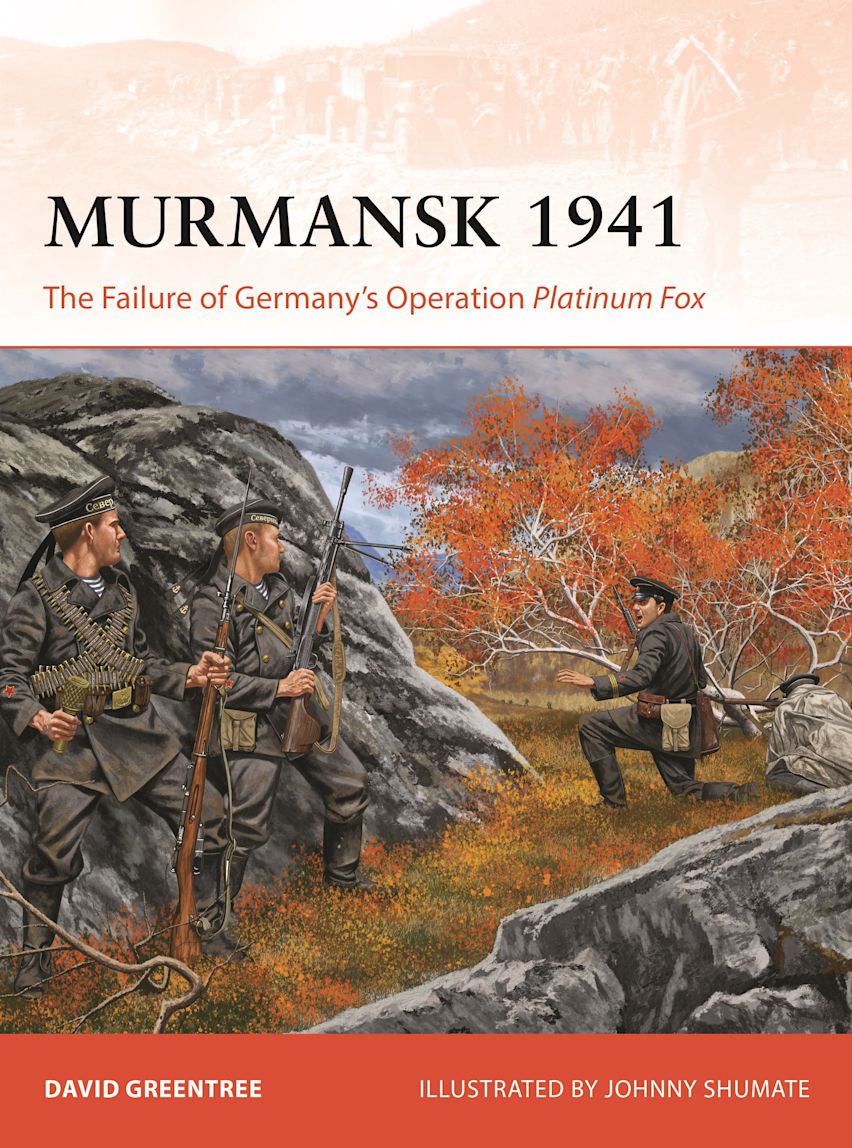
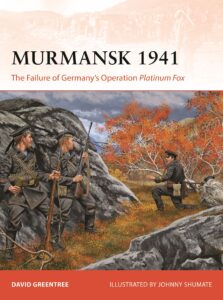
David Greentree, Murmansk 1941 (Osprey, 2026)
The Eastern Front in World War II conjures images of mass warfare, incorporating thousands of tanks and warplanes, sweeping across the wide-open steppes. In the far north, however, the Russians, Germans, and Finns fought a different campaign along a rugged coastline and tundra inland, all for control of the Russian town of Murmansk. In this Osprey Campaign series book, David Greentree takes readers into an unforgiving war in an unforgiving environment.
Germany had concerns over vital Finnish nickel supplies in the event of war with the Soviet Union. Capturing Murmansk on the Barents Sea and its associated railway would be a big part of the protection they needed. The problems for developing a workable plan, however, were manifold. Greentree sets the scene, comparing the respective commanders and their available forces. Returning to the battlefield, we find the Russians digging in and the Germans preparing to attack across mostly unknown terrain against an opposition they knew little about. Greentree moves on to discussing the opposing plans. The German Generalleutnant Eduard Dietl fretted about the size of his command, the intended approaches, and events elsewhere that might impact his campaign. The Russians did not fully believe that Germany would attack but prepared defensive positions anyway. Then came 22 June 1941 and Operation Barbarossa.
The German advance begins Greentree’s narrative of the campaign. The Germans rolled forward while building their logistics, while the Russians held as best they could. The grind would continue for months. What is striking throughout this narrative is the lack of effective communications and the broken terrain that benefitted the defender. That worked both ways, affecting the Russians just as badly when they counter-attacked, though wasteful frontal assaults did not help them. An attempt to flank German positions north of Litza Bay also came unstuck. Greentree also describes the action at sea, with the Royal Navy aiding the Russians in limiting German convoys creeping along the coast. On land, attrition took its toll on men and morale, including, perhaps surprisingly, German SS units. By September, the Germans had lost momentum and supplies had dwindled. Their offensive had been stopped in its tracks. Greentree concludes that the Germans had deployed insufficient forces in the wrong places and did not support them. The Russians played their part, of course, in wearing down and defeating the Germans.
This is an interesting survey of a smaller campaign within the massive Operation Barbarossa. David Greentree just about manages to contain all the twists and turns of a wide-ranging series of combats on land and sea. There are moments where the details swamp the narrative flow, but that is probably unavoidable in this format. Nevertheless, Greentree successfully outlines who did the fighting and how that unfolded. He is ably supported by excellent maps and illustrations and some fascinating photographs. Readers interested in an off-beat campaign from the Eastern Front will enjoy Greentree’s efforts.