Mark Lardas, Lexington-Class Aircraft Carriers 1927-46 (Osprey, 2026)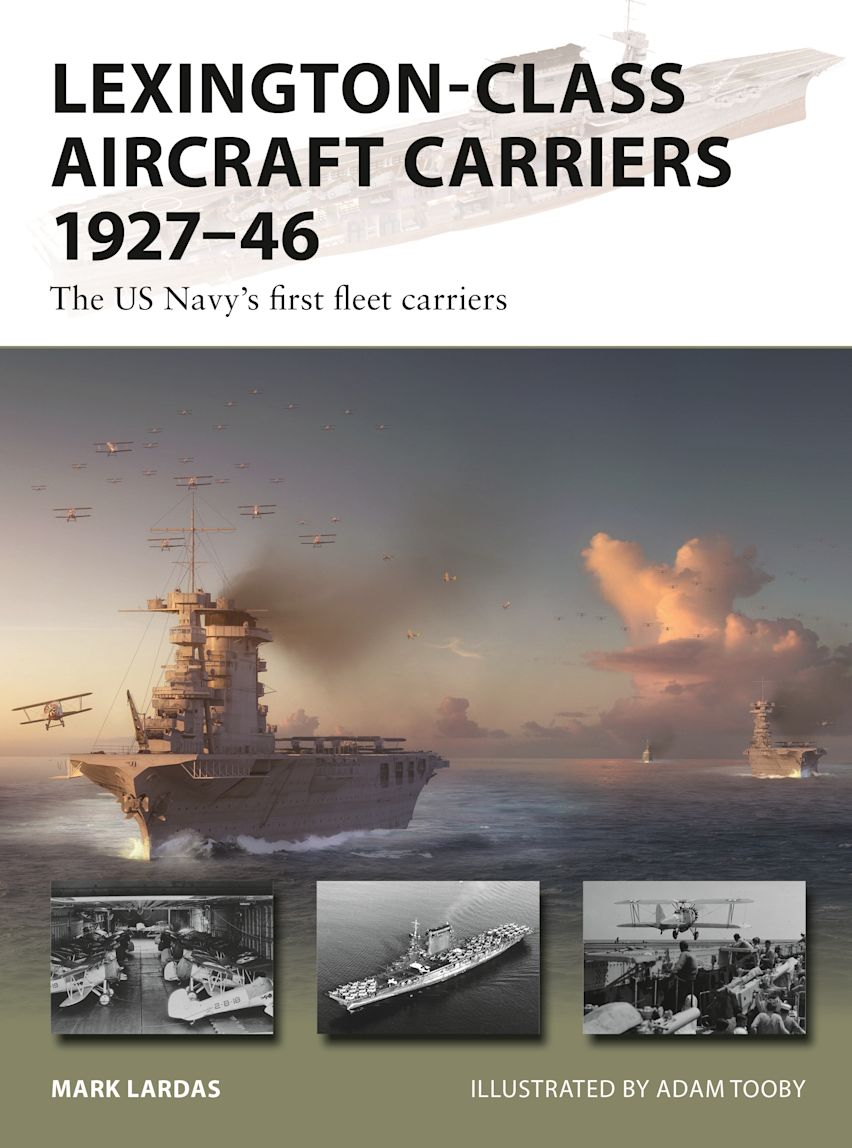
Arguably, the most distinctive warships of World War II were the Lexington-class Carriers of the US Navy, with their massive funnel arrangements. There were only two of them, Saratoga and Lexington, but they played a significant role in the Pacific theatre. They were also the largest carriers the US deployed before 1945. In this Osprey New Vanguard book, Mark Lardas describes these historic vessels and narrates their wartime experiences.
Lardas begins with the sinking of Saratoga by nuclear explosion in 1946. In juxtaposition, he follows with the development of aircraft carriers, leading to the Lexington Class Carriers in accord (but not quite) with the Washington Treaty of 1922. He compares those with other naval powers: France, Britain, and Japan. Lardas notes that the US could already build fast ships, but like everyone else, designing the specifications for an aircraft carrier was still relatively new. In addition to the basic configuration, the designers upgraded and modified the Carriers as the demands of war were met. Lardas highlights the installation of radar as illustrative of new technological resources being deployed.
Lardas closes with two narrative sections about the two ships in peace and war. Both were laid down in the early 1920s, with air operations beginning in 1928. Then they were used in fleet exercises, in the wrong role, argues Lardas. In the 1930s, he continues, they were involved in shaping the US naval doctrine that would take them into war. That included an exercise attacking Pearl Harbor, the lessons from which impressed the Japanese more than the Americans! Neither Carriers were present at the real thing, but Saratoga was torpedoed by a submarine in January 1942. While in drydock, Lexington was sunk at the Battle of the Coral Seas in May 1942. Saratoga survived the war only to be destroyed in post-war atom bomb tests.
There were only two ships in the Lexington-class, but they were important for the development of US Navy carrier doctrine, and their unique profile prompts questions worthy of a book in this series. The sinking of the Lexington at Coral Sea was also an iconic moment of the Pacific War. Lardas has written an interesting wee survey that covers all the technical bases and outlines the fate of the Lexington and Saratoga. Excellent graphic art and photographs accompany his text. Readers interested in the Pacific Theatre will enjoy this book as will readers of naval history in general.