by RNS | Oct 22, 2026 | Beating Tsundoku
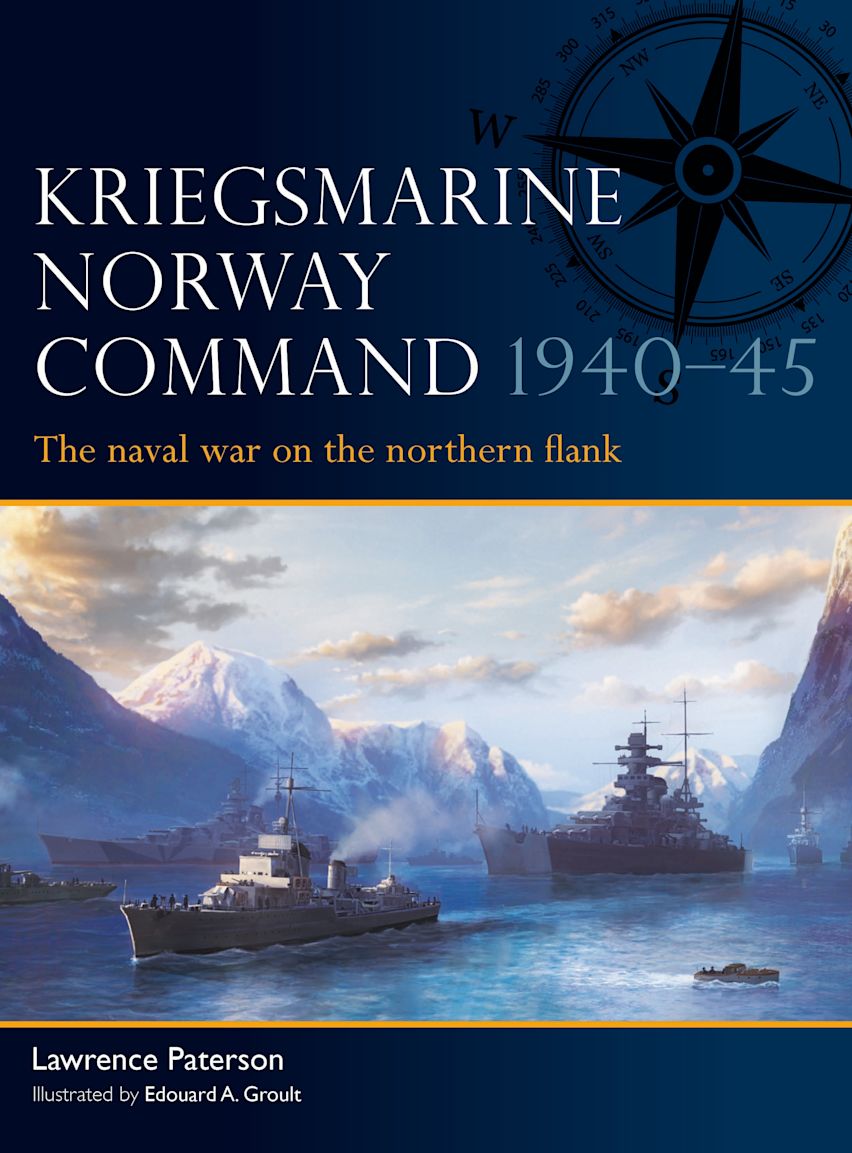
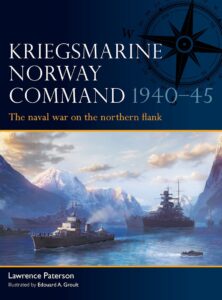
Lawrence Paterson, Kriegsmarine Norway Command 1940-45 (Osprey, 2026)
In this edition of Osprey’s Fleet series, we revisit the Kriegsmarine in Norway. Rather than the separate commands, however, Lawrence Paterson examines the totality of the German fleet operations in this theatre. That includes offensive operations into the North Atlantic and against the Soviet Union but also the layered and stretched defensive curtain the Kreigsmarine attempted to place along the extensive Norwegian coastline. To do all that, Paterson highlights the absence of a single fleet but an overall command that served Germany’s naval requirements.
Paterson relates how the German high command was persuaded that invading Norway was vital to protect Germany’s iron ore supply while providing a base of operations into the North Atlantic. He notes that the Royal Navy was initially unprepared to deal with the Germans as the coastline quickly became Fortress Norway. After providing that context, Paterson conducts a survey of ships, including Tirpitz as the standout heavy warship, many destroyers, flak ships, gunboats, torpedo boats captured from the Norwegians and repurposed, minelayers, and the ubiquitous Vorpostenboote or patrol boats, generally converted whalers and trawlers, and of course U-boats, though they surprisingly under-performed in action. Command and control proved cumbersome and in need of regular tinkering, Paterson notes, before working his way through the command structure and geographic and operational responsibilities. The war in Norway started with a bang, with Narvik the focus of fierce combat. Norwegian capitulation on 10 June 1940 resulted in a year of German consolidation. Fending off Royal Navy attacks occupied much of the German time along the long, crenulated coastline, but they also carried out offensive operations against Allied convoys in the North Atlantic and against Soviet bases. Along the way, they lost the battleships Scharnhorst and Tirpitz, one to naval combat and the other to increasingly effective FAA and RAF raids. In his analysis, Paterson argues that the invasion of Norway ‘taxed the Kreigsmarine to the maximum’ and that they failed in their mission to stop the Allied convoys. The Norwegian theatre, he concludes, promised much but delivered little.
Kriegsmarine Norway Command is a useful survey of German naval operations in a complex theatre. Paterson ranges across the wide scale of operations from big ship actions to the smallest coastal defence vessels. Along the way, he offers deeper dives into actions through informative ‘boxouts’. Osprey’s graphics, illustrations, and photographs complement Paterson’s text. Anyone interested in the Kriegsmarine or World War II naval actions in general will appreciate this book.
by RNS | Oct 16, 2026 | Beating Tsundoku
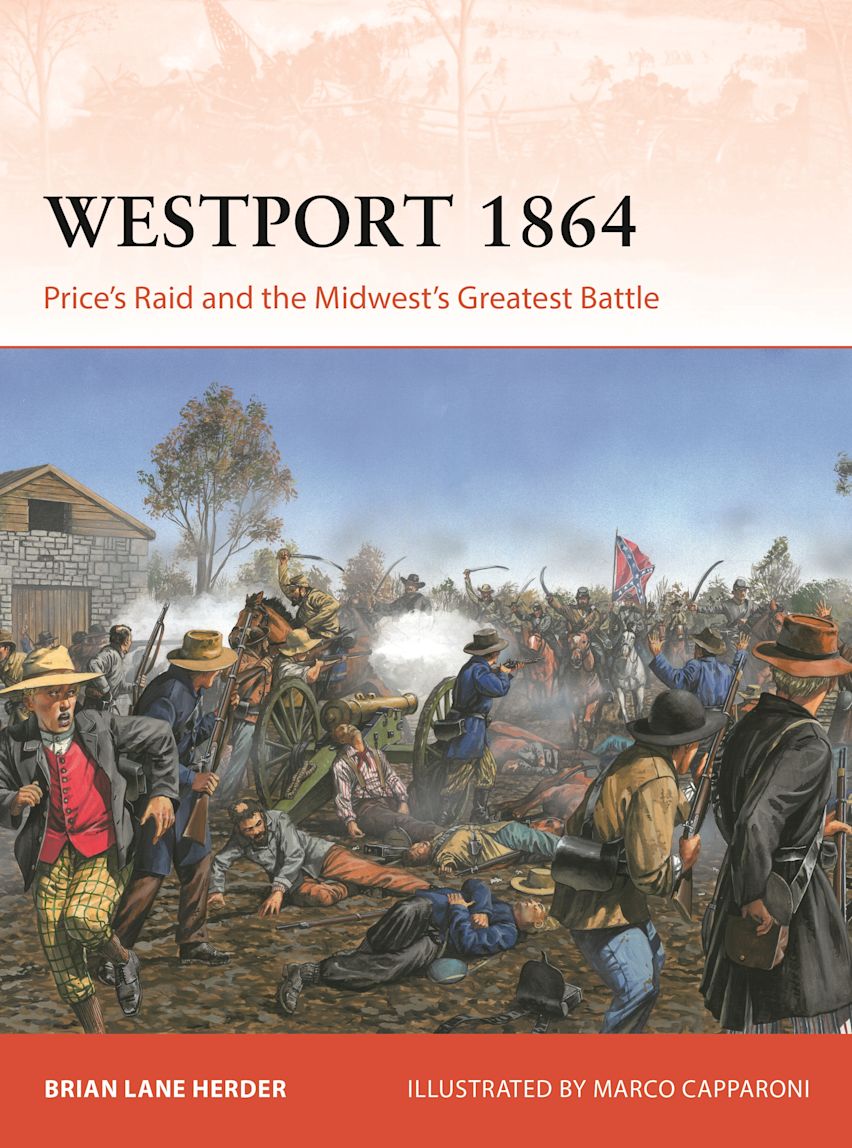
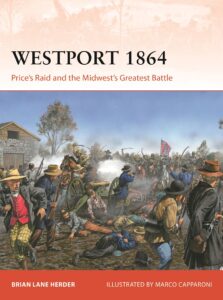
Brian Lane Herder, Westport 1864 (Osprey, 2026)
By late 1864, the fortunes of the American Civil War had firmly shifted in favour of the Union. But the fighting was far from over. While the concentration of forces remained in the East, the Western theatre had not been completely neglected, though the Federal forces in Kansas felt more threatened by Indian raids than Confederate ones. That would change in September with a Confederate invasion that threatened St. Louis. It would end in the second largest cavalry battle of the war. In this Osprey Campaign series edition, Brian Lane Herder brings us that story.
The neighbouring States of Kansas and Missouri were hotbeds of violence before the hostilities opened that became a national conflagration in 1861. The central issue was slavery against free labour, with Kansas opting for the latter when it came to picking sides in the Civil War. Herder highlights Missouri as a more contested space with considerable military activity in the early phases of the war. That included along the Kansas-Missouri border, which became anarchic. Herder assesses the strategic situation in 1864. That reveals a Confederacy firmly on the back foot and split in two along the Mississippi river. To bolster the west, the Confederates pushed a cavalry force into Missouri, traditionally known as ‘Price’s Raid’, but it was much bigger than that.
Herder reviews the various commanders on both sides, a cast of atypical characters but typical of the Civil War. The men Confederate general Sterling Price commanded consisted of three undersized cavalry divisions with some light artillery, the quality of which left much to be desired. The Federal force was of a similar size, around fourteen-thousand, consisting of regular and militia troops from across the Union. They were superior to the Confederates in almost every metric. Sterling Price’s mission was to capture St. Louis, and if forced out, to ravage Kansas; the Federals, under Major-General Samuel Curtis, just had to hold, but they were unprepared for a major Confederate invasion.
The campaign narrative follows. Herder begins in late August 1864, with the Confederate army bypassing the Federal line and moving into Arkansas before invading Missouri on 19 September. The first serious resistance came at Fort Davidson, which fell but so did 1,000 Confederates. Then, as he approached St. Louis, Price abandoned efforts to carry the town, described as ‘one of the Confederacy’s great lost opportunities’ by Herder. Jefferson City became the new target. But here too, Price opted out, rendering the overall mission a failure. Herder switches to review the anarchic bushwhacker actions along the border. Returning to the main operations, Herder describes the ‘race to Kansas’ and the clashes between the Confederates and Federals at Glasgow, Sedalia, and Little Blue River. On 22 October, the sides met at Westport in the largest battle fought west the Mississippi river. This was in reality two almost synchronous battles followed by two more the following morning. Across the battlefields, the Federals wore down their opposition before sending them flying. Rearguard actions followed until the Federals over-ran the Confederates at Mine Creek on 25 October in a stunning cavalry charge. Despite his later braggadocio, Price’s army had been destroyed almost wholesale, and the Confederate effort west of the Mississippi river was effectively ended.
The Western theatre of the American Civil War rarely grabs the attention of readers and students. That’s probably rightly so, given the scale of operations east of the Mississippi. But Brian Herder, a Kansas native, has written an action-packed narrative of war set against a fractious political background. The Westport campaign has everything that makes the Civil War interesting, and in some ways, unique, and there is the added dimension of a large cavalry battle to enjoy. It’s a fascinating story. Herder is ably supported by excellent maps, graphic illustrations, and contemporary photographs. Readers of the Civil War will appreciate this book.
by RNS | Oct 9, 2026 | Beating Tsundoku
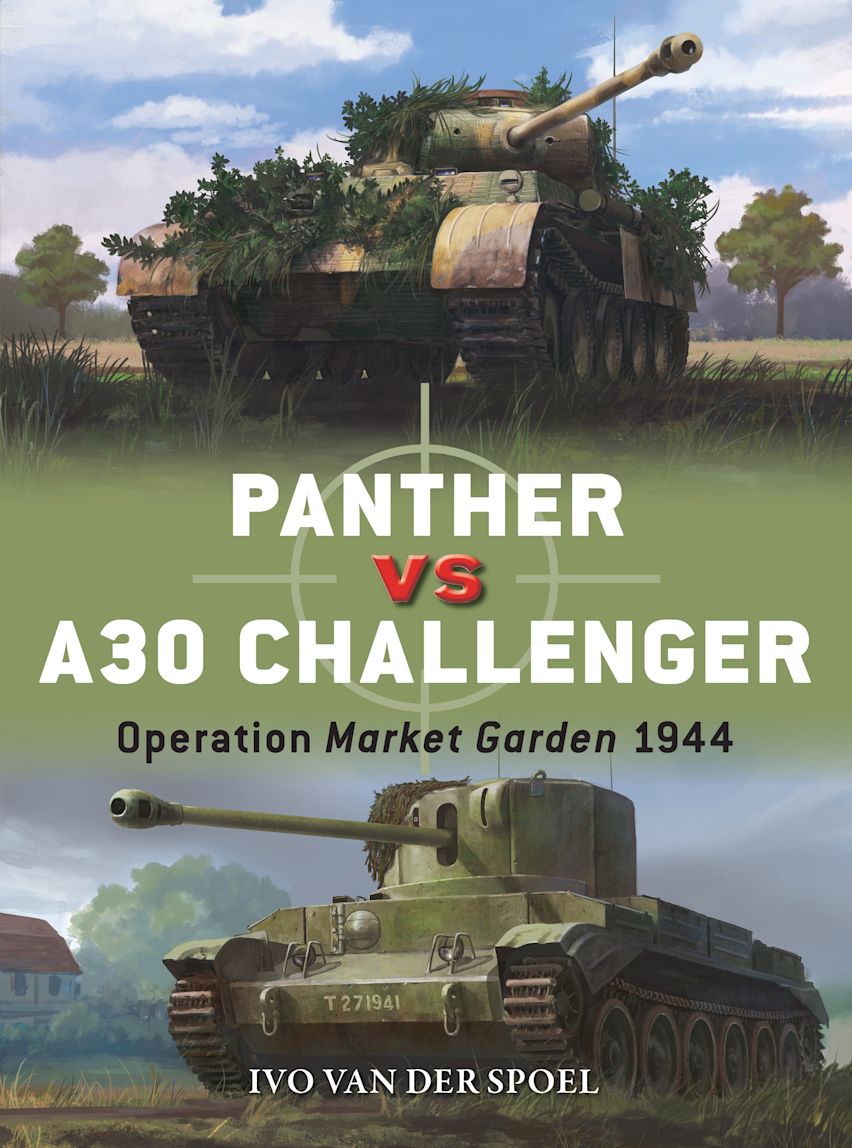
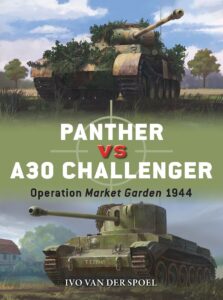
Ivo Van Der Spoel, Panther vs A30 Challenger (Osprey, 2026)
It was a straightforward proposal: drop a carpet of paratroopers across the front line in the Netherlands and link those to advancing supporting troops via a single road. But there were bridges to protect, and the Germans wanted to prevent that. They sent small Panzer-Brigades to counter-attack, which included Panthers, and in return, near the bridge at Son, the British deployed an ungainly looking tank, the A30 Challenger. In this Osprey Duel series book, Ivo Van Der Spoel describes what happened next.
Spoel begins with the background of Operation Market Garden and how the Panther and Challenger arrived at the Son bridge in September 1944. He leaves the narrative to describe the design and development of the Challenger, which he places into the doctrinal framework of the British army throughout the war. What emerges is that the British learned some severe lessons as the war progressed. They needed a bigger gun to compete, and the demands of the war led them to put that gun on a Cromwell chassis. It gave them a tank that had some problems but was able to contest the battlefield. The Germans too had combat issues and had to think on the fly how to develop a medium tank that could fight Soviet T-34s. Their solution was the Panther, which entered production in January 1943 and thrown into battle despite numerous defects. That proved disastrous on the Eastern Front, prompting further modifications. By the time of Market Garden, the Panther was a good tank, argues Spoel, but one that suffered from poor logistics and lack of crew training.
After a comparison of tank specifications, Spoel discusses the evolution of tank tactics, including their use in combined-arms, hide and seek tactics, and the time-consuming British tactic of bringing in Challengers to deal with troublesome enemy tanks. Spoel focuses on the 15/19 Hussars’ campaign in France, where they found Panthers hard to beat. He also follows Panzer-brigade 107 on its road to the Son bridge. Spoel returns to the strategic situation for Market Garden before launching into the narrative for the battle for Son bridge. There, the arrival of Panthers threw the cat among the pigeons among the airborne troops. They dug in to wait for the Hussars, who arrived having learned some lessons on how to fight Panthers. Spoel’s detailed tank vs tank narrative follows but within the context of the broader fight. The shock of the Panther attack soon wore off, and they were steadily eliminated. Then the British counter-attacked, driving into the German positions before withdrawing successfully. In his analysis, Spoel notes that the German thrust had caused some anxiety and helped delay the vital British advance, but the Panthers struggled with maintenance and logistics issues. The British Challenger soon gave way to new tanks, but it had done its job when it could be used effectively.
The use of a ‘duel between tanks’ angle may seem a bit of a contrived means of writing about a small battle within a greater operation. After all, the Challenger was hardly involved in the fight, though when it was used, it was quite successful. Nevertheless, Ivo Van Der Spoel has written an absorbing wee study that answers all the big questions about how these tanks evolved and how they were used. Osprey’s excellent graphic art and photograph selection adds flavour and valuable information to Spoel’s text. His book is a useful addition to the voluminous literature on Market Garden, and readers of WWII will no doubt enjoy this.
by RNS | Oct 2, 2026 | Beating Tsundoku
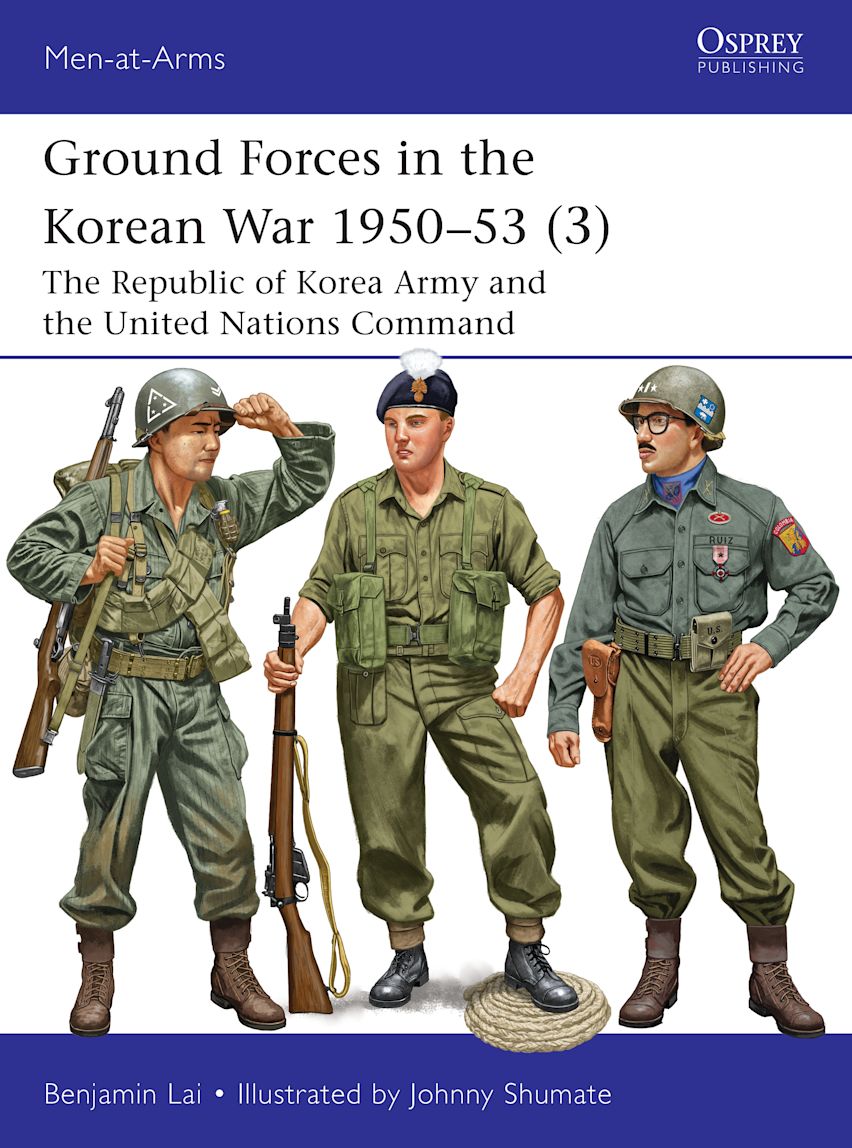
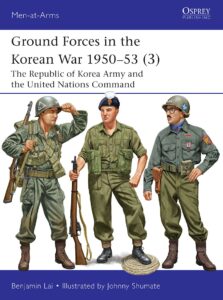
Benjamin Lai, Ground Forces in the Korean War 1950-53 (3) (Osprey, 2026)
Of the more than half a million troops that formed the United Nations Command in the Korean War, Bejamin Lai informs us in this latest book in Osprey’s Men-at-Arms series, half were South Koreans, 253,000 were American, and 28,000 came from fourteen supporting countries. Lai surveys the Republic of Korea Army (ROKA) and the UN Command (UNC) forces.
Lai traces the origins of the ROKA to the chaos that ensued after the Japanese expulsion in 1945. The new army was backed by the US and was used primarily for policing rebel groups. But they would soon be needed for greater purposes. Lai notes how the ROKA needed re-equipping from their wartime Japanese equipment, and they suffered from poor quality leadership at all levels. They also lacked artillery and armour. When the North Korean hammer fell, the ROKA was found wanting. That prompted a greater ‘americanisation’ of the ROKA to bring it up to combat standards. Lai also surveys the uniforms and equipment of the ROKA soldiers, highlights some of its key units, and reviews the ROK Marine Corps.
The UNC forces are given the same treatment by Lai. He surveys the troops, uniforms, and equipment from the Commonwealth troops, with an emphasis on the British who supplied the biggest contingent. The Belgium-Luxembourg volunteers are included in addition to contingents from Colombia, France, Greece, the Netherlands, the Philippines, Thailand, Türkiye, and Ethiopia. Lai concludes with a brief survey of noncombatant contingents from a host of countries.
Lai’s survey of ROKA and UNC forces is primarily aimed at readers interested in uniforms and equipment. That makes it supplemental, but still useful, for those more interested in the history of the Korean War. Lai’s straightforward text is accompanied by many photographs and colour illustrations of soldiers and equipment, and that is all that is required to create another solid edition to the Men-at-Arms series.