Ivo Van Der Spoel, Panther vs A30 Challenger (Osprey, 2026)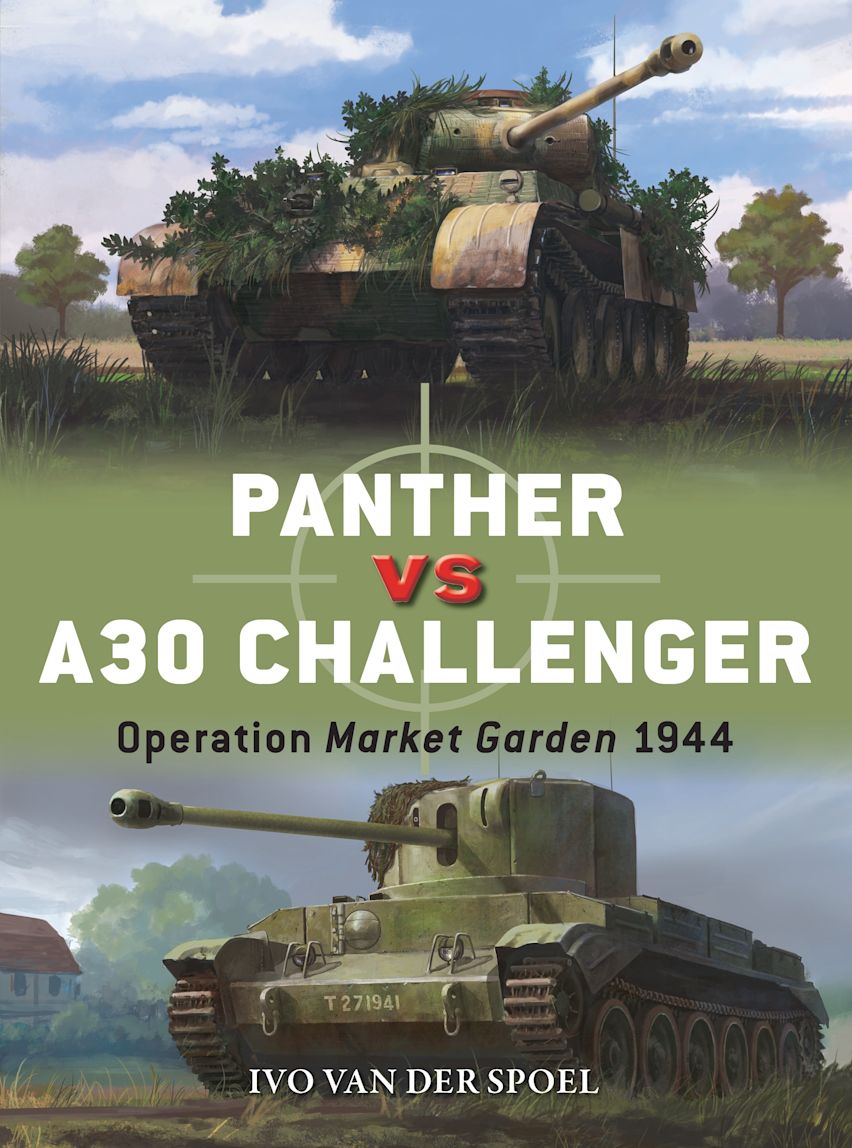
It was a straightforward proposal: drop a carpet of paratroopers across the front line in the Netherlands and link those to advancing supporting troops via a single road. But there were bridges to protect, and the Germans wanted to prevent that. They sent small Panzer-Brigades to counter-attack, which included Panthers, and in return, near the bridge at Son, the British deployed an ungainly looking tank, the A30 Challenger. In this Osprey Duel series book, Ivo Van Der Spoel describes what happened next.
Spoel begins with the background of Operation Market Garden and how the Panther and Challenger arrived at the Son bridge in September 1944. He leaves the narrative to describe the design and development of the Challenger, which he places into the doctrinal framework of the British army throughout the war. What emerges is that the British learned some severe lessons as the war progressed. They needed a bigger gun to compete, and the demands of the war led them to put that gun on a Cromwell chassis. It gave them a tank that had some problems but was able to contest the battlefield. The Germans too had combat issues and had to think on the fly how to develop a medium tank that could fight Soviet T-34s. Their solution was the Panther, which entered production in January 1943 and thrown into battle despite numerous defects. That proved disastrous on the Eastern Front, prompting further modifications. By the time of Market Garden, the Panther was a good tank, argues Spoel, but one that suffered from poor logistics and lack of crew training.
After a comparison of tank specifications, Spoel discusses the evolution of tank tactics, including their use in combined-arms, hide and seek tactics, and the time-consuming British tactic of bringing in Challengers to deal with troublesome enemy tanks. Spoel focuses on the 15/19 Hussars’ campaign in France, where they found Panthers hard to beat. He also follows Panzer-brigade 107 on its road to the Son bridge. Spoel returns to the strategic situation for Market Garden before launching into the narrative for the battle for Son bridge. There, the arrival of Panthers threw the cat among the pigeons among the airborne troops. They dug in to wait for the Hussars, who arrived having learned some lessons on how to fight Panthers. Spoel’s detailed tank vs tank narrative follows but within the context of the broader fight. The shock of the Panther attack soon wore off, and they were steadily eliminated. Then the British counter-attacked, driving into the German positions before withdrawing successfully. In his analysis, Spoel notes that the German thrust had caused some anxiety and helped delay the vital British advance, but the Panthers struggled with maintenance and logistics issues. The British Challenger soon gave way to new tanks, but it had done its job when it could be used effectively.
The use of a ‘duel between tanks’ angle may seem a bit of a contrived means of writing about a small battle within a greater operation. After all, the Challenger was hardly involved in the fight, though when it was used, it was quite successful. Nevertheless, Ivo Van Der Spoel has written an absorbing wee study that answers all the big questions about how these tanks evolved and how they were used. Osprey’s excellent graphic art and photograph selection adds flavour and valuable information to Spoel’s text. His book is a useful addition to the voluminous literature on Market Garden, and readers of WWII will no doubt enjoy this.