Steven J. Zaloga, Carentan 1944 (Osprey, 2026)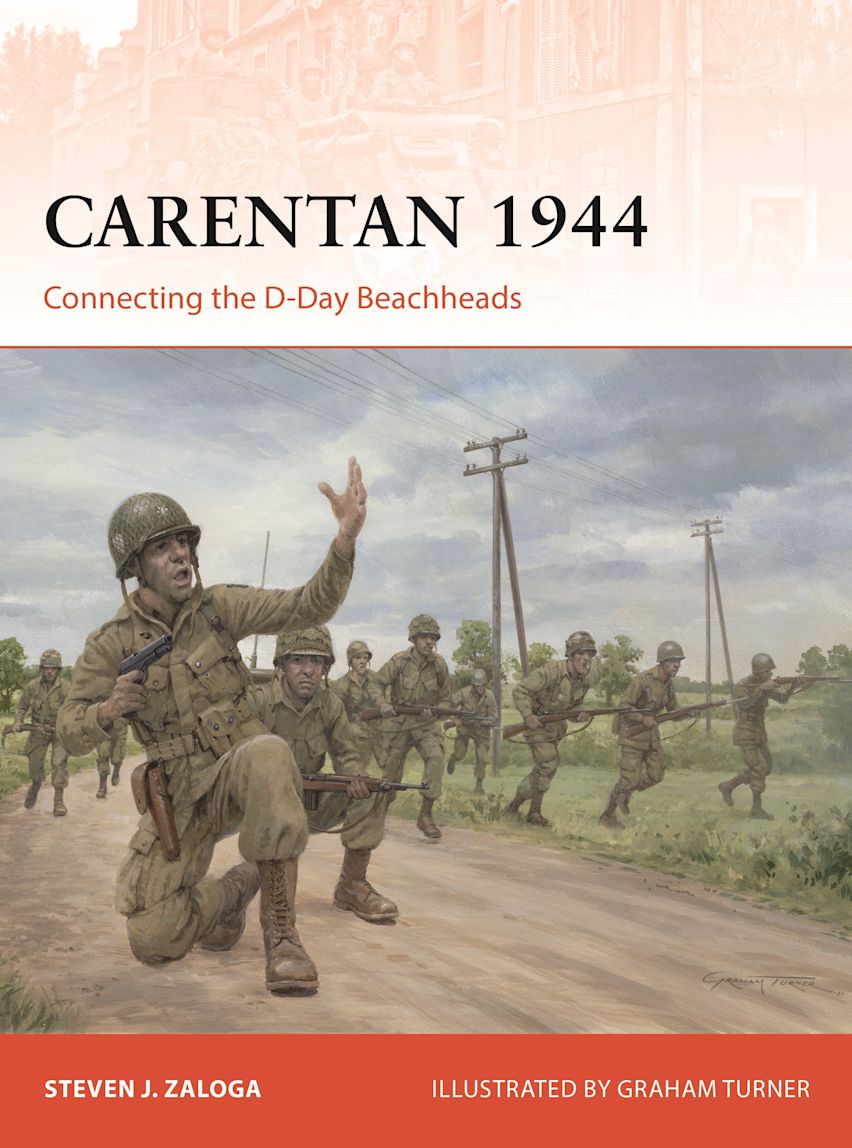
So, you have landed your army on two beaches along the Normandy coastline. Then what? You have to unite them before you can push forward. This was the situation facing the Americans on D-Day; they just had to take the towns of Saint-Côme-du-Mont and Carentan with the 101st Airborne to bridge the gap. But that proved easier said than done, with an elite unit of Germans dug-in to defend an already difficult zone to traverse. In this Osprey Campaign series book, Steven Zaloga takes us into a critical battle for control of Normandy.
After a brief assessment of the problem, Zaloga outlines the commanders and forces involved on both sides. The German’s primary force was Fallschirmjäger-Regiment.6 (FJR.6), a veteran paratrooper unit of over 4,000 men on D-Day, many of whom had seen combat. By any measure, they were a tough nut to crack. That nutcracker was the storied 101st Airborne Division, who were an intensively trained group of elite soldiers but lacking combat experience at this time. Events would show, however, that they were ready for the task ahead. Zaloga notes that the Germans had planned for landings in the Cotentin peninsula and took various steps to impede airborne forces, including flooding low-lying ground, though that Zaloga argues would backfire in the end on the defenders. Thanks to Ultra decrypts, the Americans knew who they would be fighting, but that would not make it any easier for them.
Zaloga begins his narrative of the campaign with the softening up of German positions and the first drops of US paratroopers. This did not go completely according to plan, and losses were high though initial objectives were achieved. The initial German confusion gave way to establishing their defence of Saint-Côme-du-Mont and Carentan before chaos resumed as widely spread groups of US paratroopers broke German communications and isolated German units. Zaloga describes fighting amongst the villages and notorious bocage hedgerows as the Americans pushed off the beaches over the days following D-Day. Despite losses, they pressed on, forcing the Germans back into Carentan, where they set up defensive positions even as their casualties mounted amid ammunition shortages. Widespread flooding offered little opportunity for the Americans to advance without exposing themselves on a raised causeway, and they mistakenly believed the town was lightly defended. They soon found out otherwise. It would take an unlikely bayonet charge to gain a toehold into the town and force the causeway. That was followed by more intense US shelling that reduced the Germans even more and help for them would arrive too late to save the town. They evacuated on 12 June, and a counter-attack the next day failed and was met, in turn, by another determined US assault. By then, FJR.6 was down to a quarter of its strength and Carentan was lost.
Carentan has become famous through Hollywood and HBO treatments, but Zaloga’s account of the battle brings out the true nature of the fighting over this previously understated but ferocious battle. His narrative makes sense of the chaos and confusion, which is an achievement in this style of introductory work. His inclusion of an extensive bibliography will help those readers who want to dig deeper. Zaloga’s even-handed inclusion of German operations also helps to create a worthwhile overview. In that, he is assisted by Osprey’s usual high quality art and map work and contemporary photographs. Readers of World War II, and in particular paratrooper actions, will enjoy this book.