Jacob Zabielski, Soviet Rifleman versus German Infantrymen (Osprey, 2026)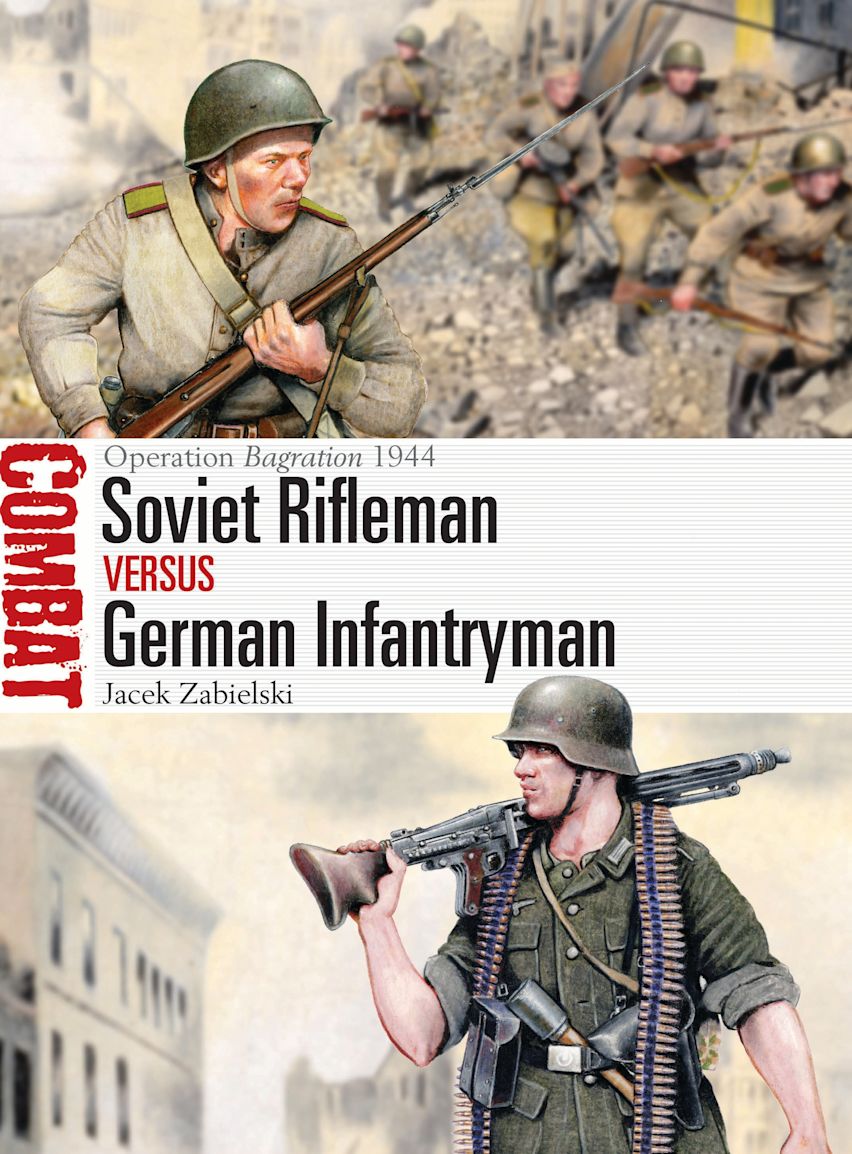
By 1944, the tides of war on the Eastern Front had firmly turned against Germany. The Soviet bear had been chased across the steppes but was now biting back. The Germans had all but spent themselves by this time, and they were not ready for the whirlwind to come in Operation Bagration. At the sharp end of all that were the infantrymen facing each other across the battlefield. In this Osprey Combat series edition, Jacob Zabielski compares those men and their roles in combat.
Zabielski establishes the context with the relentless advances of the Red Army in 1944. That left a massive German salient in western Belorussia held by Heeresgruppe Mitte with orders to hold fast. But they were overstretched, and the Soviets were determined to attack them head-on. With that set, Zabielski examines the organisation and functions of the respective armies with the depleted Germans on the back foot and the seemingly limitless Soviet armies getting after them. Those themes run through Zabielski’s survey of recruitment, training, and logistics, where what the sides wanted to do was often different from what they could do. He then compares tactics and weaponry. The Germans were tried and tested but, again, stretched along their defensive lines, while the Soviets had evolved their frontal assault tactics to work with the artillery to exploit weak spots. Zabielski moves onto the armies in combat, beginning with the Vitebsk-Orsha offensive in June 1944. The Soviets deployed 1.25 million men and used misdirection to lull the Heeresgruppe Mitte into believing the assault would land elsewhere. The shock blew the German front lines away, and the Soviets advanced relentlessly. The next stop would be Minsk, which the Soviets surrounded then squeezed, forcing the Germans into a chaotic retreat. The liberation of Vilnius followed in July 1944. Defending Belorussia had proved impossible for the Germans. In his analysis, Zabielski praises Soviet planning, tactics, and leadership, but he also emphasises their numerical superiority as a key factor. The Germans had been decimated, which exposed them for further operations, especially with the loss of battlefield leadership, men, and equipment.
This is an informative survey of Operation Bagration with a focus on the infantrymen doing the fighting on the ground. Zabielski’s narrative of operations is deftly handled for a short book on a complicated subject, where it is easy to become lost in the staggering numbers. That said, we don’t learn enough about the soldiers’ experiences in what must have been hellish conditions, but the format for this series probably doesn’t allow for that. That quibble aside, as an introduction to the Eastern Front, this works well. Ospreys’ maps, graphics, and particularly photographs add to this well-rounded book that readers of World War II will enjoy.