John Rawlinson, The Royal Marine Commandos 1991-2025 (Osprey, 2026)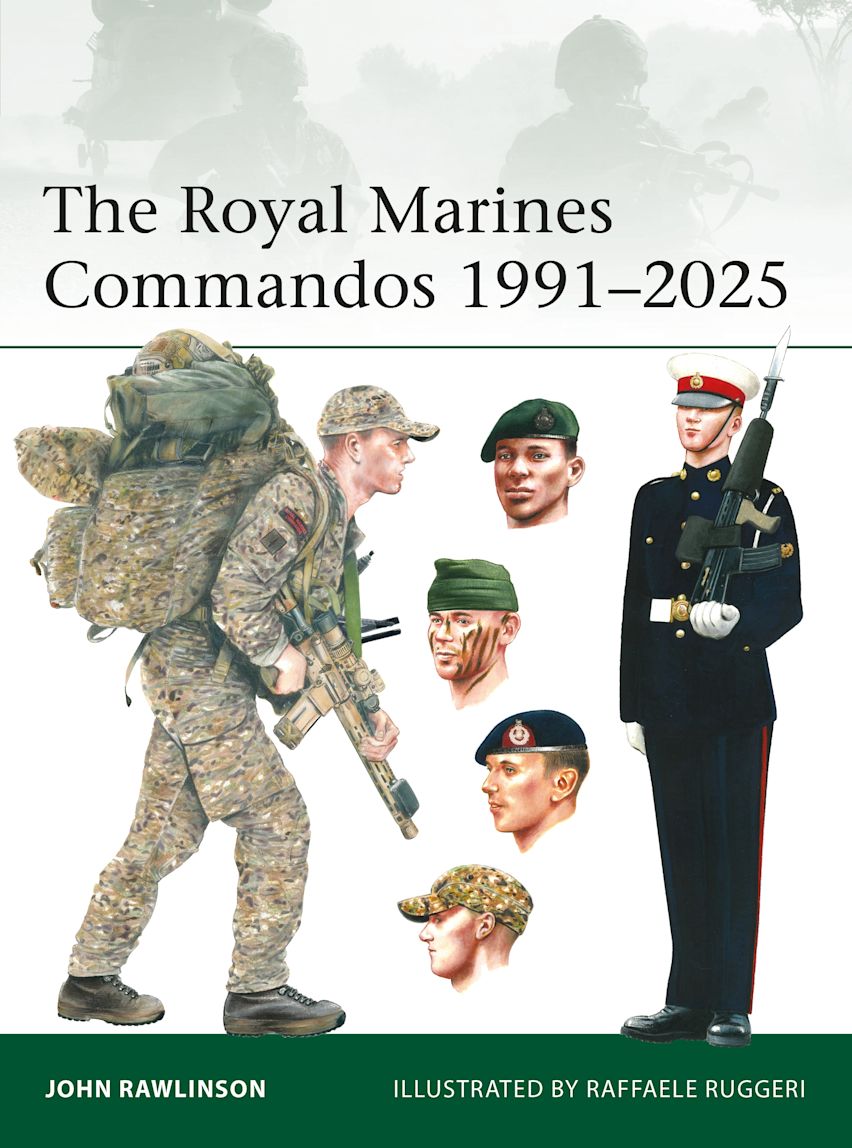
The United Kingdom’s Commando Force (UKCF) has a storied history, and they are rightly famous across the globe for their martial prowess. In this Osprey elite series book, John Rawlinson surveys that actions of the UKCF since 1991 and the changes it has undergone as a result.
Rawlinson notes that the UKCF has two basic missions – find and strike – and he goes into detail on how that works on the ground. He places the Royal Marines into their historical context, leading with an emphasis on their values combined with the ‘commando spirit’. The UKCF goes back to the early 18th Century, becoming permanent in 1755 as a detachment of the Royal Navy. The commando aspect came to the fore in the world wars of the 20th Century, but they have been active in every post-WWII engagement, proving their modern system in the 1982 Falklands War.
How to make a marine begins Rawlinson’s modern review of the service, starting with their basic training. The graduated marines, he notes, can specialize in a multitude of skills applicable to every conceivable theatre of war. That brings Rawlinson to commando operations off Kuwait and in Northern Iraq and maritime operations off Somalia and Northern Ireland. Rawlinson argues that these operations demonstrated the commandos’ effectiveness beyond their traditional amphibious tasks. The commandos also underwent organisational reform in 2000, which was soon put into operation in Afghanistan and Iraq after 9/11. Rawlinson goes into detail on those two theatres. From there, he considers the modern commando and the future of the force, including assistance given to training Ukrainian forces. Rawlinson highlights the trend to deploying smaller commando teams for the wide variety of tasks they are required to conduct. He closes by surveying the commandos’ kit, including weapons, comms equipment, and vehicles used in combat and non-combat situations.
If anyone knows the Royal Marines, it should be John Rawlinson, a notable expert on the service. That ensures the accuracy of this survey, but it is also not a critical assessment, and at times, he treads close to glorifying this branch of the UK’s armed forces. Nevertheless, Rawlinson covers most of what the casual military history reader will want to know, though like most writing on modern warfare, this is a book littered with acronyms, which act as a reading deterrent for the uninitiated. Readers of modern British military history will enjoy this book, as will anyone who wants to know how modern warfare has been conducted over the last three decades.