Steven J. Zaloga, US Tank Tactics in World War II (Osprey, 2026)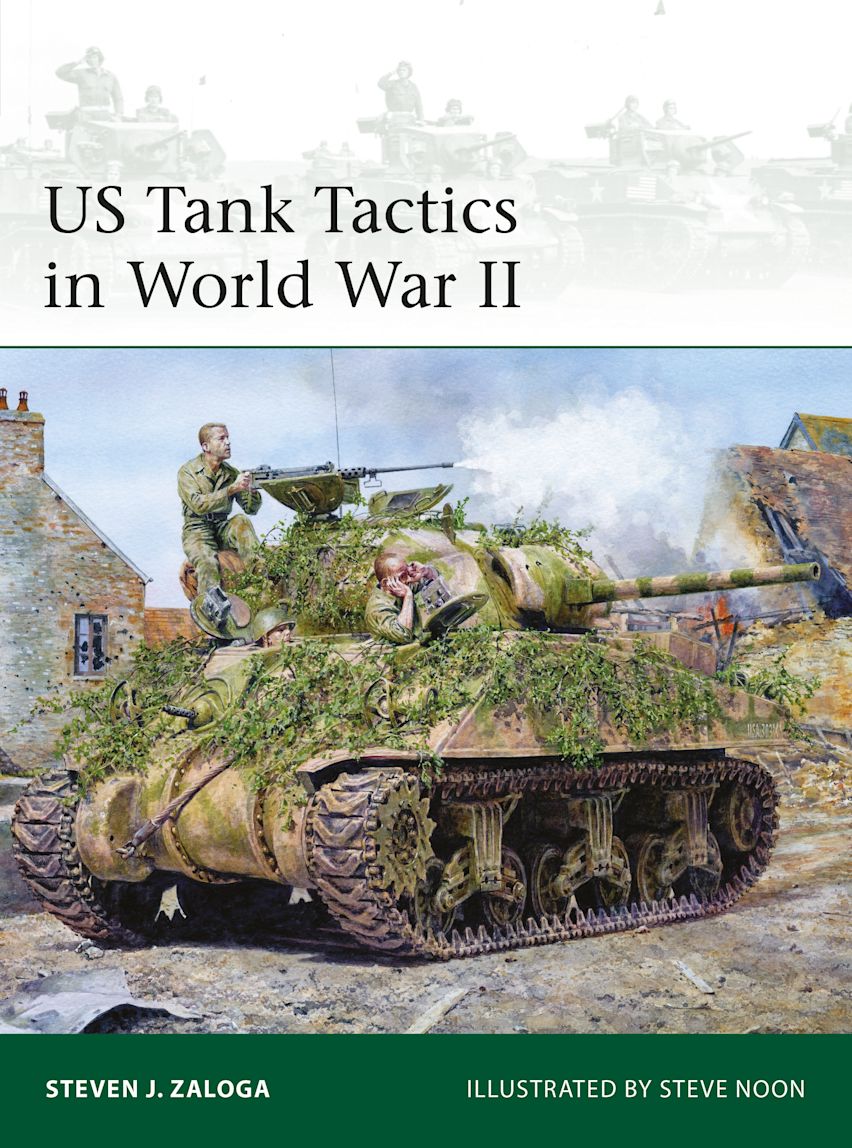
Tanks are synonymous with land combat in World War II. German panzers appear to take up most interest amongst tank enthusiasts, with the American tanks lagging behind. That is perhaps appropriate given that the US lagged behind when it came to developing tank warfare and tactics. In this book, in Osprey’s Elite series, Steven Zaloga surveys the US’s efforts to catch up with other powers as they entered World War II and the sometimes painful lessons they learned along the way.
Stemming from their WWI experience, US tank tactics were focused on infantry support, and tanks were distributed across infantry units. The US stuck to this theory even as the alarm bells of war started ringing in the 1930s, but Germany’s blitzkrieg changed all that. When France fell, the US adopted mechanisation. Zaloga narrates that development and then delves into the rudiments of US tanks, tactics, and organisation. He describes the light and medium tanks and demonstrates that the most basic tactic was centred on the tank’s crew and their drills. From 1940, the infantry support function remained, but a more destructive component was added. Zaloga works his way through the organisation of tanks formed into platoons, companies, battalions, regiments, and divisions. But these were all untested until 1943, and combat inevitably leads to change. That takes Zaloga into North Africa and Sicily, the lessons for the latter gleaned from failures in the former. A renewed emphasis on infantry support was a major change but one that that was difficult to effect given the war’s spread into the Pacific and the demands of the service. Zaloga notes also that the demands on tanks in France would be different from the other theatres. Getting tanks onto the D-Day beaches was one such problem that the US needed to negotiate; dealing with Normandy’s infamous bocage was another. Zaloga examines the thorny problem of communications between tanks and between tanks and infantry. That involved experimenting with radios and telephones. The use of tanks in a breakthrough situation was also a tactical requirement that was tested in France, as was the new obstacle of fighting in urban environments. Zaloga highlights the rarity of tank vs tank combat before September 1944 in Lorraine, where superior US tactics defeated the heavier German panzers. Then came the Battle of the Bulge that December, where German and US tank forces ground each other down. Zaloga notes the importance of combined arms tactics in all of this. Zaloga turns to the Pacific theatre and the deployment of amphibious tanks by the US Marines and their subsequent use as artillery as well as infantry support. Zaloga concludes with the lessons the US learned from World War II and the reorganisation of 1947.
Steven Zaloga has written an engaging and informative survey of US tank warfare in World War II, which is well supported by Osprey’s usual excellent graphic artwork and photographs. He balances a discussion of both the organisation of tanks and tactics as they evolved to uncover a story of assumptions tested by combat and the lessons American commanders drew from that. He also provides examples of US tanks in combat told from the viewpoint of the participants. However, Zaloga’s focus is primarily on the war against Germany, and he gives the Pacific theatre a thin veneer of attention. He might have been better served to ignore the Pacific and change the title. Nevertheless, readers of World War II will enjoy reading this introductory work, which Zaloga notes fills a puzzling gap in the literature on US tank warfare.