Casey Baker, Royal Navy Mediterranean Fleet 1793-1805 (Osprey, 2026)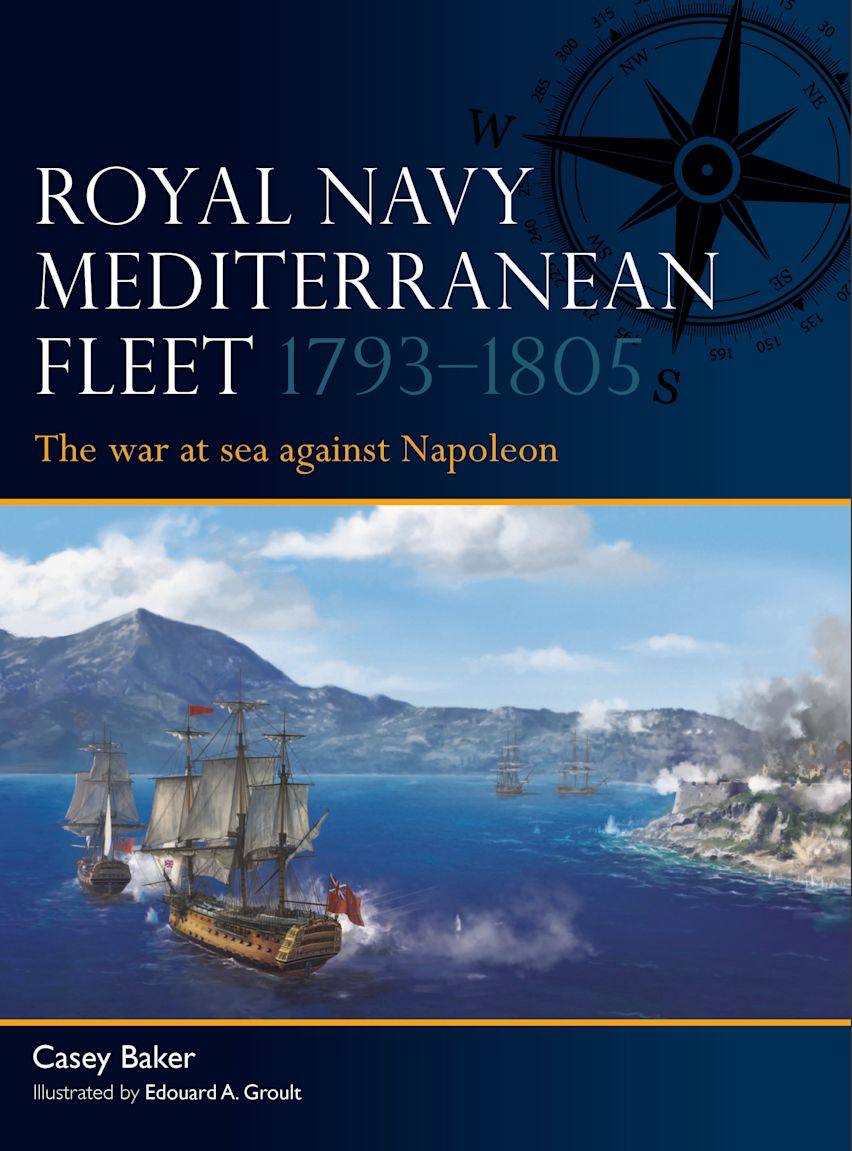
One of the foundations of British naval history has been the victories of the Royal Navy during the Napoleonic wars, most notably at Trafalgar in 1805. The image of giant wooden vessels pounding each other with thunderous cannonades and men boarding French ships with furious intent has roused patriotic fervour ever since. But, as Casey Baker highlights in this volume of Osprey’s Fleet series, the fortunes of the Royal Navy fluctuated far more than spectacular successful battles would suggest.
Baker highlights the complexity of the Mediterranean theatre in an overview describing the variety of fleets that operated there. The Royal Navy in 1793 adopted a defensive mode, primarily protecting trade, but they were soon on the offensive, attacking Toulon and Corsica. The fleet and its strategic purpose expanded as the Second Coalition sharpened into an Anglo-French war at sea. In 1803, the Royal Navy resumed its war with the French and Spanish fleets, and as Napoleon’s empire widened, the Mediterranean became ever more important.
The Spanish, French, and Britain designed their ships for different purposes, Baker notes. He examines the Royal Navy ships of the line, from the 130-gun behemoths through the second-rate 100 and 90-guns and third-rate 74-gun ships. Frigates, Baker argues, performed the ‘most glamorous role in the fleet’ because they could act independently in a variety of roles. Baker also considers the smaller boats: bomb vessels and gunboats, fireships, schooners and cutters, and troop transports. How casualties occurred on these ships was mostly down to accidents. The crews, many of them foreigners, had other things to worry about, such as lack of pay and boredom, and some of that led to mutinies. But they were well drilled, especially in gunnery.
The Mediterranean Fleet was the plum command for ambitious officers, argues Baker. He surveys the commanders, including Nelson and Hood, their rivalries and the wide variety of obligations and duties they had to perform, all of which was conducted by a semi-professional officer class. Communications were difficult for the Fleet, but they were helped by a series of bases in the region, though major repairs still had to be carried out in British dockyards. Baker also reviews the issues relating to logistics, particularly provisions and health care. Of the Fleet’s many roles, Baker highlights blockade duty and hunting Spanish treasure ships.
Baker splits the Mediterranean theatre into three stages: the fights for Toulon and Corsica; the resurgence of the Royal Navy, commencing with the victory at Cape St Vincent in 1797; and the campaign that began with the Battle of the Nile and ended in the Battle of Trafalgar in 1805. Baker follows all the action – the blockades, convoys, sieges, and battles – and ties all that into the raging land war across Europe and Egypt. His viewpoint is taken from the command perspective, particularly examining inter-command relationships in the Fleet. In his final analysis, Baker highlights the vicissitudes of the Royal Navy Mediterranean Fleet. He praises its skill and aggression in action and how the Fleet eroded Napoleon’s confidence in his naval capability. That was balanced by the Fleet’s inability to conduct amphibious operations and to work effectively with the army.
Casey Baker has written an excellent addition to Osprey’s Fleet series with this volume on the Royal Navy in the Mediterranean fighting against French and Spanish forces. He paints a more nuanced picture of the Royal Navy in action, covering its strengths and weaknesses, and his analysis of inter-command relationships and rivalries is particularly good. Baker rarely takes readers below decks, which is disappointing but understandable given the survey nature of these books, but that is a quibble more than a complaint. Osprey’s usual high quality graphics dovetail well with Baker’s informative text. Any reader interested in the Napoleonic wars, particularly at sea, will appreciate this book as will general military history readers.