William E. Hiestand, Tanks in the Caucasus 1942-43 (Osprey, 2026)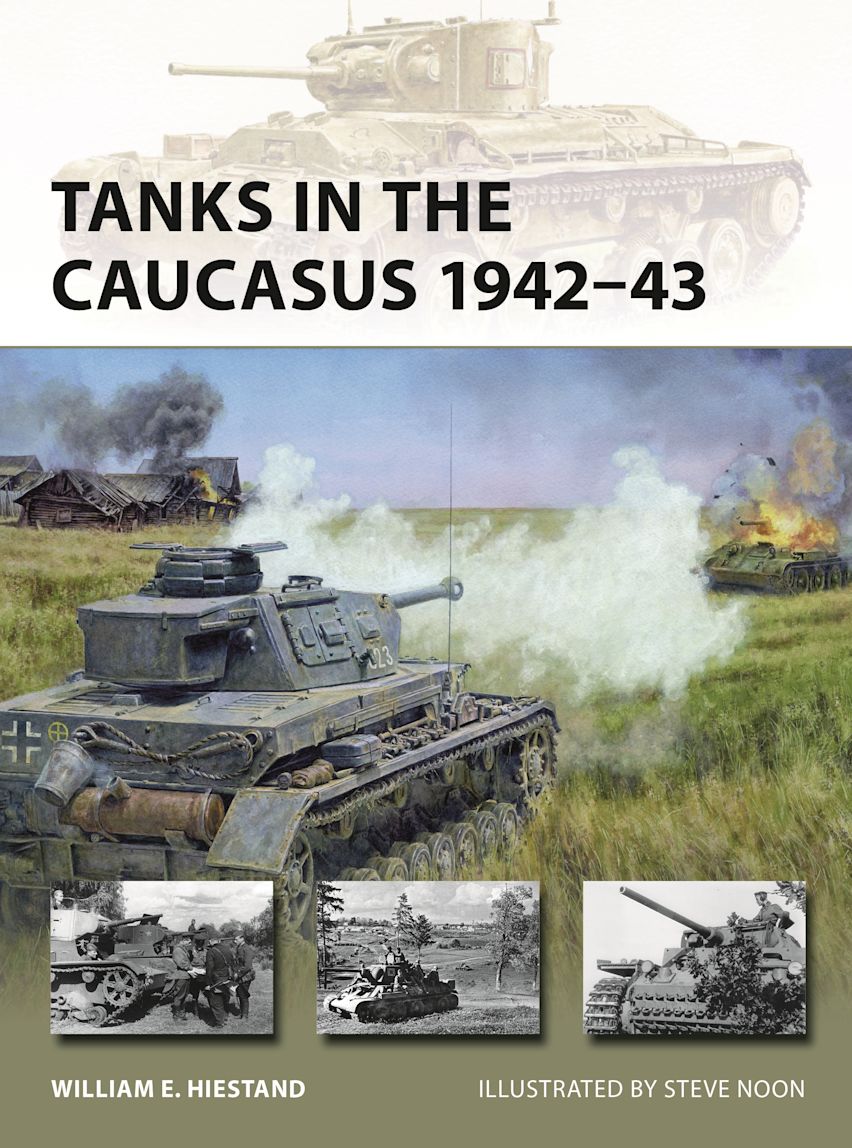
Tank warfare on the Eastern Front in World War II conjures up images of hundreds of tanks fighting across wide open plains. But, as William Hiestand illustrates in this Osprey New Vanguard series book, the Caucasus theatre was unusual because the German panzers initially outnumbered the Soviet T-34s, then the Soviets fought back using a variety of Allied lend-lease tanks.
Hiestand opens with the launching of Operation Barbarossa on 22 June 1941, noting that through the opening phases, the Germans operated combined-arms formations that used better doctrine, organisation, and tactics to defeat their enemies. But they ground down in Russia, encountering supply problems and finding tanks hard to replace. Seizing the Caucasus oilfields became Germany’s primary task for its armour in the southeast. Hiestand describes the German tank formations assigned to the task then moves on to the Soviets. They were rebuilding and reorganising, which Hiestand walks us through, but they were short of home produced tanks. The Allied Lend-Lease programme helped with that. Hiestand describes the tanks from both sides: German Panzerkampfwagen IIs, IIIs, and IVs, the new Tigers, Stugs, Marder IIs, and specialised command tanks; Soviet T-26s, BT-7s, T-34s, KV1s, T-60s, and T-70s; and the Allied Lend-Lease tanks, including Valentines, Stuarts, and Grants.
Having set the scene, Hiestand narrates the campaign. He begins with Operation Edelweiss and Germany’s panzers driving towards the Caucasus oilfields, brushing aside the meagre Soviet defences. But Soviet resistance stiffened behind defence-friendly terrain while nipping at the German advance, which ground to a halt before reaching key strategic objectives. The failure to capture Stalingrad threatened the German position in the Caucasus, and they siphoned off units to assist the beleaguered city. The Soviets, meanwhile, were a gathering storm, aided by the infusion of Lend-Lease tanks. Conversely, the loss of tanks adversely affected the Germans, which was not helped by grinding Soviet frontal attacks. By August 1943, argues Hiestand, both sides were exhausted and offensive operations ceased. The Germans would eventually withdraw. In his analysis, Hiestand emphasises the qualitative German advantage over the Soviets, but as the campaign wore on, the Soviets regained cohesion and were able to launch costly counterattacks that halted then turned the German offensive.
Tanks in the Caucasus is an interesting and informative overview of combat on the eastern front. Hiestand lays out the context and technical aspects of the campaign and provides a useful operational narrative of events. I would like to have seen a bit more on how the combat was fought at a more granular level, particularly with regard to the Soviet use of the Lend-Lease tanks, but that is not the remit of these New Vanguard books, and Hiestand includes a handy bibliography for those seeking more in-depth coverage. Readers of the Eastern Front will enjoy this somewhat different slice of the campaign, and tank enthusiasts will, of course, lap it up.