Angus Konstam, ABDA Striking Force 1942 (Osprey, 2026)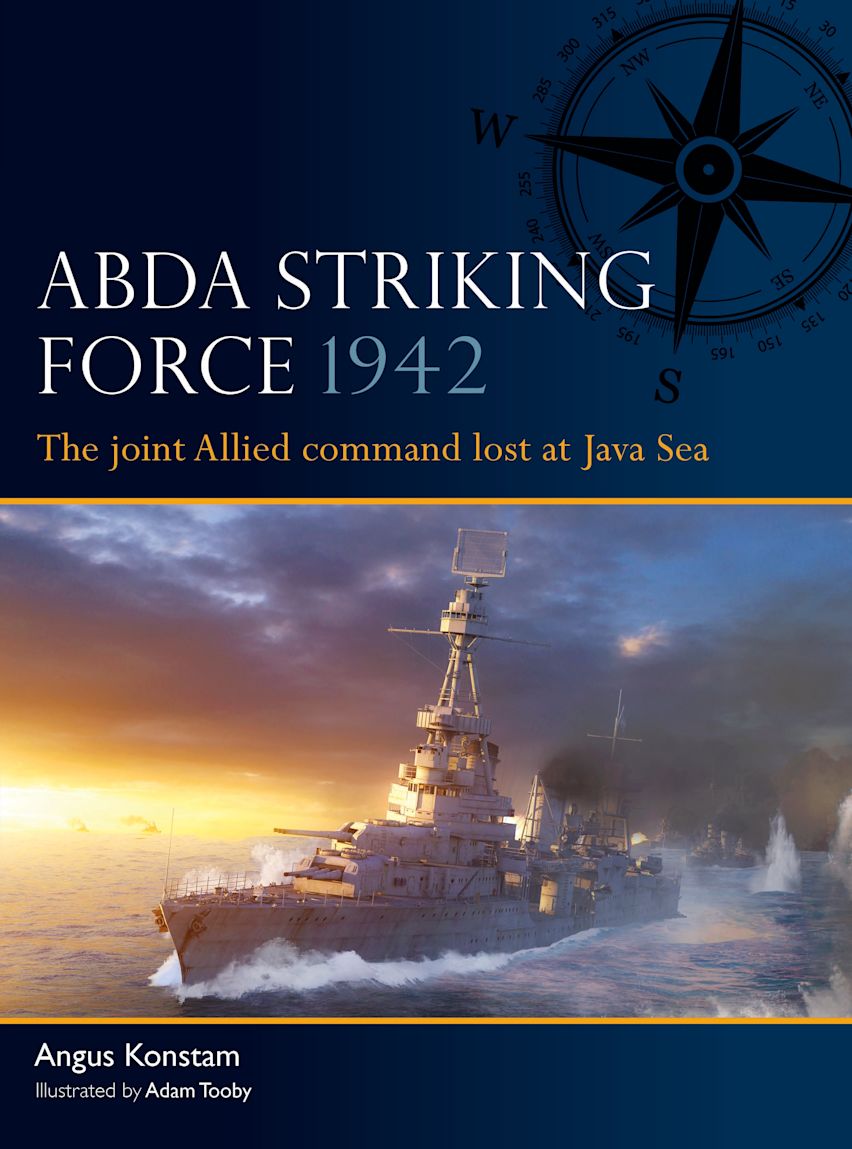
The American, British, Dutch, and Australian naval task force (ABDA) was formed on 1 January 1942 to combat overwhelming Japanese forces in defence of the Malay Barrier. Any advantages the Allies had could be measured in days as the Japanese swept all before them, but they fought anyway. In this latest volume of Osprey’s Fleet series, Angus Konstam calls the Allied effort a ‘forlorn attempt’, but one incorporating heroism and sacrifice.
Konstam notes that all the Allied fleets in the Far East were woefully unprepared for the Japanese onslaught, with just a few cruisers backed by some destroyers and submarines. The Royal Navy had had two battleships in the region, but they didn’t last long, and their fate symbolised the change from battleship supremacy to air warfare. The Americans had a couple of useful cruisers and submarines in an otherwise obsolete fleet, while the Dutch looked good on paper but lacked support from their defeated homeland. The Japanese deployed a modern fleet that included aircraft carriers and battleships, and Konstam notes, they possessed the lethal Type 93 torpedo. Overall, he concludes, the Allies were outnumbered and outgunned, but they would just have to make do. In his survey of weaponry available to both sides, Konstam highlights the lack of practical air support for the Allies. The sense of the Allies being late to the show is reflected in their failure to adopt a joint command in time to properly prepare for the enemy coming for them – which the Allies knew about from solid intelligence work, though their communications proved somewhat dysfunctional. They also lacked effective logistical support.
Combat operations began well enough for ABDA, with a successful attack on Japanese transport ships at Balikpapan in January 1942, but the ABDA fleet came under sustained aerial attack in the Flores Sea in February, and more losses came off the coast of Banka that same month. Konstam notes that the fall of Singapore in February 1942 marked the end of ABDA’s attempts to hold the Malay barrier. They would now have to try and protect Java and the Dutch East Indies. But Java came under sustained attack, also in February, and ABDA became involved in a confused, losing fight in the Badung Strait. More serious losses for ABDA came off Java in the last week of February, and then the Japanese sunk the last remaining cruisers of ABDA in the Sundai Strait and off Borneo. Only a few destroyers escaped from Java. In his analysis, Konstam reiterates the disadvantages that ABDA operated under in its futile attempt to hold back the Japanese tide.
Konstam provides a useful survey of the doomed ABDA fleet. His narrative of operations is well-handled though tough reading in parts, because despite what Hollywood writers might like, there is very little glory in doomed enterprises such as that of ABDA. Konstam’s survey is well-supported by many photographs and Osprey’s usual evocative artwork. World War II naval history readers, in particular, will enjoy reading this book.