Mark Lardas, US Liberty Ship vs German Surface Raider (Osprey, 2026)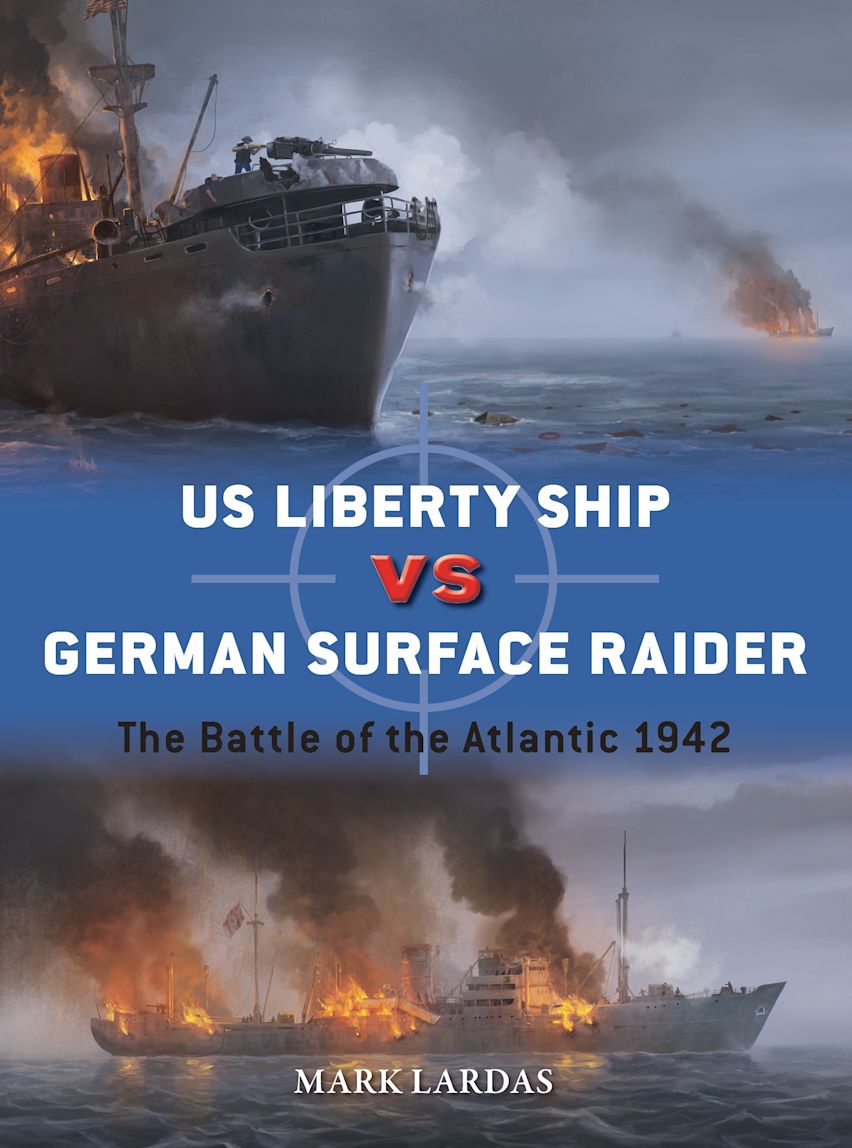
World War II naval history students will be used to reading about powerful navies competing at sea across the world. Aircraft carriers and battleships dominated major battles. However, in this Duel series edition from Osprey, Mark Lardas highlights a different contest, that between armed German merchant ships and the US freighters maintaining the Allied maritime lifelines.
Lardas traces the concept of arming merchant ships back to the 19th Century, but they came into their own in World War I. As it entered WWII, Germany had a modern merchant navy, some of which the Kreigsmarine thought would be useful in an auxiliary cruiser capacity. The main criteria was their range of operations, and the ships were kitted out with guns and efficient communications. The first of 2,708 United States Liberty ships was launched in September 1941. These were fast and fuel-efficient freighters, Lardas notes, and they were cheap and quick to build at a unique time of crisis. Lardas describes their development and characteristics. He continues his history lesson into the strategic situation entering World War II. The Germans initially did not trust submarine warfare and focused on surface raiders, including auxiliary cruisers. These proved successful at first, but as Allied security tightened, particularly in the north Atlantic and around European coasts, the raiders operated more on marginal trade routes. Lardas moves onto describing the technical specifications for both sides and adds the human factor to his survey with an overview of the respective combatants. Then Lardas narrates combat operations, tracking the German auxiliary cruisers across the seas in early 1942, when they scored numerous victories. He also highlights some individual combats involving US merchant ships. These seem to have been rather one-sided affairs, though the American sailors gave as good as they got for the most part. Ultimately, the U-boats took over the raider role, and the war had swung against the auxiliary cruisers by 1943.
There was a certain intimacy in the cat-and-mouse struggles Mark Lardas describes in this interesting and entertaining survey. This was ship-vs-ship, crew-vs-crew, combat on the high seas, and the stakes could not have been higher. The US ships were on the receiving end for the most part, but you do not have to buy into Lardas’ generalisation of American sailors as ‘scrappers’ to respect their courage under fire. Lardas casts an expert’s eye over the ships and men, and naval history readers will certainly enjoy this book.