Mark Stille, US Navy Pacific Fleet 1941-42 (Osprey, 2026)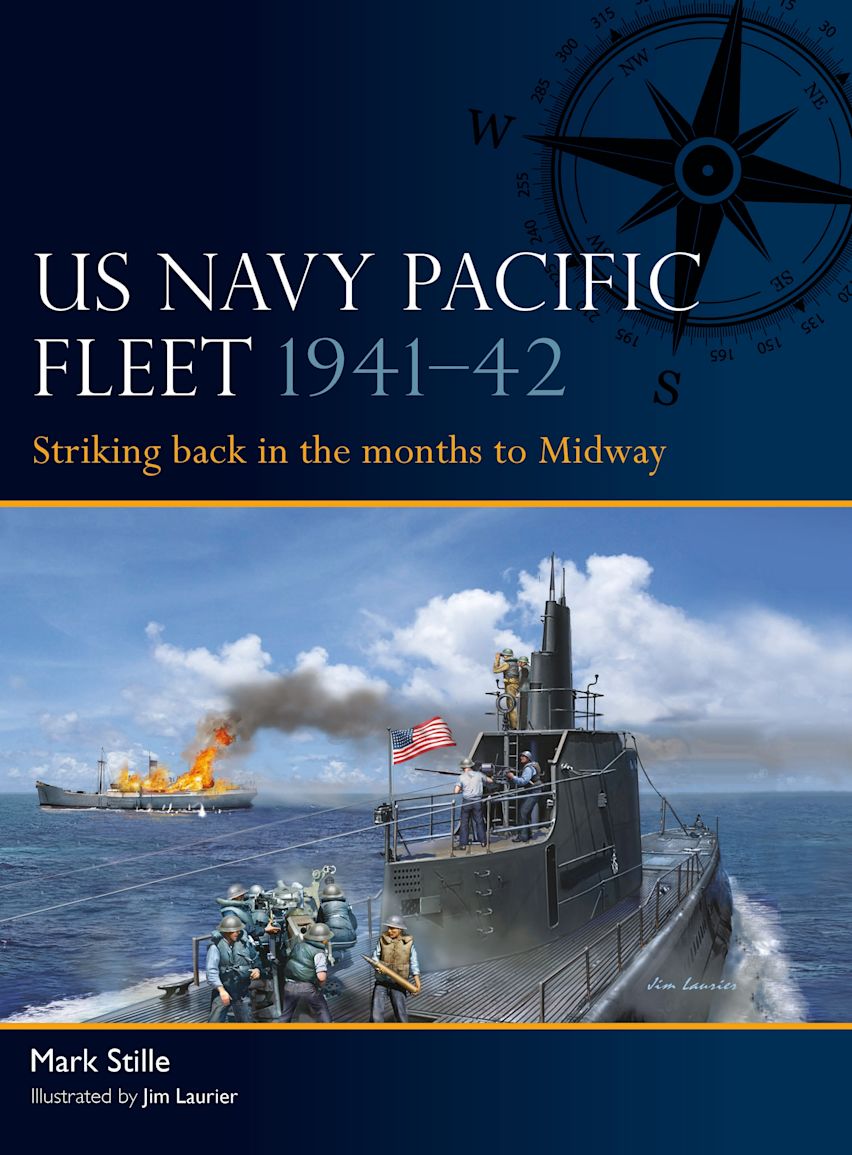
On a surface reading of the Pacific War, the Pearl Harbor attacks happen, then the US strikes back at Coral Sea and Midway a few months later, and the war grinds on after that. But that glosses over what the Americans were doing in that six month interval and what resources were available to them. In this Osprey Fleet series book, naval historian Mark Stille plugs that gap.
Stille starts with the Pacific Fleet’s purpose, which before the war was front-foot orientated and programmed to fight a decisive naval battle with the Japanese. Stille argues that this would have proved disastrous for the US. Then came Pearl Harbor and a switch to protection duties pushed forward to Wake and Midway and as far as Fiji if possible. US admirals agreed on an offensive posture to achieve defensive strategic goals. Controlling the South Pacific, therefore, was deemed integral to preventing further Japanese expansion.
Pearl Harbor determined that the war would be a carrier war and battleships were all but obsolete. But the US had too few of both, although battleships would be relegated away from the frontline and more carriers were coming on tap. The workhorses of the fleet were the cruisers, split between heavy and light. The US also maintained many destroyers that performed a wide variety of roles. The US began the war with antiquated submarines, but the Gato class was introduced in mid-1942. Stille discusses the Fleet’s weaponry, including guns, and aircraft, and their functionally inadequate torpedoes. Stille surveys the organisation of the Fleet, its command, and its new doctrine based around carrier operations. He adds an informative survey of vital intelligence operations to his review. Stille argues that ‘logistics is the life blood of a navy’ and demonstrates how the USN coped with that on a shoestring budget.
This fleet that the Japanese were supposed to have destroyed at Pearl Harbor was surprisingly busy in its aftermath, or so it seems. In fact, as Stille point out, the attack caused little strategic damage. Nevertheless, the USN was not strong enough to defend Wake Island in December 1941. In February 1942, the USN took the offensive to conduct raids with mixed results. Then, in May, the IJN and USN fought their first carrier battle in the Coral Sea; ‘a confusing affair’, Stille notes. Then came the Japanese disaster at Midway in early June. Meanwhile, the USN’s submarine campaign got off to a slow start, though they did some better work defending Midway atoll. Stille concludes that in the six months after Pearl Harbor, the USN Pacific Fleet performed ‘extremely well’; it had blunted the IJN offensive then turned it onto the defensive. There were lessons still to be learned, but Stille claims that after Midway, Japanese defeat was inevitable.
Historians have covered in some detail the battles of Pearl Harbor, Coral Sea, and Midway. What Stille achieves in this book is to fill in the gaps between those events, and he does it well. He lays out the ships involved and the commanders then narrates what they did and how they did it. For a survey style book, you cannot ask for much more than that. The overall impression Stille gives is that of an aggressive US Navy determined to take the fight to the IJN, and it showed in their actions, though tempered with caution where necessary. Readers of the Pacific Theatre will particularly enjoy this book, as will anyone interested in WWII naval warfare.