Mark Lardas, Philippines 1941-42 (Osprey, 2026)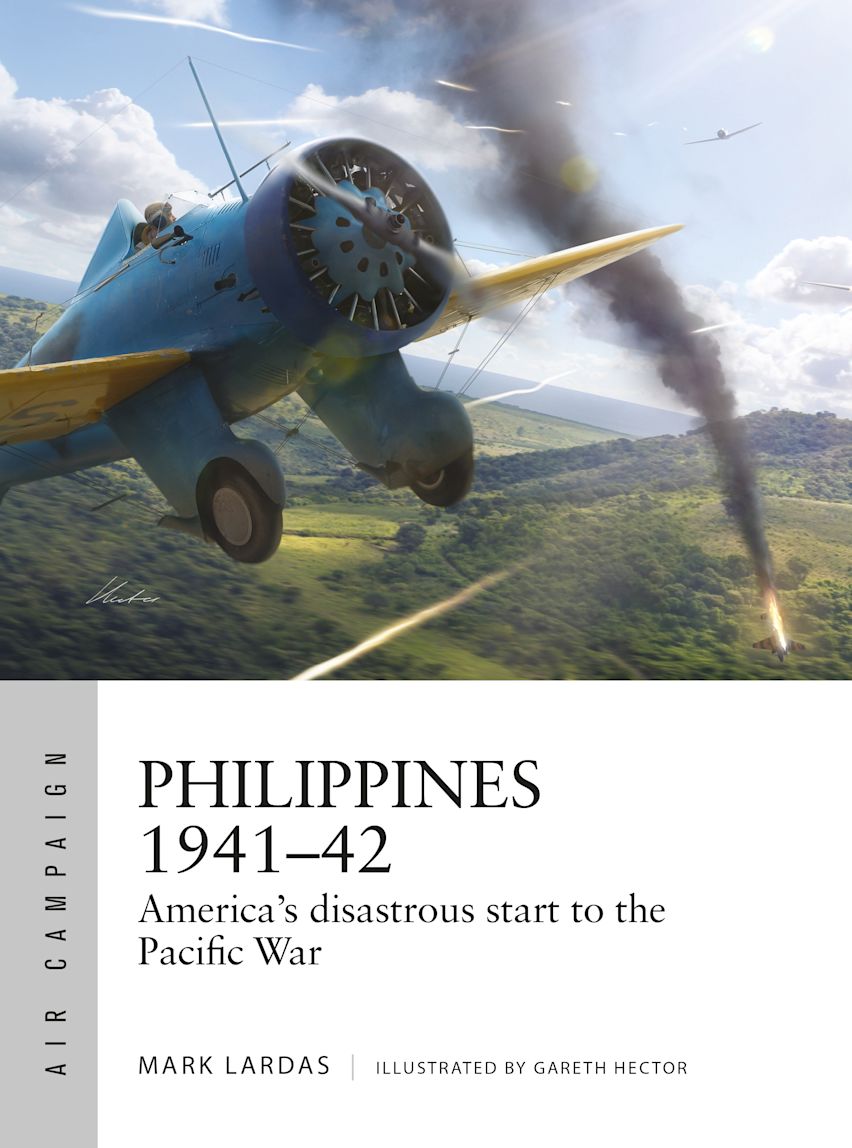
Picture the scene: Clark airfield in the Philippines on 8 December 1941. The news arrives of the attack on Pearl Harbor, but the Americans at Clark airfield have no idea what’s about to hit them. The disaster that follows sets off a desperate rearguard action by the Americans, but one that is ultimately doomed. In this Osprey Air Campaign volume, Mark Lardas describes the men, their machines, and the action that set the tone for the Pacific air war.
Lardas begins with the attack on Clark airfield to set the scene before surveying the Japanese aircraft, their facilities, and their weapons and tactics honed on fighting in Chinese skies. In response, argues Lardas, the US had many aircraft and facilities, but the planes were obsolete and the infrastructure inadequate. They would pay a high price for that. As for the campaign objectives, Japanese expansion began in China in the 1930s and spread, but the Philippines stood in the way of their full imperialist ambitions. To capture the Philippines would require amphibious landings supported by air power. The US was a somewhat reluctant defender of the Philippines, Lardas contends, but they could not let the Japanese stroll in to seize power. They thought they had the resources and correct strategy, in accordance with local forces, but they had badly miscalculated.
The campaign narrative Lardas embarks upon delves into the preparations and build-up of forces, leading into the attack on Clark airfield. The Japanese quickly secured an airfield in the Philippines, but the major initial attacks came from Formosa. In what Lardas describes as a ‘cascade of failure’, Clark airfield succumbed to a surprise raid that destroyed many US aircraft. Despite that, the Americans could still put serviceable aircraft into the air to attack Japanese landings and supply ships. Nevertheless, the Japanese attacks on US airfields intensified until, within a few days, the air campaign over the Philippines heavily favoured Japan. As the Japanese invasion progressed, US supplies were lost in addition to more aircraft, and the remainder were withdrawn. But, Lardas notes, the US still launched limited counter-strikes until the Philippines finally fell on 1 May 1942. Lardas assesses the competing campaigns as one of tight tactical Japanese doctrine against the unfocused US effort.
The front cover of this book tells you all that you need to know about what happened in the Philippines. It depicts an obsolete US warplane under intense fire from a Japanese fighter. This singular exercise in futility is reflected across the campaign, and Mark Lardas’s survey captures that very well, highlighting the progressive collapse of the US air effort in conjunction with events on the ground. He assesses the competing forces and finds that the outcome could have perhaps been different if the US had adopted an alternative strategy, although that dips into the realms of ‘what-if’ history a bit too far. Lardas is ably supported by Osprey’s usual high quality graphics and maps. Overall, this is an excellent addition to the Air Campaign series, and one that will appeal to military history readers in general and those interested in the Pacific Theatre in particular.